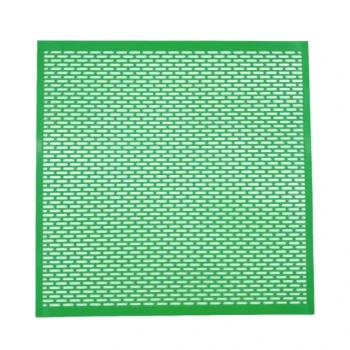
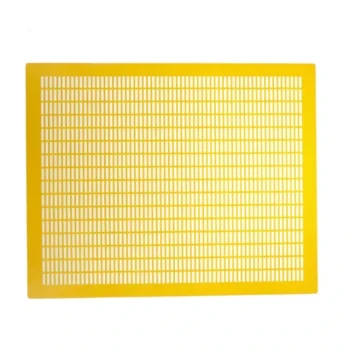
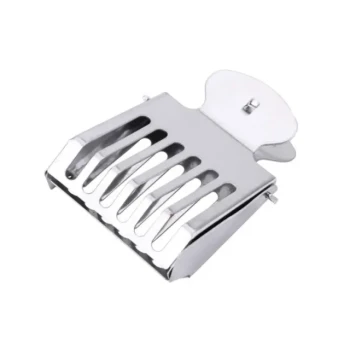
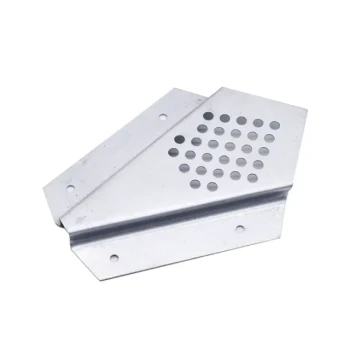
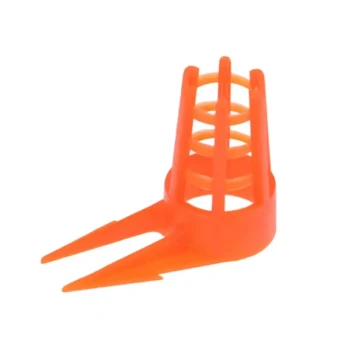
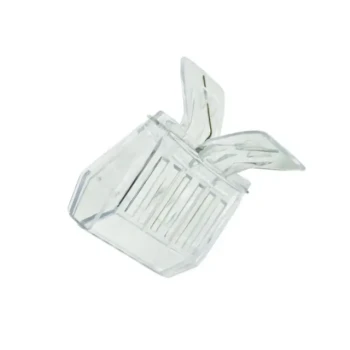
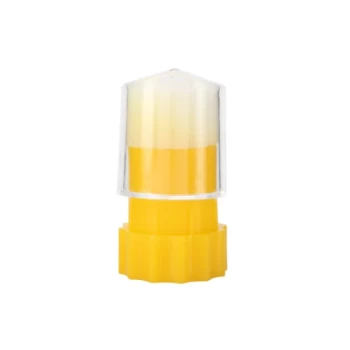
The isolation grid serves as the critical control mechanism in a modular queen rearing system, functioning as a localized biological filter. By confining the breeder queen to a specific frame or cassette containing artificial queen cups, it forces her to lay eggs directly into these receptacles within a strict 24-hour window, while permitting smaller worker bees to pass through freely to care for her.
Core Takeaway The isolation grid is not merely a barrier; it is a synchronization tool. It guarantees that all eggs are laid within a narrow timeframe for uniform larval age, while maintaining the social link between the queen and the nurse bees required for temperature regulation and feeding.
The Mechanics of Targeted Confinement
Forced Deposition in Queen Cups
The primary function of the isolation grid is to restrict the breeder queen's access to the rest of the hive. By limiting her movement to a specifically engineered zone, she is compelled to lay eggs in the provided artificial cups rather than random comb cells.
Precision Timing Control
Modular rearing systems rely on larvae being the exact same age for successful grafting or transfer. The isolation grid ensures the queen completes her laying task within a designated 24-hour period. This creates a batch of eggs that will hatch simultaneously, streamlining the subsequent management schedule.
Size-Based Filtration
The grid operates on precise exclusion principles, typically utilizing gaps between 4.1 and 4.4 millimeters. This dimension is mechanically tuned to block the larger thorax of the queen while offering zero resistance to the smaller worker bees.
Environmental and Biological Maintenance
Sustaining Nest Temperature
While the queen is isolated, the temperature of the eggs must remain constant for viability. Because the grid allows worker bees to pass through freely, they can cluster around the queen and the new eggs, maintaining the necessary brood nest heat.
Uninterrupted Queen Care
An isolated queen still requires feeding, grooming, and pheromone distribution. The permeability of the grid ensures that nurse bees can tend to the queen's metabolic needs without interruption, preventing stress during her confinement.
Protection During the Rearing Phase
The Role of the Hive-Body Excluder
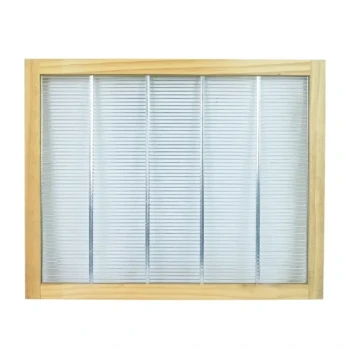
Once eggs hatch and the cells are moved to a finishing colony, a standard queen excluder plays a different role. In "queenright" rearing methods, it creates a physical barrier between the laying queen (below) and the developing queen cells (above).
Preventing Cell Destruction
If a laying queen accesses developing queen cells, she will instinctively destroy them to eliminate competition. The excluder protects the vulnerable royal cells in the upper chamber while allowing nurse bees to move up and feed them royal jelly.
Understanding the Trade-offs
Potential for Queen Stress
Confinement is an unnatural state for a queen accustomed to roaming the brood nest. Leaving a queen behind an isolation grid for longer than the recommended 24 hours can induce significant stress, potentially affecting her future laying performance.
Restriction of Worker Traffic
While workers can pass through, the grid inevitably slows down movement compared to open space. If the population density is too high or the grid becomes clogged with propolis or wax, it can hinder the nurse bees' ability to effectively regulate temperature or feed the queen.
Making the Right Choice for Your Goal
To utilize an isolation grid or excluder effectively, align its use with your specific rearing stage:
- If your primary focus is obtaining larvae for transfer: Use the isolation grid on the breeding frame for exactly 24 hours to ensure all eggs are laid simultaneously.
- If your primary focus is finishing sealed cells: Use a hive-body queen excluder to separate the queen from the rearing chamber, protecting the cells from destruction while allowing nurse bees access.
Success in queen rearing is determined by the balance of restriction for the queen and unrestricted access for the colony's resources.
Summary Table:
| Component | Primary Function | Key Benefit |
|---|---|---|
| Isolation Grid | Confines queen to artificial cups | Ensures uniform larval age (24hr window) |
| Size Filtration | Blocks queen (4.1-4.4mm), permits workers | Allows continuous queen care and feeding |
| Hive-Body Excluder | Separates queen from finishing chamber | Prevents destruction of developing queen cells |
| Thermal Regulation | Allows worker bee clustering | Maintains stable brood nest temperature |
Maximize Your Apiary's Potential with HONESTBEE
At HONESTBEE, we understand that precision is the backbone of successful queen rearing and commercial beekeeping. As a dedicated partner to commercial apiaries and distributors, we provide a comprehensive wholesale catalog of high-quality tools designed for efficiency.
Our portfolio includes everything from isolation grids and hive-body excluders to advanced honey-filling machines and hive-making equipment. Whether you are looking to streamline your production with specialized machinery or supply your customers with essential industry consumables and honey-themed cultural merchandise, we deliver the value and reliability you need to grow.
Ready to scale your beekeeping operations? Contact us today to explore our wholesale offerings and discover how our expertise can support your business goals.
References
- Letícia Carlesso de Paula Sena, Mariana Nikolla. Seasonal Aplication of Jenter's Method for a Successful Queen Bees' Rearing in Albania. DOI: 10.1080/13102818.2010.10817878
This article is also based on technical information from HonestBee Knowledge Base .
Related Products
- High Performance Plastic Queen Excluder for Beekeeping and Apiary Management
- Professional Plastic Queen Excluder for Modern Beekeeping
- Lightweight Durable Plastic Queen Excluder Scraper for Beekeeping
- Metal Queen Bee Excluder for Beekeeping
- Premium Wood Framed Metal Wire Queen Bee Excluder
People Also Ask
- What are the characteristics of a plastic queen excluder? Key Benefits for Cost-Effective Beekeeping
- What are the operational and cost advantages of using plastic queen excluders over metal or wire excluders in commercial hive management? Discover how they reduce labor, prevent wing damage, and lower total costs.
- What types of queen excluders are available for beekeepers? Choose the Right Tool for Your Hive
- Why are standardized hive frames and queen excluders essential for maintaining honey purity and quality? Scale Your Purity
- Do plastic queen excluders work? A Cost-Effective Solution for Modern Apiaries