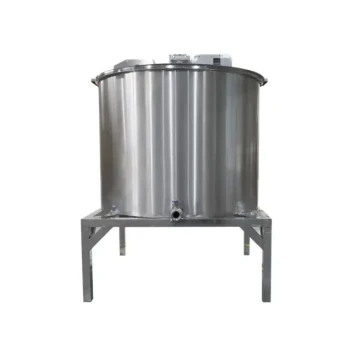
Commercial honey filtration and filling machinery acts as the technological bridge between raw harvest and international market access. It ensures that honey meets rigorous global hygiene and quality standards by precisely removing impurities and controlling moisture levels. This equipment is the defining factor in converting variable bulk honey into a standardized, safe, and high-value commodity suitable for export.
The transition from local apiary to global exporter relies less on the volume of honey produced and more on the consistency of the final product. Industrial-grade machinery provides the standardization, sterility, and stability required to elevate raw honey into a tradable asset for premium markets.
Ensuring Compliance with International Standards
The primary hurdle for export-oriented production is meeting strict regulatory requirements. Specialized machinery automates compliance, removing the variability of manual handling.
Achieving Absolute Hygiene and Sterility
Export markets demand zero tolerance for contamination. Professional machinery executes filling and packaging within sterile environments, significantly reducing the risk of environmental pollutants affecting the product.
Preventing Secondary Contamination
Manual filling introduces human error and biological risks. Automated systems utilize hygienic-grade sealing processes to eliminate the risk of secondary contamination, ensuring the product remains pure from the vat to the final seal.
Precision Filtration and Impurity Removal
To meet physicochemical standards, honey must be free of particulate matter. Advanced filtration systems effectively remove impurities without stripping the honey of its natural chemical structure, striking a balance between clarity and authenticity.
Standardization for Global Supply Chains
International buyers require consistency across thousands of units. Machinery ensures that every jar meets the same specifications, regardless of when or where the honey was harvested.
Homogenization of Variable Sources
Honey gathered from different regions or seasons naturally varies in texture and composition. High-specification processing equipment allows for the homogenization of these sources, blending them into a uniform product that adheres to global distribution standards.
Precise Control of Moisture and Specifications
Shelf stability is dictated by chemical composition. By utilizing precise temperature controls and monitoring moisture content, these machines ensure the final product falls within the narrow parameters required for safe international shipping and storage.
Operational Efficiency and Market Velocity
Speed and protection are vital when dealing with a perishable, oxidation-prone natural product.
High-Speed Automated Metering
Time-to-market is critical for maintaining freshness. Industrial filling machines employ automated metering systems to bottle honey rapidly and accurately, drastically accelerating turnover from harvest to retail readiness.
Preservation of Nutritional Value
Extended exposure to air degrades honey. Automated packaging employs airtight sealing technologies to prevent oxidative degradation, thereby locking in the active nutritional and medicinal properties that command higher prices in premium markets.
Understanding the Trade-offs
While essential for export, implementing industrial processing requires careful calibration to avoid diminishing product quality.
Balancing Filtration with Nutrient Retention
There is a fine line between purification and over-processing. Aggressive filtration can remove pollen and enzymes that define premium raw honey; therefore, operators must select machinery that removes debris while preserving active nutritional components.
Capital Intensity vs. Production Scale
Industrial-grade machinery represents a significant infrastructure investment. For smaller producers, the high cost of automated lines may only be justifiable if the volume of production is sufficient to feed a continuous export supply chain.
Making the Right Choice for Your Export Goals
Selecting the right machinery depends on the specific requirements of your target market and the scale of your operation.
- If your primary focus is the Premium/Raw Market: Prioritize machinery with advanced temperature controls and gentle filtration systems to maximize the retention of natural enzymes and pollen.
- If your primary focus is High-Volume Retail Distribution: Focus on equipment with high-speed automated metering and homogenization capabilities to ensure absolute consistency and rapid turnover.
Ultimately, the role of this machinery is to mechanically guarantee the safety and uniformity that international trade partners demand.
Summary Table:
| Key Feature | Impact on Export Success | Primary Benefit |
|---|---|---|
| Advanced Filtration | Meets global purity & clarity standards | Removes impurities without nutrient loss |
| Automated Filling | Ensures absolute hygiene & sterility | Eliminates secondary contamination risk |
| Homogenization | Standardizes variable honey sources | Consistent product across global chains |
| Moisture Control | Regulates chemical shelf-stability | Prevents fermentation during shipping |
| Airtight Sealing | Preserves nutritional/medicinal value | Prevents oxidation and quality degradation |
Elevate Your Apiary to Global Standards with HONESTBEE
Transitioning from local production to international export requires precision, reliability, and the right industrial partner. HONESTBEE specializes in empowering commercial apiaries and distributors with high-performance honey-making machinery and beekeeping tools designed for the global stage.
From advanced filtration systems that preserve nutritional integrity to high-speed honey-filling machines and specialized hive-making hardware, our comprehensive wholesale portfolio covers every stage of production. We provide the technological foundation you need to meet rigorous international hygiene standards and achieve the consistency that premium markets demand.
Ready to scale your production and access international markets?
Contact HONESTBEE Today for a Professional Consultation
References
- Panuwan Chantawannakul, Siriwat Wongsiri. Conservation of honey bee species in South East Asia:<i>Apis mellifera</i>or native bees?. DOI: 10.1080/14888386.2004.9712726
This article is also based on technical information from HonestBee Knowledge Base .
Related Products
- Commercial Rotary Honey Filling Machine for Production
- Automatic Honey Filling and Filtering Machine for Beekeeping Bottle Filling
- Precision Durable Efficient HONESTBEE Rotary Honey Filling Machine
- Double Nozzle Small Honey Filling Machine Honey Sachet Packing Packaging Equipment
- Fully Automatic Honey Filling Packaging Machine for Processing Line
People Also Ask
- What role do commercial honey filling machines play in honey distribution? Scaling Efficiency and Quality Control
- What technical support do commercial-grade filling machines provide? Convert Honey NTFPs into Marketable Commodities
- What is the significance of specialized honey filling equipment? Scaling from Beekeeping to Commercial Success
- Why is professional honey filling machinery critical for honey production? Scale Your Apiary's Profit & Efficiency
- Why is high-capacity honey filling machinery necessary for Giant Honey Bees? Solve the Apis dorsata Volume Crisis