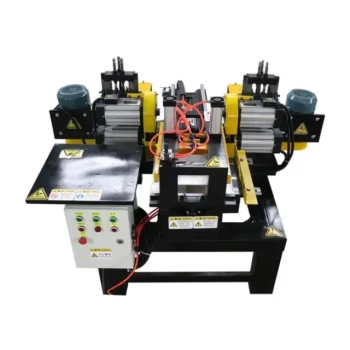
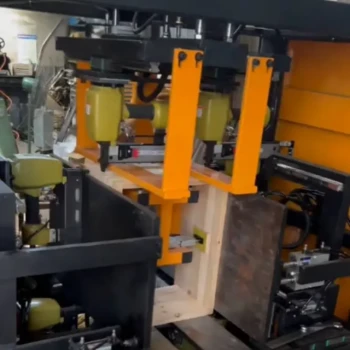
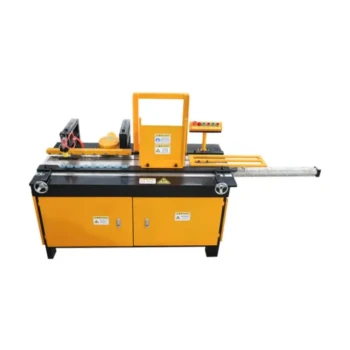
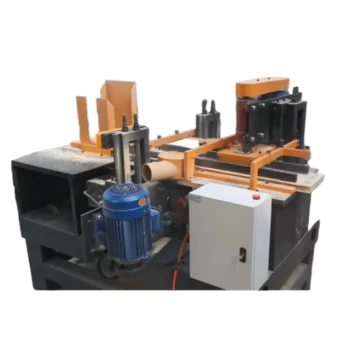
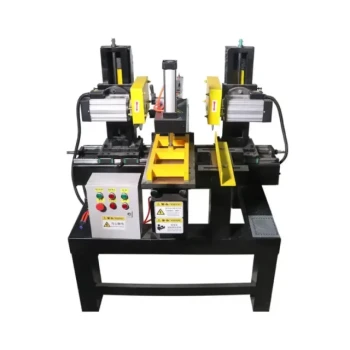
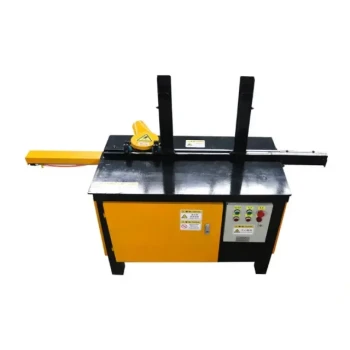
Industrial beehive-making machinery serves as the critical hardware foundation for modern commercial pollination systems. By utilizing high-precision cutting and assembly processes, this machinery produces standardized components—such as brood boxes and honey supers—that strictly adhere to essential "bee space" standards. This physical precision is the prerequisite for maintaining colony health, enabling successful overwintering, and facilitating the complex logistics required to move thousands of hives to agricultural sites.
The Bottom Line Commercial pollination is a logistics-heavy industry that relies on biological health. Industrial machinery bridges these two needs by mass-producing standardized, biologically appropriate hive structures that allow for rapid transport and interchangeability while reducing disease risks and colony mortality.
The Biological Necessity of Precision
Mastering "Bee Space" Standards
The primary function of industrial machinery is to ensure hive components meet strict dimensional standards known as "bee space." If a hive's internal gaps are too large or too small, bees will seal them with propolis or fill them with burr comb, making the hive unmanageable.
High-precision machinery eliminates these variances. By respecting these spatial requirements, the machinery directly contributes to improved disease resistance and better ventilation, which are critical for colony survival.
Enhancing Overwintering Success
Pollination contracts often start early in the spring, requiring colonies to emerge from winter strong and populous. The structural integrity provided by industrial manufacturing reduces drafts and thermal leaks.
This creates a stable nesting environment that improves overwintering survival rates. A well-built hive ensures that the colony maintains the vigor necessary for high foraging motivation immediately upon release into the crops.
Enabling Large-Scale Logistics
Standardization for Transport
Commercial pollination requires moving hives frequently between forests and farmlands to chase flowering periods. Industrial machinery produces identical, modular components that stack perfectly on transport vehicles.
This physical uniformity ensures stable stacking, which drastically reduces logistical losses during transit. It allows apiaries to respond rapidly to pollination demands without worrying about equipment compatibility.
Interchangeability and Modular Management
In a large-scale operation, beekeepers cannot waste time matching specific frames to specific boxes. Industrial manufacturing ensures that every frame and box is interchangeable across the entire operation.
This modularity streamlines management tasks, such as dividing colonies or harvesting honey. It transforms beekeeping from a craft into a scalable industrial process capable of supporting high-density agricultural needs.
Driving Economic Viability
Reducing Production and Maintenance Costs
High-performance machinery determines the cost control capability of the primary production stage. By automating the cutting, slotting, and assembly of timber, these systems reduce the unit cost of each hive.
Furthermore, precise machining leads to more durable equipment that withstands extreme environmental conditions. This durability lowers long-term maintenance costs, providing a stable financial foundation for expanding operations.
Understanding the Trade-offs
The Requirement for High-Fidelity Equipment
While mechanization offers scale, it demands a commitment to high-fidelity equipment. Low-quality machinery that cannot hold tight tolerances will produce inconsistent "bee space," negating the biological benefits mentioned above.
Dependence on Uniformity
Transitioning to industrial machinery locks an operation into a specific standard (typically Langstroth or modified versions). While this facilitates growth, it reduces flexibility to use non-standard equipment or experiment with alternative hive geometries without significant retooling.
Making the Right Choice for Your Goal
To establish a robust pollination system, align your equipment strategy with your operational priorities:
- If your primary focus is Colony Health: Prioritize machinery that guarantees precise adherence to "bee space" to minimize stress, disease, and overwintering mortality.
- If your primary focus is Logistical Efficiency: Ensure your manufacturing process emphasizes strict modularity and stackability to facilitate rapid, safe transport between crop sites.
- If your primary focus is Cost Control: Leverage high-volume industrial machinery to lower the per-unit cost of expansion and reduce long-term maintenance through improved durability.
By treating the beehive not just as a wooden box, but as a precision-engineered agricultural tool, you build the stability required for a reliable commercial pollination business.
Summary Table:
| Key Role | Primary Benefit | Operational Impact |
|---|---|---|
| Biological Precision | Adherence to "Bee Space" | Improved colony health, ventilation, and disease resistance. |
| Logistical Efficiency | Modular & Uniform Design | Seamless stacking for transport and rapid interchangeability. |
| Economic Viability | Automated Mass Production | Reduced unit costs and enhanced equipment durability. |
| Winter Stability | High Structural Integrity | Higher overwintering survival rates for early spring contracts. |
Scale Your Commercial Apiary with HONESTBEE Precision Engineering
Transitioning from manual beekeeping to a large-scale commercial pollination service requires more than just tools—it requires industrial reliability. HONESTBEE empowers commercial apiaries and global distributors with the high-performance hardware needed to dominate the market.
Our Value to You:
- Advanced Machinery: From high-precision hive-making machines that guarantee perfect "bee space" to automated honey-filling lines.
- Complete Supply Chain: A full spectrum of beekeeping tools, machinery, and essential consumables designed for durability.
- Cultural Branding: Unique honey-themed merchandise to diversify your revenue streams.
Whether you are expanding your fleet of hives or upgrading your processing facility, our team is ready to provide the specialized equipment you need for professional growth.
Contact HONESTBEE Today for a Wholesale Quote
References
- J. M. Kasina, Karin Holm-Mueller. Economic Benefit of Crop Pollination by Bees: A Case of Kakamega Small-Holder Farming in Western Kenya. DOI: 10.1603/029.102.0201
This article is also based on technical information from HonestBee Knowledge Base .
Related Products
- High-Efficiency Pneumatic Bee Hive Making Machine for Rapid Box Assembly
- HONESTBEE Top Bar & Bottom Bar Forming Machine | Bee Frame Machine
- Mini Desktop Bee Hive Frame Forming Making Machine
- Automatic High-Speed Bee Hive Box Stapling Machine
- Beehive Handle and Frame Rest Cutting Machine: Your Specialized Hive Machine
People Also Ask
- How does the introduction of professional beehive-making machinery benefit sustainable beekeeping? Scale Your Apiary
- Why is specialized beehive-making machinery critical for low-defense breeding? Enhance Selection with Precision Tools
- How does the introduction of specialized beehive making machinery contribute to increasing the scale of regional beekeeping industries?
- What is the importance of specialized beehive making machinery in a circular bio-economy? Build Local Sustainability
- Why is specialized beehive-making machinery essential? Scale Your Apiary with Precision Industrial Standards