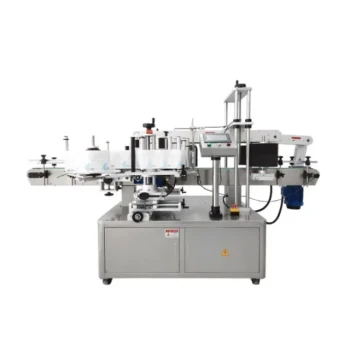
Industrial-grade weighing equipment acts as the definitive validation tool for commercial apiary productivity. Its primary role is to provide accurate, objective measurements of total honey production at the end of a harvest season. This data converts subjective observations into hard metrics, allowing beekeepers to perform precise input-output analyses on their colonies.
Accurate weighing is the cornerstone of data-driven apiary management. It moves operations beyond estimation, enabling beekeepers to mathematically verify if specific investments in feeding or management yield a profitable return.
The Foundation of Input-Output Analysis
Quantifying Productivity Gains
The central function of this equipment is to measure the tangible results of management decisions.
By recording exact weights, beekeepers can compare standard practices against specific strategies, such as combined pollen and water feeding.
This data reveals whether the input (the cost and labor of feeding) results in a proportional increase in output (honey yield).
Defining Commercial Yield vs. Reserves
Total colony weight includes both marketable product and necessary resources for the bees.
Industrial scales allow for the precise calculation of commercial honey yield separate from the honey reserves required for wintering.
This distinction is critical for ensuring colony survival while maximizing immediate revenue.
Driving Economic Efficiency
Comparing Experimental and Control Groups
To truly assess efficiency, apiaries often run experiments comparing different botanical compositions or management styles.
Weighing equipment provides the "scorecard" for these tests.
By comparing the total output of an experimental group against a control group, beekeepers can calculate the direct economic gains of a specific strategy.
Supporting Standardized Data Models
Efficiency in modern agriculture is often measured using models like Data Envelopment Analysis (DEA).
Weight data provides the essential "output" metric for these models.
When combined with input data—such as labor hours and fixed costs—precise weighing ensures that efficiency models remain objective and accurate.
Understanding the Trade-offs
The Requirement for Contextual Data
Weight data is powerful, but it cannot stand alone.
To be useful for efficiency analysis, weight metrics must be paired with rigorous records of labor hours and variable costs.
High honey yields verified by weighing equipment may still result in low efficiency if the labor required to achieve them was disproportionately high.
Lagging vs. Leading Indicators
Weighing total production at the conclusion of a harvest season is a lagging indicator.
It tells you what happened in the past but does not provide real-time feedback during the flow.
Therefore, this equipment is best used for strategic planning for the next season, rather than immediate tactical adjustments.
Making the Right Choice for Your Goal
To leverage industrial weighing equipment effectively, align its use with your specific management objectives.
- If your primary focus is Protocol Development: Use weight data to compare specific interventions (like supplemental feeding) against control groups to validate productivity gains.
- If your primary focus is Financial Planning: Use the equipment to strictly separate commercial yield from winter reserves to accurately forecast revenue without endangering colony health.
- If your primary focus is Operational Efficiency: Integrate weight metrics with labor and cost data to perform Data Envelopment Analysis (DEA) for a holistic view of apiary performance.
Objective measurement is the only path to optimized, scalable beekeeping.
Summary Table:
| Metric Category | Role of Industrial Weighing Equipment | Strategic Value |
|---|---|---|
| Productivity | Validates exact honey yield vs. colony weight | Quantifies management strategy success |
| Financials | Distinguishes commercial yield from winter reserves | Accurate revenue forecasting and colony safety |
| Efficiency | Provides the 'output' metric for DEA models | Identifies labor-to-yield optimization points |
| Analysis | Compares experimental groups with control groups | Justifies investments in feeding and hardware |
Scale Your Apiary Success with HONESTBEE Precision
At HONESTBEE, we understand that for commercial apiaries and distributors, data is the difference between guessing and growing. We provide a comprehensive wholesale range of beekeeping tools, specialized machinery, and essential industry consumables—including honey-filling machines and hive-making equipment—designed to streamline your operations.
Ready to transform your productivity metrics into profit? Our team specializes in supplying high-capacity equipment that caters to the rigorous demands of large-scale beekeeping and industrial honey processing. Contact us today to explore our full portfolio and learn how HONESTBEE can deliver the professional-grade solutions your business needs to thrive.
References
- Halil Yeninar, Alaeddin Yörük. Effects of Additive Feeding with Pollen and Water on Some Characteristics of Honeybee Colonies and Pine Honey Production. DOI: 10.24925/turjaf.v3i12.948-951.576
This article is also based on technical information from HonestBee Knowledge Base .
Related Products
- Professional Grade Foldable Beehive Handles
- Premium Frame Grip with Ergonomic Wood Handles
- Professional Bee Frame Machine for Side Bar Shaping
- Automatic Dual Sided In Line Labeling Machine
- Professional Frame Comb Fork and Lifter for Efficient Handling
People Also Ask
- How do bee hive handles facilitate the evaluation of food stores? Use the Lift Test for Winter Survival
- How do the geometry and dimensions of hive handles influence operational safety and control? Expert Design Insights
- What is a bee hive tool? Discover Why It’s the Most Essential Hand Tool for Every Beekeeper
- What are the common sizes and features of bee hive tools? Choose the Right Tools for Your Apiary
- What is the role of professional hive tools in routine apiary maintenance? Expert Tips for Hive Health and Longevity