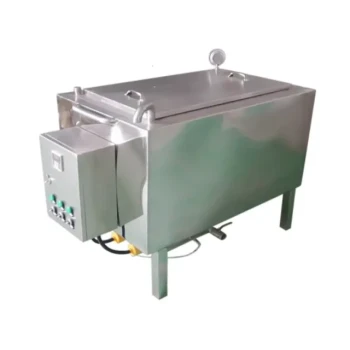
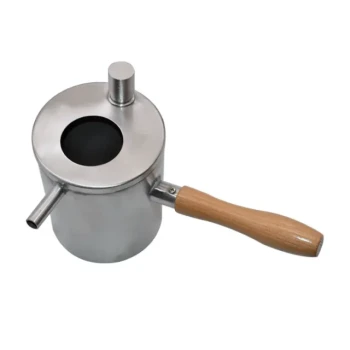
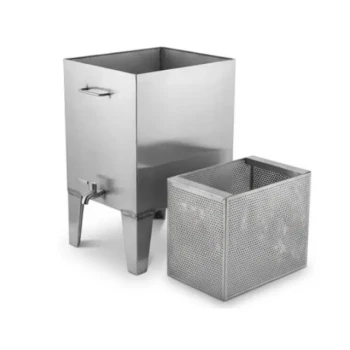
Industrial wax melters and filtration systems act as the critical purification stage in beeswax refining, transforming raw material into a commercially viable product. These technologies function in tandem to liquefy raw wax through precise, constant-temperature heating while simultaneously purging physical contaminants like biological residues and micro-particles.
By replacing inconsistent manual heating with precise thermal control and forced filtration, this equipment transforms low-value raw comb waste (cera cruda) into high-purity, commercial-grade beeswax (cera fina) suitable for premium cosmetic, food, and industrial applications.
Precise Thermal Management
The primary role of the industrial melter is not just to liquefy the wax, but to do so without altering its chemical structure.
Avoiding Thermal Degradation
Raw beeswax is sensitive to heat. Traditional heating methods often result in overheating, which can burn the wax and darken its color.
Constant-temperature heating processes utilize precise controls to maintain the wax in a molten state without exceeding its degradation threshold.
This prevents the formation of burnt impurities that permanently damage the quality and market value of the final product.
Preserving Chemical Integrity
Beeswax possesses inherent physical and chemical properties, such as antibacterial activity and film-forming capabilities.
Advanced melters ensure these natural characteristics are preserved during the phase change from solid to liquid.
By maintaining the wax's natural integrity, the equipment ensures the final product meets the strict requirements of the cosmetics and pharmaceutical industries.
Multi-Stage Impurity Removal
Once molten, the wax must be cleaned. Filtration equipment moves beyond simple sedimentation to actively separate non-wax elements.
Eliminating Biological Residues
Raw honeycomb contains significant debris, including cocoons, larval remains, and bee parts.
Multi-stage filtration systems mechanically separate these macroscopic impurities from the liquid wax.
This step is essential for converting waste combs and hive residues into a usable raw material.
Removing Micro-Particles
Sedimentation alone cannot remove fine particulates. Industrial thermal filtration systems perform forced filtration on the molten wax.
High-precision filter elements trap micro-particles and pigments that would otherwise cloud the final product.
This level of clarity is a prerequisite for high-end applications, such as premium beeswax foundation combs or medical polishes.
Understanding the Trade-offs
While industrial refining offers superior purity, operators must understand the operational constraints.
Maintenance of Consumables
High-density filtration achieves high purity, but it relies on filtration consumables.
These filters can become clogged with debris quickly, requiring regular replacement or cleaning to maintain flow rates.
This adds an operational cost and maintenance step that simpler gravity-based settling methods do not require.
Processing Complexity
Moving from simple rendering to industrial refining introduces mechanical complexity.
Operators must manage pressure, temperature curves, and flow rates simultaneously.
Failure to balance these variables can lead to equipment blockages or inconsistent batch quality.
Economic and Application Impact
The ultimate role of this equipment is to elevate the economic standing of the apiary or processing facility.
Unlocking High-Value Markets
Refined wax produced through this method meets food, cosmetic, and export standards.
It allows producers to sell into high-margin markets, such as waterproof cosmetics and ritual candles, rather than selling low-grade raw wax.
Maximizing Resource Utilization
These systems allow for the recovery of wax from sources often deemed waste, such as old, dark combs.
By effectively separating the wax from the hive residue, producers create a consistent secondary revenue stream alongside honey production.
Making the Right Choice for Your Goal
To determine if industrial refining equipment is necessary for your operation, consider your end-product requirements.
- If your primary focus is High-End Cosmetics or Pharma: Prioritize precise temperature control and high-density filtration to preserve bio-activity and ensure zero contamination.
- If your primary focus is Industrial Volume: Prioritize throughput speed and robust primary filtration to maximize the recovery rate from bulk waste combs.
Ultimately, the transition to industrial melting and filtration is the defining step that turns a beekeeping by-product into a valuable, standardized commodity.
Summary Table:
| Feature | Role in Refining | Key Benefit |
|---|---|---|
| Precise Heating | Maintains constant temperature below degradation thresholds | Prevents burning and preserves natural antibacterial properties |
| Multi-Stage Filtration | Mechanically removes biological residues and bee parts | Converts raw comb waste into high-purity commercial wax |
| Micro-Particle Removal | Traps fine particulates and pigments via forced filtration | Ensures the clarity required for medical and premium cosmetic grades |
| Thermal Control | Regulates phase change from solid to liquid | Maintains chemical integrity and color consistency across batches |
Scaling Your Beeswax Production? HONESTBEE Has the Solution.
At HONESTBEE, we specialize in empowering commercial apiaries and distributors with the professional-grade tools needed to turn hive by-products into high-value commodities. Whether you are refining beeswax for premium cosmetics or manufacturing foundation combs, our comprehensive range of industrial wax melters, high-precision filtration machinery, and honey-filling equipment ensures your operation meets strict global standards.
Why partner with HONESTBEE?
- Wholesale Excellence: Access a full spectrum of beekeeping hardware and essential industry consumables.
- Precision Engineering: Our machines are designed to preserve the bio-activity and purity of your wax.
- Industry Expertise: From hive-making to honey-themed cultural merchandise, we support every facet of your business growth.
Ready to upgrade your refinery or expand your distribution portfolio? Contact our expert team today to discuss our wholesale offerings and customized equipment solutions!
References
- K. Samanta, Rakesh Das. Role of honey bees as beneficial insects: Significance and challenges. DOI: 10.33545/26174693.2024.v8.i4sc.964
This article is also based on technical information from HonestBee Knowledge Base .
Related Products
- Electric Commercial Beeswax Melter for Factory Use
- Professional Stainless Steel Wax Melter for Beekeeping and Crafts
- Steam Beeswax Melter Wax Warmer for Wax Processing
- Beeswax Melter for Candle Making Honey Bee Wax Melter
- Solar Beeswax Melter Easy Solar Wax Melter for Beeswax
People Also Ask
- Why might a commercial beekeeper prefer an electric beeswax melter? Maximize Profit with Speed & Scale
- What safety precautions should be taken when melting beeswax? A Guide to Flammable Wax Handling
- What types of beeswax melters are available for different scales of beekeeping? Solar vs. Electric Melters Compared
- What are the three popular methods for melting beeswax? Safely Process Your Wax with Ease
- How do you melt beeswax without making a mess? Master Safe & Clean Techniques