Precision grafting tools and queen cell cups serve as the primary interface between biological instinct and industrial efficiency. They are the essential mechanisms that allow apiaries to simulate a natural queen-rearing environment, tricking worker bees into secreting royal jelly at a scale far exceeding natural requirements.
By effectively mimicking the conditions of a queen cell, these tools induce the colony’s nursing instinct on a mass scale. They transform royal jelly from a scarce sustenance resource into a harvestable commodity without compromising the biological activity of the product.
The Mechanism of Induced Secretion
Simulating the Natural Nest
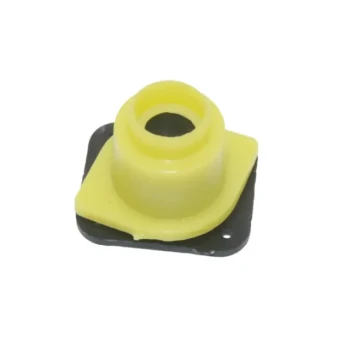
In a natural hive, bees only produce significant amounts of royal jelly to raise a new queen. Queen cell cups are designed to simulate the specific geometry of a natural queen cell.
When a larva is placed inside this cup, the colony perceives it as a potential queen. This triggers a biological imperative in nurse bees to fill the cup with royal jelly.
Triggering the Nursing Instinct
The primary role of these tools is psychological manipulation of the hive. By grafting larvae into artificial cups, producers induce the nursing bees' instinct.
The bees respond by secreting large quantities of jelly to feed the larvae. This accumulation is the harvestable product, usually collected around the fourth day after grafting.
The Specific Role of Queen Cell Cups
Standardization for Extraction
Unlike natural comb, which is irregular, artificial queen cell cups have precise, standardized dimensions.
This standardization is critical for efficiency. It ensures that the secretion efficiency is uniform across the hive and allows for the use of mechanical or semi-mechanical collection devices later in the process.
Material Impact on Yield
The material of the cup directly influences the "acceptance rate"—how likely the bees are to care for the larva.
Natural beeswax cups offer the highest biocompatibility and are most readily accepted by workers, leading to maximum production.
Industrial plastic cups are durable and reusable but have lower acceptance rates. To solve this, plastic cups are often treated with a beeswax coating. This hybrid approach maintains mechanical strength while simulating natural texture to increase yield.
The Specific Role of Precision Grafting Tools
Ensuring Larval Survival
Grafting needles are used to physically transfer larvae of a specific age from the brood comb to the queen cup.
High-precision tools are required to ensure the survival rate of the larvae. If the larva is damaged during transfer, the bees will clean out the cup rather than fill it with royal jelly.
Enabling Mass Production
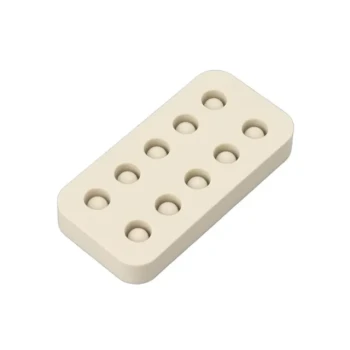
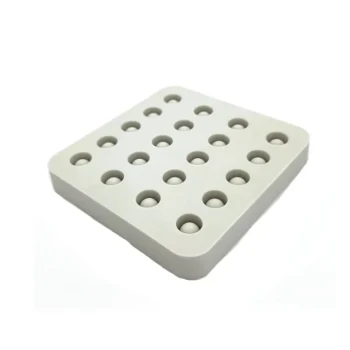
These tools allow for the use of specialized grafting frames, which hold dozens of cups in a centralized structure.
By using precision tools to populate these frames, apiaries can achieve synchronous mass rearing. This converts a delicate manual process into a standardized workflow suitable for large-scale collection.
Understanding the Trade-offs
Durability vs. Acceptance
Producers often face a choice between operational longevity and biological optimization.
Plastic cups are highly durable and fit perfectly into automated extraction machinery. However, without a beeswax coating, the lower acceptance rate can significantly reduce the total volume of royal jelly per hive.
Handling Sensitivity
While precision tools enable the process, the physical extraction of jelly poses a risk.
Harvesting devices must be calibrated to minimize mechanical damage to the jelly's composition. Improper handling during extraction can degrade the purity and commercial value of the final product.
Making the Right Choice for Your Goal
When selecting equipment for royal jelly production, your choice should align with your scale and quality targets.
- If your primary focus is maximum yield per hive: Prioritize natural beeswax cups or wax-coated plastic cups to ensure the highest possible acceptance rate by the nurse bees.
- If your primary focus is operational scalability: Invest in standardized grafting frames and durable plastic systems that integrate seamlessly with mechanical extraction equipment.
Success in royal jelly production lies in balancing the biological needs of the bee with the mechanical requirements of the harvest.
Summary Table:
| Tool Type | Primary Role | Key Benefit | Material Impact |
|---|---|---|---|
| Queen Cell Cups | Simulates queen cell geometry | Triggers nursing instinct for mass secretion | Beeswax increases acceptance; Plastic offers durability |
| Grafting Tools | Larval transfer to cups | Ensures larval survival for successful harvest | Precision tips prevent damage to delicate larvae |
| Grafting Frames | Centralized cup housing | Enables synchronous mass production | Standardized layouts allow for mechanical extraction |
Scale Your Royal Jelly Production with HONESTBEE
As a professional beekeeper or distributor, your success depends on the delicate balance between biological efficiency and industrial scalability. HONESTBEE provides the precision-engineered equipment you need to tip the scales in your favor. From high-acceptance beeswax-coated cell cups and ultra-fine grafting needles to advanced honey-filling and hive-making machinery, we supply the comprehensive tools required for modern commercial apiaries.
Partner with us to access wholesale beekeeping hardware and essential consumables designed for maximum yield and durability. Contact HONESTBEE today to discover how our specialized portfolio can streamline your operations and grow your business!
References
- Alperen Varalan, Mustafa Bahadır ÇEVRİMLİ. Kars İlinde Arıcılık İşletmelerinin Sosyo-Ekonomik Yapısı Üzerine Bir Araştırma. DOI: 10.47027/duvetfd.1330239
This article is also based on technical information from HonestBee Knowledge Base .
Related Products
- Clear Black Plain Polystyrene Queen Bee Grafting Cell Cups No Lug for Bee Queen Cup
- Stainless Steel Queen Grafting Tool for Beekeeping and Bee Queen Grafting
- JZBZ Type Wide Base Plastic Queen Cell Cups for Base Mounting and Queen Rearing
- JZBZ Push-In Queen Cell Cups for Beekeeping
- Plastic Chinese Queen Grafting Tool for Bee Queen Rearing
People Also Ask
- What materials are used to make artificial queen cell cups for grafting? Beeswax vs. Plastic Guide
- What role do specialized queen rearing tools play in developing mite-resistant honeybee stock? Master Genetic Selection
- What roles do specialized queen cell cups play in royal jelly production? Optimize Your Hive's Secretion and Yield
- What types of cell cups are commonly used in grafting? Plastic vs. Wax for Queen Rearing Success
- Why is a diluted royal jelly solution applied to queen cell cups? Boost Acceptance in Artificial Grafting