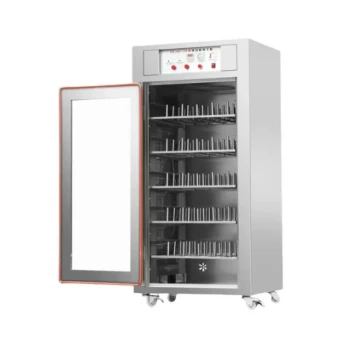
Specialized freezing and drying equipment provide critical control over the biological stability of pollen. High-precision freezing units operating at -20 °C serve as an immediate preservation mechanism, halting biochemical activity to maintain the sample's original profile. Complementing this, constant-temperature drying equipment operating at 40 °C executes standardized dehydration, removing moisture to ensure physical stability for accurate weighing and extended preservation.
By combining immediate biochemical termination with controlled moisture removal, these technologies transform highly perishable raw pollen into a stable, measurable resource without compromising its nutritional or bioactive integrity.
The Role of High-Precision Freezing
Immediate Biochemical Termination
The primary function of freezing equipment is to act as a biological brake. By rapidly bringing samples to -20 °C, the equipment immediately terminates ongoing biochemical reactions within the pollen. This effectively freezes the sample in time, ensuring that the chemical composition analyzed later matches the state of the pollen at the moment of collection.
Prevention of Early Degradation
Fresh pollen is biologically active and vulnerable to rapid decay. Freezing prevents the onset of microbial degradation before processing can continue. This step is non-negotiable for preserving the original characteristics of the pollen against bacterial or fungal activity that would otherwise occur at room temperature.
The Function of Constant-Temperature Drying
Standardized Dehydration
Drying equipment operating at a precise 40 °C is essential for reducing the naturally high water content of fresh pollen. This specific thermal application provides standardized dehydration, ensuring every batch reaches a consistent physical state. This consistency is strictly required for accurate weighing and scientific quantification of the resource.
Inhibiting Microbial Growth
Moisture is the catalyst for spoilage in pollen. By removing excess water, drying equipment creates an environment where mold and bacteria cannot thrive. This effectively extends the shelf life of the product, making it safe for long-term storage or commercial distribution.
Preservation of Bioactive Compounds
Unlike natural sun drying, which exposes samples to damaging ultraviolet radiation, specialized equipment uses controlled heat and airflow. This protects sensitive components, such as Vitamin B complexes and antioxidant substances. The 40 °C threshold is carefully selected to evaporate water without thermally destroying these valuable nutritional elements.
Understanding Operational Trade-offs
Thermal Precision vs. Processing Speed
There is a delicate balance between drying speed and nutrient retention. While higher temperatures might dry pollen faster, exceeding 40 °C risks degrading heat-sensitive bioactives. Operators must rely on the equipment's ability to maintain a uniform thermal field to dry samples efficiently without crossing this thermal threshold.
Equipment Cost vs. Uniformity
Industrial convective drying systems use circulating heated air to create a uniform thermal field. While this is a cost-effective core choice for small to medium enterprises, it requires rigorous maintenance of the airflow systems. Poor air circulation can lead to uneven drying, resulting in "wet spots" that become focal points for spoilage.
Making the Right Choice for Your Goal
To maximize the value of your pollen resources, align your processing steps with your specific end-goals:
- If your primary focus is scientific accuracy: Prioritize immediate freezing at -20 °C to create an unaltered chemical snapshot of the sample for analysis.
- If your primary focus is commercial shelf-life: Focus on standardized drying at 40 °C to effectively inhibit mold growth while retaining Vitamin B stability.
- If your primary focus is processing efficiency: Utilize industrial convective drying to balance high throughput with the maintenance of a uniform thermal environment.
The precise coordination of freezing to stop biology and drying to stabilize physics is the foundation of high-quality pollen processing.
Summary Table:
| Equipment Type | Operating Temperature | Primary Function | Key Benefit |
|---|---|---|---|
| High-Precision Freezer | -20 °C | Biochemical Termination | Halts degradation; preserves original chemical profile |
| Constant-Temp Dryer | 40 °C | Standardized Dehydration | Removes moisture; enables accurate weighing & storage |
| Industrial Convection | Controlled Airflow | Uniform Thermal Field | High-throughput processing without nutrient loss |
Maximize Your Pollen Resource Value with HONESTBEE
For commercial apiaries and distributors, maintaining the bioactive integrity of pollen is the key to market success. HONESTBEE provides the professional-grade beekeeping tools, specialized machinery, and processing equipment you need to transform raw pollen into high-value stable resources.
From advanced hive-making technology to specialized drying solutions, we empower your business with equipment designed for precision and durability. Partner with HONESTBEE today to access our comprehensive wholesale portfolio and industry expertise.
Contact Our Specialists to Upgrade Your Facility
References
- Nuno Capela, José Paulo Sousa. Exploring the External Environmental Drivers of Honey Bee Colony Development. DOI: 10.3390/d15121188
This article is also based on technical information from HonestBee Knowledge Base .
Related Products
- HONESTBEE Professional Cabinet Bottle Dryer
- Stainless Steel Pail Perch Bucket Bench
- 0.5T Capacity Honey Dehumidifier Dryer with Vacuum Heating and Thickening Filtering Machine
- Economy Small Scale Honey Dryer Dehumidifier Thickening Machine
- Professional Plastic Honey Dipper for Easy Honey Drizzling
People Also Ask
- Why use a Cabinet Drier for pollen at 38–41°С? Protect Sample Integrity and Heavy Metal Data Accuracy
- What is the role of an industrial forced-air drying oven in bee bread fermentation? Optimize Moisture and Nutrients
- What is the primary purpose of a constant temperature drying oven in bee bread production? Achieve Perfect Fermentation
- How do forced circulation drying ovens sterilize beekeeping tools? Efficient Oxidation for Metal Equipment Safety
- What are the technical requirements for using a constant temperature drying oven for raw propolis? Expert Guide