For standardized commercial honey production, Langstroth hives are generally the stronger choice. Their vertical, modular boxes and reinforced removable frames align with standardized handling, palletization, uncapping, and centrifugal extraction systems. Top Bar hives use a horizontal body and free-hanging comb, which can simplify small-scale management but usually requires manual cutting, pressing, or straining during harvest.
The central difference is not simply hive shape—it is whether the entire operation is built around reusable framed comb and mechanized processing. Langstroth systems support modular expansion and repeatable throughput, while Top Bar systems favor simpler, lower-disturbance management at the cost of processing standardization.
How the Hive Structures Differ
Langstroth: vertical and modular
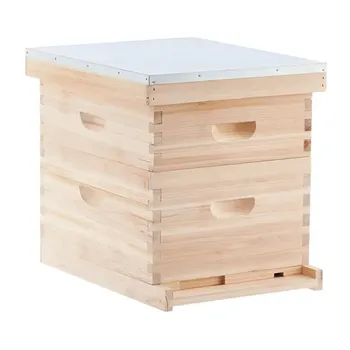
A Langstroth hive consists of stacked rectangular boxes, such as brood boxes and honey supers. Each box contains removable frames that guide and support comb construction.
This modular arrangement allows operators to add or remove supers as colony size and honey flow change. Standard components can also be replaced, rearranged, cleaned, and reused across colonies.
Top Bar: horizontal and single-box oriented
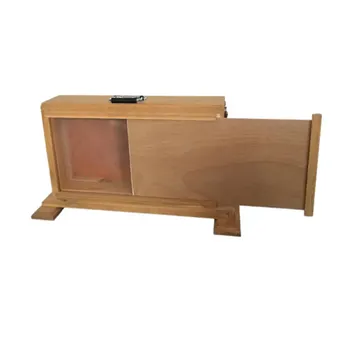
A Top Bar hive is generally wider and shorter, with individual bars spanning the top of a horizontal hive body. Bees build comb downward from each bar without enclosing it in a four-sided frame.
Many Top Bar designs use inward-sloping walls to reduce the likelihood that bees attach comb to the hive sides. This supports individual-bar inspection, but the comb remains structurally more exposed than framed Langstroth comb.
The key structural distinction
Langstroth frames provide wooden support on all sides of the comb. Top Bar comb usually has support only at its upper edge.
That difference affects nearly every downstream activity: lifting, transporting, inspecting, extracting, storing, and returning comb to the colony.
Why Modularity Matters to Commercial Operators
Interchangeable Langstroth components
Standardized Langstroth woodenware typically includes boxes, frames, supers, bottom boards, and related components designed to work together. Operators can move compatible frames between colonies or replace damaged parts without rebuilding an entire hive system.
For distributors and commercial buyers, this modularity also simplifies product selection, inventory planning, replacement orders, and customer support.
Limited interchangeability in Top Bar systems
Top Bar equipment is less compatible with the framed-comb ecosystem. Bars may vary in length, spacing, and construction between hive designs or suppliers.
This makes it important to confirm dimensions and replacement-part availability before standardizing a commercial apiary or stocking equipment for multiple customers.
Expansion follows different principles
Langstroth hives expand vertically by adding supers. This creates a compact footprint and a familiar workflow for operations already using standard lifting, transport, and storage systems.
Top Bar hives expand horizontally within the hive body. That can make individual comb access straightforward, but it does not provide the same box-and-super architecture for rapid modular scaling.
How Structure Affects Honey Harvesting
Langstroth frames support centrifugal extraction
The four-sided Langstroth frame reinforces the comb during handling and spinning. After uncapping, intact frames can be placed in centrifugal extractors designed for standardized frame dimensions.
Once extracted, the drawn comb can generally be returned to the hive. This preserves the comb structure and reduces the amount of new wax construction required before the colony can store additional honey.
Top Bar comb requires non-centrifugal processing
Top Bar comb lacks the side and bottom frame support needed for routine centrifugal extraction. Spinning it can cause the comb to break apart.
The usual alternatives are cutting and straining, crushing and straining, or using a suitable honey press. These methods can produce quality honey and recover beeswax, but they destroy the original comb and require a different production workflow.
Processing equipment becomes a strategic decision
Langstroth operations may require uncapping equipment, capping tanks, and extractors, but these tools support repeatable, high-throughput processing.
Top Bar operations can harvest with simpler tools, but that apparent equipment saving shifts more work into manual cutting, pressing, filtering, handling, and cleanup. The right comparison is therefore total processing capacity, not equipment purchase price alone.
Effects on Inspection and Labor
Langstroth supports systematic colony management
Removable frames allow operators to inspect brood, honey stores, and colony condition in a consistent format. Frames can also support colony division, cleaning, and controlled reuse.
The trade-off is that removing frames can disturb the colony more than inspecting individual Top Bar combs in place. Commercial crews must therefore use disciplined inspection procedures and appropriate handling methods.
Top Bar inspection can reduce heavy lifting
Because the hive is horizontal and individual bars are accessed one at a time, operators do not need to lift heavy stacks of boxes during routine inspection.
This can be valuable where simple manual handling is a priority. However, the unsupported comb requires careful handling, especially when it is full of honey or exposed to heat and movement.
Comb replacement affects labor and yield
When Top Bar comb is cut away for harvest, bees must rebuild comb before using that space again. Wax production consumes colony resources and reduces the operational advantage of returning intact drawn comb.
Langstroth systems retain more of the existing comb after extraction, which is important for operators seeking repeatable seasonal throughput.
Mechanical Compatibility and Logistics
Langstroth fits established commercial infrastructure
Standard Langstroth frames are designed to integrate with common honey-processing and apiary-handling equipment. This includes centrifugal extractors, uncapping machinery, transport pallets, and storage systems built around framed comb.
This compatibility reduces the need for custom equipment and makes it easier to scale a facility in stages.
Top Bar systems need a separate workflow
Top Bar operations generally need tools for comb cutting, crushing, pressing, and straining rather than a conventional framed-comb extraction line.
They may also require different handling methods for transport and temporary storage because unsupported comb is more vulnerable to breakage. A Top Bar operation can be commercial, but its equipment ecosystem is less standardized.
Standardization must include the supply chain
A hive is only one part of a commercial system. Operators should also standardize replacement bars or frames, boxes, lids, pallets, extraction equipment, protective equipment, and cleaning procedures.
For resellers and distributors, offering a compatible product portfolio is particularly important. A low-cost hive that creates later incompatibility with processing or replacement parts can increase the customer’s total operating cost.
Understanding the Trade-offs
Langstroth’s main disadvantages
Langstroth systems require more specialized equipment and can involve heavier lifting, particularly when supers are full. Routine frame removal may also create more colony disturbance than selective Top Bar inspection.
The system is therefore strongest where operators can justify investment in handling and extraction infrastructure.
Top Bar’s main disadvantages
Top Bar hives are less compatible with standard centrifugal extraction and produce a more labor-intensive harvest workflow. Destroying comb during processing also means the colony must repeatedly invest resources in rebuilding it.
Their bars and comb may additionally be less convenient for standardized transport, storage, and interchange between colonies.
Avoid comparing only initial equipment cost
Top Bar systems may appear economical because harvesting can use basic utensils and simple straining equipment. Langstroth systems have higher equipment requirements, but they can deliver greater process consistency and preserve drawn comb for reuse.
Commercial buyers should compare labor, throughput, wax replacement, equipment compatibility, and fulfillment requirements over the full operating cycle.
Avoid mixing incompatible standards
Langstroth equipment is widely standardized, but not every component is automatically interchangeable across all manufacturers or regional conventions. Buyers should verify frame dimensions, box specifications, extractor compatibility, and pallet requirements before placing large orders.
The same principle applies even more strongly to Top Bar equipment, where bar dimensions and hive construction can vary substantially.
Making the Right Choice for Your Goal
The best selection depends on whether the apiary is optimizing for processing scale or simplified, low-disturbance management.
- If your primary focus is standardized honey throughput: Choose a Langstroth system with compatible frames, supers, uncapping equipment, extractors, and transport infrastructure.
- If your primary focus is simple manual harvesting: Consider Top Bar hives, provided the operation accepts cutting, pressing, or straining comb instead of centrifugal extraction.
- If your primary focus is equipment interchangeability: Standardize on Langstroth components from a consistent specification and verify compatibility across suppliers.
- If your primary focus is reduced lifting during inspection: Evaluate Top Bar designs, while accounting for their horizontal footprint and more delicate comb.
- If your primary focus is distributor or reseller service: Build a complete compatible portfolio and confirm replacement-part availability, dimensions, response times, and delivery capacity before recommending a hive standard.
For commercial apiaries pursuing repeatable, scalable honey production, Langstroth is usually the more practical structural platform because it connects hive design directly to reusable comb and mechanized processing.
Summary Table:
| Aspect | Langstroth Hive | Top Bar Hive |
|---|---|---|
| Structure | Vertical, modular boxes with fully framed combs | Horizontal, single-box with free-hanging comb |
| Expansion | Vertical by adding supers; compact footprint | Horizontal within the hive body |
| Harvesting | Centrifugal extraction with reusable frames | Manual cutting/pressing/straining; comb destroyed |
| Inspection | Heavier lifting but systematic, consistent format | Light lifting, selective comb access, delicate handling |
| Equipment | Extractor, uncapping machine, pallets; standardized | Basic tools; less standardized workflow |
| Best Fit | Standardized, scalable honey production | Simple, low-disturbance manual harvesting |
Choose the right hive system for your commercial apiary with HONESTBEE. Our comprehensive wholesale portfolio includes Langstroth and Top Bar hives, frames, supers, extractors, and full processing lines—plus OEM/ODM support, certifications, and rapid delivery. Contact us today to optimize your honey production and supply chain reliability. Get in touch.
Related Products
- High-Performance Langstroth Bee Hives for Global Professional Beekeeping
- Langstroth Honey Bee Box Hive Boxes for Different Depths
- Australian Langstroth Beehive Boxes for Beekeeping Wholesales
- Long Langstroth Style Horizontal Top Bar Hive for Wholesale
- Professional Observation Hive: The Ultimate Portable Solution for Beekeeping Education, Exhibitions, and Colony Displays
People Also Ask
- Why is the adoption of modern movable-frame hives, such as Langstroth hives, advantageous over traditional hive equipment for commercial apiaries? Key Benefits for Scalable Beekeeping
- What are the structural and yield differences between traditional primitive beehives and modern standard wooden hives (such as Langstroth hives) for commercial honey producers? Discover why modern hives boost yield and efficiency.
- How does transitioning to modern hives boost honey yield? Increase production and product quality for your commercial apiary
- How do Langstroth and Dadant standard beehives compare regarding brood chamber management and component compatibility? Find the Perfect Fit for Your Apiary
- What are the key operational differences and structural trade-offs between Langstroth beehives and top-bar beehives for apiary management? Discover which hive system fits your operational needs.