Commercial colonies are best protected by combining tight hive construction with controlled access, sanitation, and standardized pest-management equipment. Precision-machined boxes with sealed joints, properly fitted frames, entrance reducers, pest-resistant stands, cleanable bottom boards, and monitoring traps limit entry points and remove breeding conditions for wax moths, beetles, wasps, and other predators. Standardized equipment also lets teams inspect, split, clean, and isolate affected colonies before an infestation spreads across the apiary.
The core principle is defense in layers: strong colonies provide the biological defense, while well-sealed hive hardware, restricted entrances, elevated stands, removable debris-control components, and protected frame storage provide the physical and operational defense.
Build Hives That Eliminate Pest Entry Points
Use precision-machined, tightly fitted components
Hive bodies, covers, bottom boards, and frames should fit together accurately, with tight-fitting joints and minimal gaps.
Cracks, warped timber, loose corners, and unmanaged recesses can give wax moths protected locations to lay eggs. Commercial equipment should therefore use consistent dimensions, sound materials, and durable joints that remain aligned through repeated handling.
Maintain secure frame and box interfaces
Frames should sit correctly within the hive body without excessive side or end gaps. Properly fitted components reduce hidden spaces where pests can enter while preserving the bee space required for healthy colony operation.
Damaged or distorted frames should be repaired or removed promptly. Broken timber and deteriorated comb create both access points and additional organic material for pests.
Prioritize smooth, inspectable internal surfaces
Hive interiors should avoid unnecessary cavities and inaccessible corners where wax fragments, pollen, dead bees, and other debris can accumulate.
The best commercial designs make internal surfaces easy to inspect and clean. This is particularly important for beetles and other detritus-feeding pests that benefit from accumulated hive debris.
Control the Hive Entrance
Install adjustable entrance reducers
Entrance reducers limit the number and size of access points that pests can use. They are especially important when colonies are weak, recovering after swarming, or facing seasonal shortages.
An 8 mm slot entrance is one example of a restricted opening described for blocking larger intruders while allowing worker bees to pass. The correct opening must still match colony strength, ventilation needs, and local operating conditions rather than being treated as a universal setting.
Add robbing screens and predator barriers
Robbing screens can help reduce direct access by wasps and other attackers while allowing resident bees to use a controlled entrance path.
Specialized wasp traps may provide an additional perimeter defense, particularly where predatory wasps attack adult bees or raid honey stores. These devices supplement—not replace—colony inspection and entrance management.
Match entrance size to colony strength
A strong colony can defend a larger entrance more effectively than a small or declining colony. Entrance dimensions should therefore be adjustable so beekeepers can reduce exposure during vulnerable periods and reopen the hive as population and conditions improve.
Design the Hive Base for Pest Monitoring
Use removable and cleanable bottom boards
Bottom boards should be easy to remove, inspect, and clean without excessive disturbance to the colony.
Regular cleaning removes wax fragments, dead insects, and other debris that can support beetle activity. A bottom board that cannot be accessed efficiently turns sanitation into a labor-intensive task and is less suitable for commercial operations.
Incorporate traps or monitoring surfaces
Bottom-board traps and monitoring inserts help reveal pest presence before visible damage becomes extensive. They can also collect debris and provide a practical inspection point beneath the brood area.
For distributors and commercial users, compatible replacement inserts and standardized trap dimensions are important. Consumables should be readily available so monitoring does not stop when a component becomes soiled or damaged.
Protect the hive from ground pests
Hives should be mounted on elevated, stable stands rather than placed directly on the ground. Elevation reduces exposure to ants, termites, crawling predators, moisture, and ground-level debris.
The stand should support the hive securely, resist deterioration, and permit inspection beneath the bottom board. Stability matters because vibration and leaning equipment can disrupt colonies and complicate servicing.
Protect Stored Combs and Spare Equipment
Separate vulnerable stored equipment from active colonies
Wax moths can damage stored supers, brood frames, and beeswax foundation even when active colonies are not visibly affected. Unprotected storage therefore creates a separate infestation pathway for the apiary.
Stored frames should be kept in specialized racks, airtight equipment bags, or suitable controlled-storage systems. Storage areas should be cool, clean, and routinely monitored.
Remove degraded comb and contaminated material
Old, damaged, or heavily infested comb should not be returned to service without appropriate treatment. During dearth periods, removing unnecessary or degraded comb reduces the habitat available to wax moth larvae.
Clean beeswax foundation and usable comb should be stored in well-lit, cool conditions where possible. Any cold-storage or fumigation approach must follow approved product instructions, local regulations, and worker-safety requirements.
Avoid transferring infestation through equipment
Frames, boxes, and tools can move pests between colonies. Standardized equipment makes it easier to label, isolate, clean, and inspect components before they are redeployed.
A commercial operation should define a clear quarantine process for affected equipment rather than moving it directly into clean apiary areas.
Standardize Equipment for Faster Colony Protection
Use interchangeable hive dimensions
A standardized hive system allows teams to exchange compatible boxes, frames, entrance reducers, bottom boards, and dividers without modification.
This supports rapid split inspections, frame replacement, colony equalization, and removal of affected material. It also simplifies purchasing and reduces the risk of incompatible parts remaining unused during an infestation.
Provide protective dividers and isolation hardware
Specialized dividers can restrict the usable hive space and help a weak colony defend its comb more effectively. They also provide a physical barrier against pest movement within the equipment.
Dividers should fit securely, be durable, easy to clean, and compatible with the hive dimensions used across the operation.
Design for low-disruption inspection
Equipment should allow inspection once or twice per week when conditions require monitoring, without forcing unnecessary daily disturbance.
Accessible covers, removable bottom boards, secure but serviceable fasteners, and consistent frame spacing help technicians inspect colonies efficiently while limiting stress on the bees.
Combine Hardware With Colony and Apiary Management
Maintain strong, populous colonies
Strong colonies are the primary natural defense against wax moths. Adequate bee populations can patrol comb surfaces and restrict the ability of moths and larvae to establish.
Hive hardware is most effective when colony strength, queen performance, and food stores are also maintained. Equipment cannot compensate for a persistently weak or starving colony.
Remove organic debris and damaged timber
Sanitation should include cleaning bottom boards, removing wax scraps, and repairing or replacing cracked hive timber. Pest control begins by removing both access points and food sources.
Particular attention should be given to joints, corners, and areas that are difficult to see during routine inspections.
Inspect on a consistent schedule
Commercial apiaries should monitor colonies regularly for wax moths, beetles, wasps, ants, termites, and other threats. A routine of once or twice per week may be appropriate during active risk periods, while daily inspections should generally be avoided because repeated disruption stresses colonies.
Inspection records should identify weak colonies, damaged equipment, pest findings, and any frames placed into storage or quarantine.
Understanding the Trade-offs
Tighter construction requires better manufacturing and maintenance
Precision-machined, well-sealed equipment usually costs more than poorly fitted boxes and demands quality control during production.
However, the higher initial specification can reduce recurring losses, labor, replacement costs, and pest spread. Sealing alone is not permanent; timber movement, impact damage, and repeated handling can reopen gaps.
Smaller entrances improve defense but restrict airflow and traffic
Entrance reducers make defense easier for weak colonies and limit access by larger pests. If used too aggressively, they can restrict bee movement, ventilation, or temperature management.
They should be adjustable and selected according to colony population, season, weather, and local pest pressure.
Monitoring equipment adds labor
Traps, removable inserts, and inspection components only provide value when they are checked and cleaned consistently.
A simple, durable system that staff actually service is more effective than a complex design that is difficult to access or lacks replacement parts.
Stored-comb protection requires dedicated infrastructure
Racks, airtight bags, cold storage, and other protective systems require space, inventory control, and operating procedures.
The trade-off is justified when stored comb represents a significant commercial asset. Unprotected frames can become a reservoir that reinfests active colonies.
Making the Right Choice for Your Goal
The most effective commercial specification is a coordinated portfolio rather than a single pest-control product.
- If your primary focus is hive manufacturing or wholesale distribution: Prioritize precision-machined boxes, standardized dimensions, tight joints, adjustable entrance reducers, removable bottom boards, compatible traps, and durable elevated stands.
- If your primary focus is apiary protection: Combine strong colony management with restricted entrances, cleanable bottom boards, routine inspections, pest traps, and rapid isolation of affected frames.
- If your primary focus is stored-comb preservation: Offer frame racks, airtight equipment bags, cool or controlled storage options, and clearly defined inspection and quarantine procedures.
- If your primary focus is operational efficiency: Standardize components across the apiary so crews can exchange frames, dividers, bottom boards, and reducers quickly without compatibility problems.
- If your primary focus is reliable sourcing: Select suppliers able to provide the full equipment system—hive bodies, frames, barriers, traps, stands, storage products, and replacement consumables—with consistent specifications and rapid fulfillment.
With standardized, well-sealed equipment and disciplined colony management, commercial beekeepers can turn pest control from emergency response into a repeatable system of prevention.
Summary Table:
| Feature/Equipment | Pest Defense Role | Best Practice |
|---|---|---|
| Precision-machined boxes | Eliminate pest entry points | Ensure tight-fitting joints and minimal gaps |
| Adjustable entrance reducers | Limit pest access | Use 8mm slot for weak colonies; adjust to colony strength |
| Removable bottom boards | Facilitate monitoring and cleaning | Regularly clean debris and inspect traps |
| Elevated stands | Reduce ground pests and moisture | Use stable, durable stands |
| Stored comb protection | Prevent infestation of spare combs | Use racks, airtight bags, and cool storage |
| Standardized dimensions | Enable rapid inspection and quarantine | Use interchangeable parts across apiary |
| Strong colony management | Natural defense against pests | Maintain populous colonies and sanitation |
Protect your commercial apiary with HONESTBEE's comprehensive line of beekeeping equipment and supplies. From precision-machined hives to pest monitoring traps and storage solutions, we offer one-stop sourcing for all your needs. As a trusted B2B partner, we provide rapid response, dedicated service, and ultra-fast delivery. For distributors and wholesalers, our OEM/ODM support, certifications, and reliable supply chains ensure your profitability. Contact us today to fortify your colonies against pests and enhance your operational efficiency. Get in touch with us now!
Related Products
- Professional Reversible Beehive Hive Entrance
- Metal Hive Feet Bee Hive Stand for Ant Protection
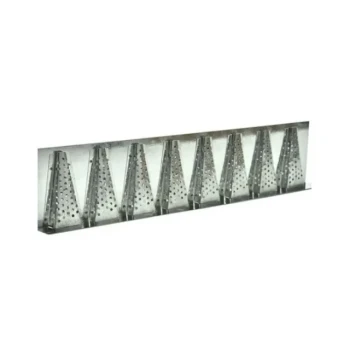
- 8-Cone Galvanized Steel Bee Robber Guard
- High-Performance Langstroth Bee Hives for Global Professional Beekeeping
- Professional Insulated Plastic Bee Hives
People Also Ask
- Where is the hive entrance typically located? Optimize Your Hive's Health and Honey Production
- What role does the size of the entrance play in hive ventilation? Master Beehive Climate Control
- What roles does the hive entrance (piquera) play in beehive management and colony health? Essential Guide for Pro Apiaries
- What are the primary advantages of providing a smaller entrance for a beehive? Boost Defense and Winter Survival
- Why adjust beehive entrance size for humidity? Boost Honey Ripening and Varroa Control in Commercial Apiaries