Commercial suppliers should not treat Apis cerana equipment as a smaller version of standard Apis mellifera equipment. They must adapt hive dimensions, frame geometry, comb spacing, entrances, materials, and machinery settings to suit smaller colonies and different nesting behavior. The equipment should remain compatible with local management practices while offering enough standardization for inspection, transport, and honey processing.
The central requirement is species-specific modularity: suppliers need adjustable hive and frame-making systems that can produce smaller, correctly spaced components without compromising bee space, structural strength, or operational efficiency.
Why Apis cerana Requires Different Equipment
Smaller body size affects frame geometry
Apis cerana workers are smaller than Apis mellifera workers. As a result, standard mellifera frame dimensions and spacing may create excessive internal volume, inefficient comb use, or unsuitable bee-space conditions.
Suppliers should offer reduced frame dimensions, narrower comb foundation spacing, and appropriately scaled frame supports rather than simply using standard Langstroth components.
Smaller colonies need less internal volume
Apis cerana colonies generally reach lower peak populations than Apis mellifera colonies. Their hive bodies and supers should therefore provide sufficient room for brood and stores without creating an oversized cavity that is difficult for the colony to defend or regulate.
Smaller, modular boxes can reduce wasted space and make colonies easier to inspect, move, and maintain in forested or rugged production areas.
Nesting behavior must influence hive design
Apis cerana is commonly managed in smaller wooden box systems or other localized hive formats rather than relying exclusively on standard mellifera Langstroth dimensions. Equipment suppliers should therefore support regional hive configurations, not assume that one global box format will suit every apiary.
Technical Adjustments for Hive Suppliers
Provide smaller, configurable hive bodies
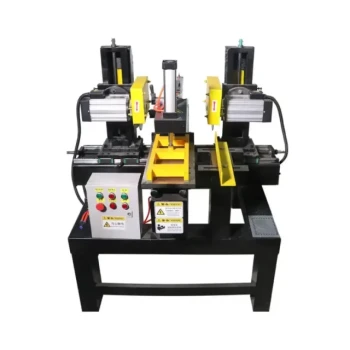
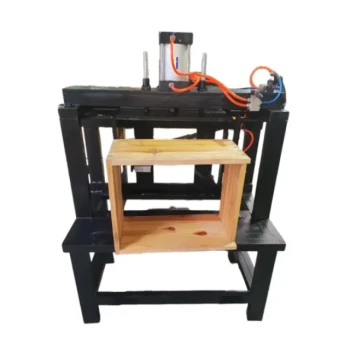
Hive-making equipment should be capable of producing multiple box lengths, widths, and depths. Adjustable cutting, drilling, and assembly fixtures are more valuable than machinery dedicated to only one standard mellifera format.
This allows distributors to supply:
- Smaller brood chambers
- Reduced-capacity honey supers
- Compact nucleus or split boxes
- Regional tetragon-style hive bodies
- Lightweight boxes for difficult terrain
The objective is not to minimize every dimension indiscriminately. Internal proportions must be tested so that the colony can maintain an effective brood nest and defend the cavity.
Preserve correct bee space
Reduced hive dimensions must still maintain the correct clearance between frames, walls, and adjacent comb surfaces. If the spacing is too large, bees may build brace comb or cross-comb; if it is too small, bees may be crushed during frame removal.
For this reason, machinery should provide precise and repeatable tolerances for frame rests, rabbet joints, box dimensions, and internal spacing. Suppliers should validate the finished equipment with local Apis cerana colonies rather than relying only on nominal drawings.
Modify hive entrances
Apis cerana equipment may require smaller entrance slits or other entrance configurations that better match the colony’s size and defensive behavior.
Depending on the local management system, suppliers may need to provide:
- Narrower entrance openings
- Adjustable entrance reducers
- Smaller landing zones
- Double-entrance configurations where appropriate
- Replaceable entrance blocks for seasonal adjustment
Entrance components should be easy to change because colony strength, weather, forage availability, and pest pressure vary throughout the production cycle.
Improve ventilation and weather adaptability
Apis cerana is kept across forest, plantation, temperate, and mountainous environments. Hive designs should therefore accommodate local humidity, rainfall, temperature variation, and transport conditions.
Useful design features include raised floors, replaceable screens or inserts, weather-resistant roofs, drainage provisions, and secure ventilation options. These features should be adapted without creating excessive drafts or an internal cavity that is too large for the colony to control.
Adjustments Required in Frame-Making Machinery
Use adjustable frame-making fixtures
Frame-making machinery designed only around standard Apis mellifera frames may not accept the shorter or narrower components needed for Apis cerana.
Suppliers should consider machinery with:
- Adjustable cutting stops
- Interchangeable jigs
- Variable frame-length settings
- Replaceable drilling templates
- Adjustable nail or staple positions
- Quick-change assembly fixtures
This allows one production line to serve both species and reduces the need for separate machinery inventories.
Scale foundation and wax-handling systems
Comb foundation should match the intended frame dimensions and spacing. Oversized foundation sheets can be difficult to install correctly and may encourage poor comb placement.
Foundation-related equipment should support smaller sheet formats, accurate trimming, secure attachment, and consistent alignment. When foundation is not used, frame designs should still guide the colony toward orderly movable comb construction.
Maintain structural strength at smaller dimensions
Smaller frames do not automatically justify lighter construction in every component. Frames must withstand inspection, transport, honey loading, and extraction without twisting or breaking.
The correct approach is optimized construction, not simply thinner materials. Suppliers should assess wood quality, joint design, wire placement, foundation support, and handling loads for the specific frame format.
Add inspection and quality-control checkpoints
Small dimensional errors can cause major management problems in movable-frame hives. Frame-making lines should verify:
- Frame squareness
- Top-bar and bottom-bar alignment
- Consistent side-bar spacing
- Correct frame-rest dimensions
- Smooth internal surfaces
- Secure joints and fasteners
Quality control is particularly important when supplying large batches to distributors or assembling mixed-format orders.
Designing Machinery for Commercial Flexibility
Build one platform with multiple format options
For distributors and wholesalers, the most commercially useful solution is usually a multi-format production platform rather than a completely separate Apis cerana machinery line.
Interchangeable tooling allows the same equipment to produce:
- Standard Apis mellifera frames
- Smaller Apis cerana frames
- Nucleus-box components
- Custom regional hive parts
- Replacement frames for older local systems
This reduces capital expenditure and simplifies spare-parts management for customers.
Specify the required format before quoting
Suppliers should obtain detailed information before recommending equipment. The order specification should identify the bee species, local hive model, frame dimensions, foundation type, production volume, and intended assembly method.
A short technical questionnaire can prevent costly errors, especially when a buyer uses the term “Asian hive” to describe several different local designs.
Offer rapid format changes and technical support
Commercial buyers may need to switch between species-specific products or supply different regional markets. Machinery with quick-change tooling, clear setup instructions, and responsive technical support creates more value than a nominally faster machine that cannot handle format variation.
Suppliers should provide drawings, sample components, changeover procedures, and dimensional confirmation before full-scale production.
Matching Processing Equipment to Apis cerana Operations
Avoid oversizing extraction capacity
Apis cerana colonies generally produce less honey per colony and maintain smaller populations than commercial Apis mellifera colonies. A high-capacity extractor or automated line designed for large mellifera operations may be inefficient for smaller apiaries.
Compact radial or tangential extractors, smaller uncapping systems, and flexible honey-handling equipment may be more appropriate, particularly where apiaries are distributed across rugged terrain.
Confirm frame compatibility with extractors
A smaller frame must fit securely in the extractor basket. It should not move, collapse, or contact the machine during rotation.
Suppliers should verify basket dimensions, frame support points, rotational balance, and maximum safe speed for each frame format. Adaptable baskets or interchangeable cages can allow one extractor to serve both species.
Design for smaller and more variable batches
Apis cerana operations may involve lower-volume harvesting and more frequent movement between smaller apiary sites. Equipment should be easy to clean, transport, assemble, and operate in locations with limited infrastructure.
Modular processing systems can be more practical than fully automated high-throughput lines when the customer’s production volume is modest or geographically dispersed.
Understanding the Trade-offs
Smaller equipment improves fit but reduces interchangeability
Species-specific frames and boxes improve colony management, but they may not fit standard mellifera hive bodies, extractors, or transport equipment. Suppliers must clearly label dimensions and avoid implying universal compatibility.
A modular adapter or exchangeable basket can reduce this limitation, but it should be treated as a designed interface rather than an assumption.
More customization increases production complexity
Adjustable machinery supports more customers and regional formats, but it adds tooling, setup, documentation, and quality-control requirements. Poorly controlled changeovers can create mixed batches with inconsistent dimensions.
The commercial benefit of customization depends on disciplined configuration management and reliable technical service.
Smaller hives do not eliminate Apis cerana management risks
Apis cerana has strong swarming and absconding tendencies, particularly when exposed to resource stress or unsuitable conditions. Correctly sized equipment can reduce colony stress and improve management, but it cannot replace appropriate forage planning, inspection, pest control, and apiary practices.
Do not copy mellifera assumptions
Apis cerana should not be evaluated only by the standards of high-output Apis mellifera operations. Its value may depend on performance in forests, plantations, mountains, or other environments where mellifera systems are less suitable.
Equipment selection should therefore consider environment, colony behavior, transport conditions, and expected yield, not just box size.
Making the Right Choice for Your Goal
The best specification combines biological fit with the buyer’s production and distribution requirements.
-
If your primary focus is supplying Apis cerana beekeepers: Provide smaller hive bodies, reduced frame formats, narrower spacing options, adjustable entrances, and locally validated dimensions.
-
If your primary focus is serving both Apis cerana and Apis mellifera markets: Choose frame-making and hive-assembly machinery with interchangeable tooling, adjustable stops, and documented quick-change procedures.
-
If your primary focus is commercial honey processing: Match extractor baskets, uncapping equipment, and batch capacity to the smaller frames and lower per-colony output typical of Apis cerana operations.
-
If your primary focus is distribution and resale: Offer a complete, clearly labeled portfolio of hive boxes, frames, foundation equipment, entrance components, adapters, spare parts, and technical documentation.
-
If your primary focus is rugged or remote apiaries: Prioritize lightweight, durable, weather-adaptable equipment that can be transported and maintained efficiently in forested or mountainous environments.
The strongest suppliers are those that deliver species-appropriate dimensions, flexible machinery, reliable quality control, and fast technical support as one integrated sourcing solution.
Summary Table:
| Aspect | Apis mellifera Standard | Apis cerana Adjustments |
|---|---|---|
| Frame Dimensions | Larger, standard Langstroth | Reduced dimensions, narrower spacing |
| Hive Body Size | Standard volume | Smaller, modular boxes |
| Bee Space | Standard clearance | Maintain precise clearance for smaller bees |
| Entrance Design | Standard opening | Narrower, adjustable, possibly double |
| Ventilation | Standard | Customizable for local climate |
| Machinery | Fixed for mellifera | Adjustable tooling for multiple formats |
| Extractors | High-capacity | Compact, compatible with smaller frames |
Partner with HONESTBEE for species-specific beekeeping equipment that fits Apis cerana perfectly. Our comprehensive wholesale portfolio includes adjustable hive and frame-making machinery, ensuring precision and flexibility for your market. Benefit from rapid response, expert support, and ultra-fast delivery. Contact us today to discuss your requirements and boost your business.
Related Products
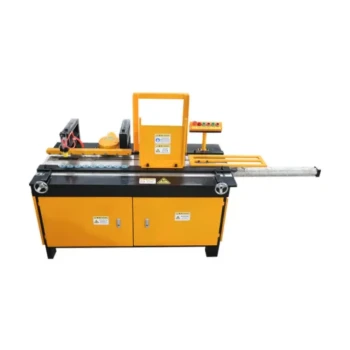
- Beehive Handle and Frame Rest Cutting Machine: Your Specialized Hive Machine
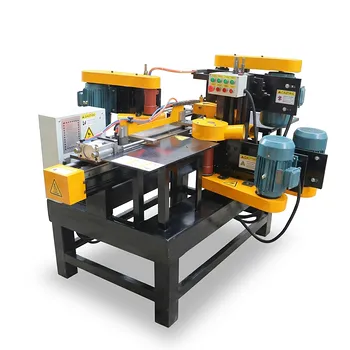
- Mini Desktop Bee Hive Frame Forming Making Machine
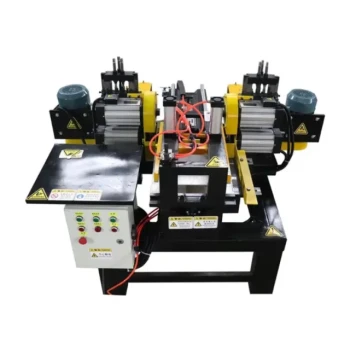
- HONESTBEE Top Bar & Bottom Bar Forming Machine | Bee Frame Machine
- Frame Punching Hole Puncher Machine for Bee Frame Producing Line
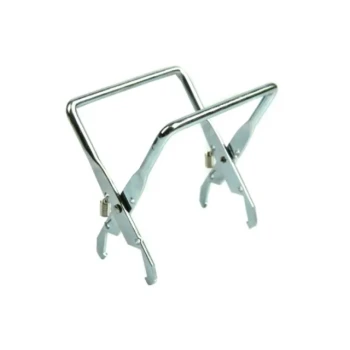
- Durable Galvanized Steel Frame Grip
People Also Ask
- What is the importance of specialized beehive-making machinery? Ensure Precision for Sensor-Based Hive Monitoring
- How do bee hive handles facilitate the evaluation of food stores? Use the Lift Test for Winter Survival
- How do specialized beehive handling machines contribute to efficiency? Streamline Your Mobile Beekeeping Logistics
- How do professional beehive and frame manufacturing machines contribute to commercial apiary management? Boost Efficiency
- What are the standard dimensions for frame rests in a beehive? Essential Guide for Perfect Bee Space