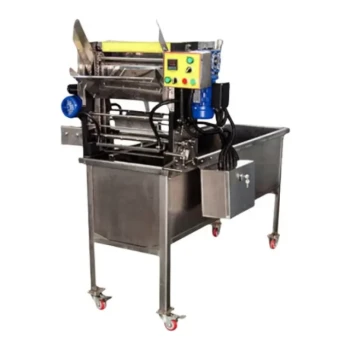
Automated honey filling and packaging systems deliver critical technical advantages centering on hygiene, precision, and market compliance. By replacing manual handling with closed-loop mechanical processes, these machines ensure sterile dispensing, airtight sealing to extend shelf life, and the consistent product specifications required to enter formal retail markets.
Core Takeaway: The transition to automation is not merely about speed; it is the technical bridge between raw agricultural honey and a shelf-stable commercial commodity. These systems guarantee the standardized weight, airtight integrity, and hygiene levels strictly mandated by supermarkets and export regulators.
Achieving Retail-Grade Standardization
To move honey from local distribution to formal retail channels—such as supermarkets or export markets—product consistency is non-negotiable.
Precise Volumetric Control
Manual filling often leads to weight variances that violate labeling laws. Automated machines use high-precision dosing systems to ensure every unit meets the exact net weight declared on the label.
This consistency fosters consumer trust and meets the strict "entry requirements" of large-scale retailers.
Flexible Specification Management
Modern systems support standardized production across a wide range of volumes, typically from 330ml to 1500ml.
This flexibility allows producers to service different market segments—from single-serve jars to family-sized containers—without sacrificing line speed or accuracy.
Brand Image and Traceability
Beyond the fill, these systems often integrate labeling and coding. This ensures professional visual presentation and enables traceability, which is increasingly required for food safety audits in high-end markets.
Preserving Quality and Extending Shelf Life
Honey is a biological product sensitive to moisture and contaminants. Automation acts as a barrier between the product and the environment.
Preventing Secondary Contamination
Automated fillers operate within a closed environment, drastically reducing human contact with the product.
This isolation minimizes the risk of introducing bacteria or foreign particles ("secondary contamination") that often occurs during manual scooping or pouring.
Airtight Sealing Technology
Proper sealing is the primary defense against spoilage. Automated cappers apply consistent torque to create a truly airtight seal.
This prevents the ingress of moisture, which is the leading cause of fermentation in honey. Consequently, the product's natural flavor and physicochemical properties are preserved, significantly extending its commercial shelf life.
Operational Efficiency and Loss Reduction
While quality is the primary output, the technical architecture of these machines also addresses material economy.
Minimizing Material Loss
Honey is viscous and prone to dripping, which represents lost revenue over thousands of units.
Precision machinery utilizes specialized nozzles and metering controls to eliminate dripping. This ensures that the raw material goes into the bottle, not onto the factory floor.
Scaling for Commercial Distribution
Automation transforms bulk storage tanks into retail-ready inventory efficiently.
This high-throughput capability is the technical foundation for large-scale production, allowing businesses to meet the volume demands of domestic and international distribution channels.
Understanding the Trade-offs
While automation solves consistency and hygiene issues, it introduces new technical challenges that must be managed.
Maintenance and Cleaning Rigor
Honey is notoriously difficult to clean once it hardens or crystallizes inside machinery.
Automated lines require strict cleaning-in-place (CIP) protocols. Failure to maintain these systems can lead to cross-contamination or mechanical seizure, potentially halting production longer than a manual slowdown would.
Changeover Complexity
While machines can handle sizes from 330ml to 1500ml, switching between these sizes is not instantaneous.
It requires mechanical adjustments and calibration. For small batches of varying sizes, the downtime required for changeovers might temporarily offset the efficiency gains of high-speed filling.
Making the Right Choice for Your Goal
The decision to implement these systems depends on your current stage of commercialization.
- If your primary focus is Market Entry (Supermarkets/Export): Prioritize systems with certified hygienic sealing and labeling integration to meet strict regulatory and retail standardization requirements.
- If your primary focus is Cost Control: Focus on high-precision dosing systems that specifically highlight "anti-drip" technology to minimize raw material loss and maximize yield from bulk storage.
Ultimately, automated packaging is the technical requirement that elevates honey from a raw farm product to a traceable, shelf-stable, and globally competitive brand.
Summary Table:
| Feature | Technical Advantage | Commercial Benefit |
|---|---|---|
| Dosing Precision | High-precision volumetric control | Guaranteed weight compliance & reduced product loss |
| Hygiene Control | Closed-loop mechanical processing | Minimized contamination & meeting food safety standards |
| Sealing Quality | Automated airtight capping | Extended shelf life & prevention of honey fermentation |
| Flexibility | 330ml to 1500ml range support | Ability to serve diverse market segments efficiently |
| Traceability | Integrated labeling and coding | Professional branding & simplified food safety audits |
Scale Your Honey Production with HONESTBEE
Transitioning from raw agricultural honey to a globally competitive brand requires precision and reliability. HONESTBEE specializes in supporting commercial apiaries and distributors with high-performance honey-filling machines, hive-making equipment, and a full spectrum of beekeeping tools.
Whether you are looking to enter major retail markets or optimize your wholesale operations, our equipment ensures your honey meets the highest standards of hygiene and standardization.
Ready to automate your success? Contact us today to explore our machinery and consumables.
References
- Kurnia Kurnia, Andi Sadapotto. The development strategy of Trigona sp beekeeping at SMKN 4 Luwu. DOI: 10.1088/1755-1315/886/1/012064
This article is also based on technical information from HonestBee Knowledge Base .
Related Products
- Fully Automatic Honey Filling Packaging Machine for Processing Line
- Precision Automated Packaging Turntable Honey Spoon Filling Sealing Packing Machine
- Automatic Single-Dose Snap & Squeeze Honey Sachets Packing Machine
- Automatic Honey Filling and Filtering Machine for Beekeeping Bottle Filling
- Precision Durable Efficient HONESTBEE Rotary Honey Filling Machine
People Also Ask
- Why are fully automatic honey filling and packaging lines essential? Boost Your Honey's Market Value and Quality
- What is a fully-automatic honey filler? Streamline Your Production with High-Precision Automation
- How do automated honey filling and packaging machines affect profitability? Boost Margins with HONESTBEE Technology
- How do automated honey filling and packaging machines contribute to the market value of honey products? Maximize Your ROI
- How do industrial-grade automated honey filling and packaging machines mitigate the risk of physical contamination?