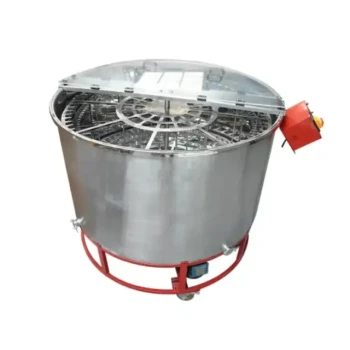
Industrial honey processing equipment secures market value by utilizing advanced filtration, temperature-controlled dehydration, and homogenization to preserve the product's natural integrity. Instead of competing solely on price, this technology allows producers to retain active ingredients and unique flavors, positioning their product as a premium commodity that meets strict international standards.
Core Takeaway Deep-processing capability shifts the competitive advantage from low cost to certified quality. By stabilizing physicochemical indicators and preventing spoilage without destroying natural enzymes, industrial equipment transforms raw honey into a standardized, high-value export capable of commanding premium pricing.
Elevating Quality Through Precision Processing
Preserving Active Ingredients
The primary technical advantage of industrial equipment is temperature-controlled dehydration. Unlike rudimentary heating methods that destroy enzymes, industrial systems reduce moisture while protecting heat-sensitive active ingredients.
This preservation allows exporters to market the health benefits of their honey. It justifies a higher price point compared to over-heated, nutrient-deficient alternatives common in low-cost markets.
Retaining Unique Flavor Profiles
Standardization often leads to blandness, but advanced processing avoids this through controlled homogenization. This process blends batches to ensure consistency without neutralizing specific floral notes.
By maintaining a unique high-quality profile, producers can differentiate their honey based on sensory experience rather than just volume.
Achieving Physical Stability
Industrial fine filtration removes physical impurities that detract from the visual appeal and hygiene of the product. This step is critical for transitioning from hobbyist production to commercial-grade goods.
Clean, clear honey suggests superior hygiene to the consumer, directly influencing the perceived value and shelf presence of the brand.
Ensuring Compliance and Export Viability
Meeting International Hygiene Standards
Global markets, particularly the European Union, have rigorous requirements for food safety. Industrial filling lines utilize vacuum sealing and automated flow control to ensure zero contamination.
This level of hygienic sealing extends shelf life significantly. It ensures the product survives long-distance maritime or land transport without degradation or spoilage.
Exacting Measurement Accuracy
High-precision quantitative filling equipment guarantees that every unit meets strict volume regulations. This prevents trade disputes regarding weight and volume, establishing trade credibility.
Consistent volumetric delivery is a baseline requirement for entering high-value retail channels rather than remaining in bulk commodity trading.
Standardization of Physicochemical Indicators
Large-scale buyers require assurance that the first container of honey matches the last. Industrial machinery ensures moisture content and viscosity remain uniform across massive volumes.
This supply stability allows enterprises to sign long-term export contracts, as buyers trust the consistency of the delivered product.
Understanding the Trade-offs
The Risk of Over-Processing
While filtration is necessary, there is a technical risk of ultra-filtration. Removing too much particulate matter can strip honey of all pollen, which serves as its geographic fingerprint. In some high-end markets, honey without pollen is considered adulterated or "fake," potentially destroying its market value.
Operational Complexity vs. Raw Appeal
Industrial processing ensures safety and stability, but it moves the product away from the "raw" label that some niche markets demand. Producers must balance the need for shelf stability (via dehydration and filtration) with the marketing appeal of "minimally processed" goods.
Making the Right Choice for Your Goal
To maximize market value, align your equipment choice with your specific commercial strategy:
- If your primary focus is Premium Retail Export: Prioritize temperature-controlled dehydration and gentle filtration to verify the retention of active enzymes and pollen while ensuring shelf stability.
- If your primary focus is High-Volume Bulk Trade: Focus on high-speed homogenization and precision filling to guarantee absolute uniformity and compliance with international weight and hygiene standards.
Ultimately, industrial processing equipment is not just a production tool; it is the technical gatekeeper that validates your honey as a premium, export-grade asset.
Summary Table:
| Technical Feature | Market Advantage | Strategic Benefit |
|---|---|---|
| Temperature-Controlled Dehydration | Preserves heat-sensitive enzymes | Justifies premium pricing over low-cost alternatives |
| Controlled Homogenization | Maintains consistent floral notes | Establishes a unique, recognizable brand profile |
| Vacuum Sealing & Automation | Eliminates contamination risks | Meets EU/International hygiene and safety standards |
| High-Precision Filling | Guaranteed volumetric accuracy | Builds trade credibility and prevents volume disputes |
| Advanced Fine Filtration | Removes physical impurities | Enhances visual appeal and ensures shelf stability |
Scale Your Apiary Operations with HONESTBEE Professional Solutions
Don't let low-cost competitors undercut your hard-earned honey. HONESTBEE specializes in empowering commercial apiaries and distributors with the technical edge required to dominate global markets. From high-precision honey-filling machines and vacuum dehydration systems to specialized hive-making machinery, we provide the full spectrum of equipment and industry consumables needed to transform raw honey into a high-value export.
Ready to elevate your production quality and secure premium pricing?
Contact HONESTBEE Today for a Professional Consultation
References
- Georgi Aleksiev. Impact of european ecopolicy in the development of bulgarian apiculture. DOI: 10.22620/sciworks.2024.01.006
This article is also based on technical information from HonestBee Knowledge Base .
Related Products
- Electric Double Wall Honey Filtering Machine Purifier Equipment for Honey Processing Plant
- Heavy Duty Stainless Steel Honey Processing Machine Decrystallizing Tank
- Double Wall Honey Heating Stirring Homogenizer Mixing Machine with Various Capacity
- 0.5T Capacity Honey Dehumidifier Dryer with Vacuum Heating and Thickening Filtering Machine
- Fully Automatic Honey Filling Packaging Machine for Processing Line
People Also Ask
- What is the process of filtering honey? A Guide to Clean, Pure, and Market-Ready Honey
- What types of equipment are used in honey filtering? Build an Efficient System for Pure, Marketable Honey
- What is the overall importance of using the right equipment in honey filtering? Boost Quality & Marketability
- What is a potential concern associated with filtering honey? Balancing Clarity and Pollen Preservation
- What steps are involved in maintaining honey filtering equipment? A Guide to Protecting Your Honey Quality