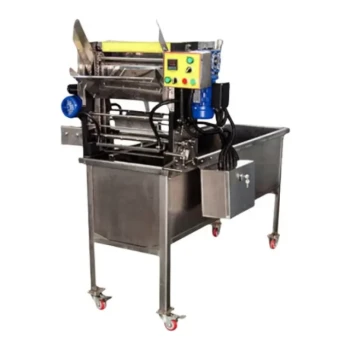
Honey stick packaging equipment is primarily categorized by the physical configuration and aesthetic of the final stick pack it produces. Based on the style of the package, these machines fall into three distinct classifications: Standard machines for traditional single-servings, Twin machines for dual-output or complementary products, and Shaped machines for high-impact branding.
The choice of machinery dictates your product's shelf presence; you must decide between the cost-effective reliability of standard packs, the efficiency of twin packs, or the higher investment required for custom-shaped branding.
The Standard Honey Stick Machine
This is the most common equipment choice, designed to produce the traditional honey straw format familiar to most consumers.
Dimensions and Specifications
The machine typically produces a uniform stick with a standard length of 6 to 7 inches and a width of roughly 1/4 inch. This format creates a single-serving tube ideal for quick use in beverages or as a standalone snack.
Seal Customization
While the shape remains a straight tube, the seal itself offers room for differentiation. Manufacturers can customize the machine to create patterned or embossed seals, adding a subtle tactile element to the standard design.
The Twin Honey Stick Machine
For producers looking to increase throughput or offer variety, the Twin Honey Stick Machine introduces a dual-lane architecture.
Dual-Hopper Functionality
These machines are equipped with two product hoppers, allowing them to fill and seal two attached stick packs simultaneously. This effectively doubles the output compared to a single-lane standard setup.
Product Versatility
The twin configuration allows for unique product pairings. You can fill both sides with honey to form a "double stick," or use the separate hoppers to package complementary products alongside the honey, enhancing the consumer experience.
The Shaped Honey Stick Machine
This equipment category prioritizes marketing and shelf appeal over simple utility.
Marketing-Driven Design
Moving beyond the straight tube, these machines form unique, non-linear shapes with styled seals. This playful approach is specifically engineered to attract attention in a crowded market, particularly appealing to younger demographics like children.
Investment Considerations
Because of the complex forming required for unique shapes, this equipment typically demands a higher capital investment than standard machines. It is a strategic choice for brands where visual differentiation is the primary driver of sales.
Understanding the Trade-offs
When selecting a machine based on stick style, you must also consider the operational realities that accompany these design choices.
Complexity vs. Marketability
Shaped machines offer the highest potential for branding but introduce greater mechanical complexity. Standard machines offer a lower barrier to entry and proven reliability but may struggle to stand out on the shelf.
Viscosity and Filling Accuracy
Regardless of the stick style chosen, the machine must be compatible with honey's physical properties. Thicker honeys generally require piston or pump filling systems to ensure accurate dosage, whereas gravity fillers are reserved for low-viscosity liquids.
Making the Right Choice for Your Goal
Your machine selection should align directly with your intended market position and production volume.
- If your primary focus is reliable, cost-effective entry: Choose the Standard Honey Stick Machine to produce the industry-standard 6-7 inch pack with customized seals.
- If your primary focus is efficiency or product pairing: Choose the Twin Honey Stick Machine to maximize output or bundle complementary flavors in a single unit.
- If your primary focus is brand differentiation: Choose the Shaped Honey Stick Machine to create unique, eye-catching geometries that appeal to specific consumer segments like children.
Aligning your machinery with your specific packaging strategy ensures you invest in a system that supports your long-term business goals.
Summary Table:
| Machine Type | Stick Style | Primary Benefit | Target Audience |
|---|---|---|---|
| Standard | Traditional 6-7" tube | Cost-effective & Reliable | General consumers, tea drinkers |
| Twin | Dual/Attached sticks | High throughput & Variety | High-volume retail, flavor pairing |
| Shaped | Custom geometries | High shelf impact & Branding | Children's market, premium brands |
Elevate Your Honey Production with HONESTBEE
Are you a commercial apiary or distributor looking to scale your operations? HONESTBEE provides industry-leading honey stick packaging machines and a full spectrum of beekeeping equipment designed for efficiency and growth. Whether you need standard reliability or custom-shaped branding to capture new markets, our expert team is ready to supply the specialized hardware and machinery your business deserves.
Maximize your output and market appeal today—Contact our specialists for a wholesale consultation!
Related Products
- Honey Stick Filler Vertical Paste Sachet Packing Machine for Honey Sachets
- Automatic Single-Dose Snap & Squeeze Honey Sachets Packing Machine
- Double Nozzle Small Honey Filling Machine Honey Sachet Packing Packaging Equipment
- Precision Automated Packaging Turntable Honey Spoon Filling Sealing Packing Machine
- Fully Automatic Honey Filling Packaging Machine for Processing Line
People Also Ask
- How do honey stick and honey sachet machines differ? Choose the Right Packaging for Your Honey
- What are the main functions of a honey sachet packing machine? Boost Efficiency with Automated Precision
- What are the advantages of honey sachet packing machines? Boost Efficiency & Unlock New Markets
- What types of filling and packing machines are available for different scales of honey production? Expert Solutions
- What is the working principle of a honey stick packing machine? Automate Your Honey Production Line