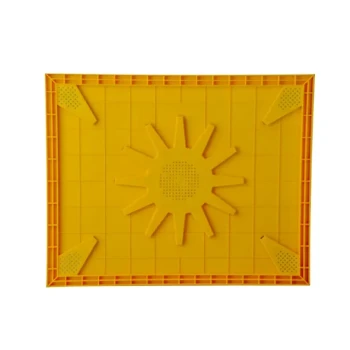
The optimal placement for a candy board is at the very top of the hive stack. It should be positioned directly above the highest box containing frames, effectively serving as the hive's "ceiling" for the bees. In standard configurations, the candy board either completely replaces the inner cover or is placed immediately beneath it to ensure direct contact with the colony.
Winter bee clusters naturally migrate upward to follow rising heat and consume stored honey. Placing the candy board at the top of the stack guarantees that when the colony reaches the upper limits of their supplies, they encounter emergency feed rather than an empty wooden cover.
The Principles of Winter Placement
Aligning with Bee Behavior
Bees do not heat the entire hive; they heat the cluster. As heat rises, the cluster slowly moves upward through the hive bodies, consuming honey stores as they go.
The candy board must be placed where the bees are going, not where they have been. By positioning the board at the top, you align the emergency food source with the colony's natural upward trajectory during the coldest months.
The Stack Configuration
The candy board is technically a specialized shim or rim that holds solid sugar. It sits directly on top of the upper brood box (or honey super, if left on for winter).
You then place the outer cover (telescoping cover) over the entire setup. This creates a compact vertical unit that minimizes heat loss while maximizing food accessibility.
Managing the Inner Cover
According to standard practices, you have two options regarding the inner cover.
First, you can remove the inner cover entirely and let the candy board serve that function.
Second, you can place the inner cover directly on top of the candy board. The critical factor is that no barrier should exist between the top bars of the frames and the sugar.
Understanding the Trade-offs
The Risk of Incorrect Layering
A common mistake is placing the inner cover between the brood box and the candy board.
This creates a physical barrier. If the bees cannot easily pass through the inner cover's central hole—or if the cluster is too cold to break formation to find that hole—they may starve despite being inches away from food.
Ventilation Considerations
While the primary reference focuses on placement for feeding, keep in mind that the candy board changes the hive's upper ventilation profile.
If you choose to place the inner cover on top of the candy board, ensure the upper entrance (notch) remains accessible if you rely on it for moisture venting. If you replace the inner cover entirely, ensure the candy board design accounts for necessary air exchange.
Making the Right Choice for Your Goal
When finalizing your winter setup, choose the configuration that best matches your equipment:
- If your primary focus is maximum accessibility: Remove the standard inner cover entirely and allow the candy board to act as the primary ceiling above the bees.
- If your primary focus is using existing insulation: Place the inner cover on top of the candy board to maintain the standard upper ventilation notch and outer cover fit.
Position your resources to anticipate the colony's movement, ensuring their final destination at the top of the hive is a source of sustenance.
Summary Table:
| Aspect | Recommended Placement | Key Benefit |
|---|---|---|
| Vertical Position | Very top of the hive stack | Matches bees' natural upward migration for heat and food. |
| Proximity to Cluster | Directly above the highest box with frames | Ensures bees encounter food before hitting the hive ceiling. |
| Inner Cover Usage | Above the candy board or removed entirely | Eliminates physical barriers that could cause starvation. |
| Protection | Beneath the outer (telescoping) cover | Maintains a compact unit to minimize heat loss during winter. |
Maximize Your Colony Survival with HONESTBEE
Ensure your commercial apiary is fully equipped for the winter season with premium supplies from HONESTBEE. We cater specifically to commercial apiaries and distributors, offering a comprehensive wholesale catalog that covers the entire spectrum of beekeeping needs.
Our portfolio includes everything from high-durability hive-making and honey-filling machinery to essential industry consumables and professional-grade beekeeping tools. Whether you are scaling your operation or sourcing for a distribution network, our expertise and inventory provide the value and reliability you need to succeed.
Ready to elevate your beekeeping business? Contact us today to discuss our wholesale offerings and how we can support your growth.
Related Products
- HONESTBEE Multi Exit Plastic Bee Escape Board for Efficient Honey Harvesting
- High-Efficiency Diamond Maze Bee Escape for Clearing Supers
- Durable 16 Way Circular Bee Escape for Efficient Honey Harvesting
- Solid Bottom Board Australian Pine Wood Langstroth Bottom Board for Wholesale
People Also Ask
- How do bee escape boards and fume boards assist in honey harvesting? Optimize Your Harvest with Low-Stress Tools
- How do bee escape boards compare with solar fume boards when clearing bees from honey supers? Speed vs. Simplicity for Commercial Apiaries
- What mechanical methods and tools are used to clear bees from honey supers? Efficient Tools for a Smooth Harvest
- How is a bee escape board used to clear a hive body for honey harvesting? Optimize Your Chemical-Free Harvest
- What is a bee escape board and what problem does it solve? Simplify Your Honey Harvest with Passive Clearing