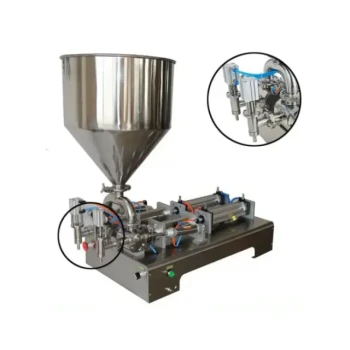
The operational efficiency of professional honey-filling machines is primarily determined by the consistency of the raw honey supply and its viscosity. These physical properties, which must be managed during the collection phases prior to filling, directly dictate how effectively the machine’s precise flow control and automated sealing technologies can function.
Core Insight: True efficiency in honey production is not merely a measure of machine speed; it is the result of stabilizing raw material inputs to leverage high-precision volumetric controls, thereby minimizing waste and ensuring standardized commercial output.
The Critical Role of Raw Material Inputs
Supply Consistency
The foundation of machine efficiency lies outside the machine itself. A stable, uninterrupted supply of raw honey is essential for continuous operation.
This stability is typically established once the pollination season concludes and bees are moved to high-yield nectar crops. Without a consistent input flow, the high-speed capabilities of professional machinery cannot be fully utilized.
Viscosity Management
Viscosity is the most significant variable affecting filling speed and accuracy.
Because honey thickness changes based on temperature and source, the "flowability" of the product must be managed during the collection phase. If the viscosity fluctuates, the machine's flow control settings become inaccurate, leading to downtime or inconsistent fill levels.
Handling High Water Content
Certain varieties, such as stingless bee honey, possess high water content and are prone to fermentation.
For these specific types, efficiency involves not just speed, but the ability to seal the product quickly and hygienically to extend shelf life. The filling machine must be capable of handling these distinct fluid dynamics without compromising the seal integrity.
Mechanical Determinants of Efficiency
Precise Flow Control
Professional machines utilize high-precision volumetric filling mechanisms to package honey into standardized units.
This technology ensures that every unit contains the exact intended volume, regardless of minor fluctuations in pressure. This precision is critical for converting bulk harvest into retail-ready commodities that meet strict market standards.
Automated Sealing Technology
Efficiency is lost if the filling is fast but the sealing is slow or compromised.
Automated sealing systems work in tandem with filling nozzles to secure the product immediately. This synchronization prevents bottlenecks in the production line and ensures the throughput matches the demands of large-scale distribution.
Hygiene and Contamination Control
Advanced filling machines utilize hygienic-grade sealing processes that prevent secondary contamination.
Unlike manual filling, which exposes the product to environmental risks, automated systems maintain a closed loop. This ensures the purity—including enzymes and vitamins preserved during extraction—remains intact through the packaging stage.
Understanding the Trade-offs
Automation vs. Input Sensitivity
High-level automation significantly increases throughput but requires stricter control over raw material consistency.
While manual or semi-automatic methods allow for human adjustment to varying honey thickness, fully automated lines may generate waste or errors if the raw honey supply varies too drastically in viscosity or temperature.
Waste Minimization vs. Setup Time
Professional machines are designed to minimize material waste and product overflow.
However, achieving this level of precision requires rigorous calibration. Beekeepers must balance the time spent calibrating the machine for specific honey batches against the savings gained from reduced product loss.
Making the Right Choice for Your Production Goals
To select the right filling technology, you must align the machine's capabilities with your specific operational focus.
- If your primary focus is maximizing volume: Prioritize machines with advanced flow control and automated sealing to exploit the stable supply available during non-pollination months.
- If your primary focus is product quality and hygiene: Ensure the equipment features hygienic-grade sealing and closed-loop systems to prevent secondary contamination and preserve nutritional value.
- If your primary focus is waste reduction: Select machinery with high-precision volumetric filling to eliminate overflow and maximize the economic yield of every batch.
Efficiency is the successful synchronization of consistent raw material properties with precise mechanical automation.
Summary Table:
| Factor | Impact on Efficiency | Key Technology/Requirement |
|---|---|---|
| Supply Consistency | Enables continuous, high-speed operation | Stable raw honey reservoir |
| Viscosity Management | Affects flow accuracy and filling speed | Temperature & flow control settings |
| Volumetric Control | Minimizes product waste and ensures standardization | High-precision filling nozzles |
| Automated Sealing | Prevents production bottlenecks | Synchronized sealing mechanisms |
| Hygiene Standards | Preserves product purity and shelf life | Closed-loop hygienic systems |
Maximize Your Apiary's Commercial Potential with HONESTBEE
At HONESTBEE, we understand that true efficiency in honey production requires more than just a machine—it requires a precision-engineered solution. We provide commercial apiaries and distributors with a comprehensive range of professional beekeeping tools, from high-precision honey-filling machines to advanced hive-making hardware and essential industry consumables.
Whether you are scaling up for large-scale distribution or seeking to minimize waste through automated precision, our expert team is ready to equip your facility with the machinery and cultural merchandise needed to succeed in the global market.
Ready to optimize your production line? Contact us today to explore our wholesale offerings!
References
- Hyunok Lee, Antoine Champetier. Pollination Markets and the Coupled Futures of Almonds and Honey Bees: Simulating Impacts of Shifts in Demands and Costs. DOI: 10.1093/ajae/aay063
This article is also based on technical information from HonestBee Knowledge Base .
Related Products
- Precision Durable Efficient HONESTBEE Rotary Honey Filling Machine
- Commercial Rotary Honey Filling Machine for Production
- Fully Automatic Honey Filling Packaging Machine for Processing Line
- Professional Stainless Steel Honey Filtering Machine with Water Bath Heating for Beekeeping
- Automatic Honey Filling and Filtering Machine for Beekeeping Bottle Filling
People Also Ask
- What quality control role does professional honey filling equipment perform? Ensure Consistency and Product Stability
- How do high-precision honey filling machines ensure quality? Optimize Your Commercial Production with HONESTBEE
- How do honey filling machines work? Achieve Precision & Speed for Your Apiary
- What is a key feature of the new generation of the honey filling machine? The Advanced Electronic Control Unit
- How do honey filling and processing machines aid native bee product conservation? Boost Value with HONESTBEE Technology