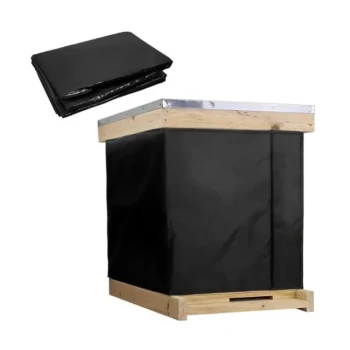
Selecting a strategic location for overwintering beehives requires prioritizing protection from wind and precipitation while strictly managing pest access and chemical exposure. You must utilize physical structures—such as fences, barns, or sheds—to create draft-resistant barriers, ensure the site is free of pesticides, and install a universal entrance reducer to prevent rodent intrusion.
Core Takeaway Bee survival in winter is rarely compromised by cold alone; the true threats are wetness, wind drafts, and physical disturbance. A successful overwintering site acts as a shield against these elements while maintaining enough ventilation to prevent internal moisture buildup.
Managing the Elements
To ensure colony survival, you must mitigate the impact of the local climate through both physical barriers and site topography.
Utilizing Windbreaks
Direct wind strips heat from the hive, forcing bees to consume honey stores rapidly to stay warm. You should position hives near fences, barns, or sheds.
These structures act as draft-resistant barriers. They break the force of the wind, creating a calm pocket of air around the colony.
Avoiding "Cold Sinks"
Topography plays a critical role in temperature regulation. You must avoid placing hives in low spots or depressions in the yard.
Cold, damp air is heavier than warm air and naturally accumulates in these low areas. Positioning hives here subjects them to lower temperatures and higher humidity than the surrounding area.
Managing Precipitation and Ground Moisture
Wetness is lethal to a winter cluster. In areas with significant rainfall, the hive must be elevated off the ground using a hive stand.
This prevents moisture from wicking up into the hive from wet soil. It also ensures the hive remains above potential standing water or snow accumulation.
Biological and Chemical Safety
Beyond the weather, the physical location must protect the colony from biological threats and human-induced hazards.
Excluding Pests
Winter creates a scarcity of food and warmth for other animals, making a beehive an attractive target for rodents. You must limit the size of the hive opening.
The primary reference recommends utilizing a universal entrance reducer. This device restricts the entry size, making it difficult for mice and other pests to infiltrate the hive while still allowing air exchange.
Ensuring Chemical Safety
The site selection process must account for environmental toxins. The location must be strictly free from pesticides.
Agricultural runoff or drift from nearby treatment areas can weaken or kill the cluster during a time when they cannot reproduce to replace lost bees.
Understanding the Trade-offs
While protection is paramount, there is a fine line between sheltering a hive and suffocating it.
The Ventilation Balance
A common mistake is sealing a hive so tightly against the wind that internal moisture cannot escape. Bees exhale moisture; if it condenses and freezes, it can drip back onto the cluster and kill it.
While you must block drafts using windbreaks, you must also establish proper ventilation. This allows humid air to exit the top of the hive, keeping the interior dry.
Public Safety vs. Isolation
Supplementary data suggests hives should be "discrete" and away from public paths like sidewalks.
However, placing them too far out of sight can lead to neglect. Ensure the location is isolated enough for safety but accessible enough for you to check for wind damage or bear activity.
Making the Right Choice for Your Goal
The "perfect" spot depends on your specific environmental challenges. Evaluate your potential sites based on these criteria:
- If your primary challenge is high wind: Prioritize a location immediately adjacent to a solid structure like a barn or a dense fence to act as a windbreak.
- If your primary challenge is moisture or flooding: Focus on elevation; avoid low-lying terrain and utilize sturdy hive stands to keep the bottom board dry.
- If your primary challenge is pests: Ensure the site allows for the easy installation of universal entrance reducers and mouse guards without obstruction.
The ideal overwintering site is a dry, elevated position that breaks the wind without stopping the airflow.
Summary Table:
| Factor | Strategic Action | Primary Benefit |
|---|---|---|
| Wind Control | Position near fences, barns, or sheds | Prevents heat loss and reduces honey consumption |
| Topography | Avoid low spots and depressions | Prevents cold air and humidity accumulation (Cold Sinks) |
| Moisture | Use hive stands and ensure ventilation | Keeps the cluster dry and prevents lethal condensation |
| Pest Safety | Install universal entrance reducers | Blocks rodents from seeking warmth/food inside the hive |
| Chemicals | Choose pesticide-free environments | Prevents colony weakening from toxins during winter |
Maximize Your Colony Survival with HONESTBEE
Preparing for winter is the most critical phase for any beekeeping operation. At HONESTBEE, we empower commercial apiaries and distributors with the professional-grade tools needed to safeguard their investments.
From durable hive-making machinery and sturdy hive stands to high-quality consumables and hardware, our comprehensive wholesale range is designed for durability and efficiency. Whether you are scaling your honey production with our honey-filling machines or stocking essential winterizing gear, we provide the expertise and equipment to ensure your success.
Ready to upgrade your apiary’s performance? Contact us today to explore our full spectrum of beekeeping solutions and wholesale opportunities!
Related Products
- Professional Insulated Winter Hive Wrap for Beekeeping
- Professional Insulated Plastic Bee Hives
- Inner Beehive Cover for Beekeeping Bee Hive Inner Cover
- Wholesales Dadant Size Wooden Bee Hives for Beekeeping
- Australian Langstroth Beehive Boxes for Beekeeping Wholesales
People Also Ask
- What are the steps to properly wrap a beehive for winter? Ensure Your Colony Survives the Cold
- When is the best time to wrap a beehive for winter? A Guide to Perfect Winterization Timing
- How do professional insulation wraps provide protection for bee colonies? Optimize Winter Survival & Energy Efficiency
- What are the technical benefits of using winter wraps for beehive insulation? Boost Colony Survival & Hive Health
- What are the benefits of using insulated covers for hives? Ensure Colony Survival and Health