The Langstroth hive was designed by Reverend Lorenzo Lorraine Langstroth in the mid-19th century. Its design is fundamentally based on the discovery of "bee space"—the precise measurement that allows bees to move between surfaces without feeling compelled to seal the gap with propolis or fill it with burr comb.
The discovery of bee space transformed beekeeping from a destructive practice into a manageable one. By respecting the colony's spatial preferences, Langstroth created the first practical top-opening hive with movable frames, allowing for inspection and harvest without harming the bees.
The Principle of "Bee Space"
Defining the Concept
Langstroth’s primary innovation was not just building a box, but engineering the internal spacing based on bee behavior. He identified an ideal measurement required for bees to maneuver comfortably within the hive.
The Consequence of Incorrect Spacing
If the space between hive components is too small, bees will seal it with propolis (a resinous "bee glue"). Conversely, if the gap is too wide, they will fill it with excess honeycomb.
The Langstroth Solution
By maintaining this specific "bee space" gap around the frames and walls, the components remain unattached to one another. This ensures the frames remain movable rather than being glued down by the colony.
Anatomy of the Design
The Movable Frame
The most critical feature of the Langstroth hive is the use of rectangular wooden frames. Because these frames adhere to bee space principles, they can be easily removed, inspected, and replaced by the beekeeper.
Modular Expandability
The hive utilizes a vertical, modular design consisting of stackable boxes, often called bodies or supers. As the colony grows, a beekeeper simply stacks additional boxes—typically deep boxes for brood and medium boxes for honey—on top of the existing structure.
Ease of Observation
This design solved the historical problem of needing to destroy a hive to harvest honey or check the colony's health. It allows for direct observation of brood activity and honey stores while minimizing disturbance to the bees' work.
Understanding the Trade-offs
Geometry vs. Nature
While the Langstroth hive is efficient for the beekeeper, it imposes a rigid structure on the colony. In nature, bees build comb in catenary curves (hanging loops), whereas this design forces them to build within rectangular frames.
Standardization vs. Customization
The dominance of this hive type means equipment is standardized and easy to source. However, the reliance on uniform, distinct boxes (deep, medium, or shallow) can limit the customization options compared to other hive styles that might better mimic a hollow tree cavity.
Making the Right Choice for Your Goal
The Langstroth hive is the industry standard for a reason, but your goals should dictate your equipment choice.
- If your primary focus is Scalability and Production: This is the superior choice, as the modular supers allow you to expand the hive volume easily as the colony grows.
- If your primary focus is Ease of Inspection: The movable frames make this design ideal for beginners or professionals who need to monitor brood health frequently without destroying comb.
- If your primary focus is Natural Mimicry: You must accept that the rectangular frames force bees to deviate from their natural comb-building tendencies to maximize human convenience.
By leveraging the simple physics of bee space, the Langstroth hive remains the definitive tool for balancing colony health with human stewardship.
Summary Table:
| Feature | Description | Benefit to Beekeeper |
|---|---|---|
| Inventor | Rev. Lorenzo Lorraine Langstroth (mid-19th century) | Established standardized modern beekeeping. |
| Core Principle | Bee Space (approx. 6mm to 9mm) | Prevents bees from sealing frames with propolis or burr comb. |
| Design Type | Top-opening, modular vertical stack | Allows for easy expansion and non-destructive harvesting. |
| Frame Style | Rectangular Movable Frames | Enables individual inspection of brood and honey without killing bees. |
| Standardization | Industry-standard dimensions | Compatible with a wide range of global tools and machinery. |
Scale Your Apiary with HONESTBEE’s Professional Equipment
As a dedicated partner to commercial apiaries and global distributors, HONESTBEE understands that the legacy of the Langstroth hive is built on precision. We provide a comprehensive wholesale offering designed to maximize your operational efficiency:
- High-Performance Machinery: From automated honey-filling machines to precision hive-making equipment.
- Full-Spectrum Tools: A complete range of beekeeping hardware and essential industry consumables.
- Custom Merchandise: Unique honey-themed cultural products to diversify your brand.
Whether you are expanding a commercial honey farm or stocking a distribution network, we deliver the quality and volume you need to succeed. Contact us today to receive our full wholesale catalog and see how our expertise can grow your business.
Related Products
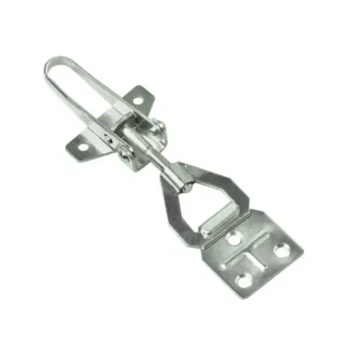
- Heavy Duty Adjustable Hive Connector
- Professional Grade Foldable Beehive Handles
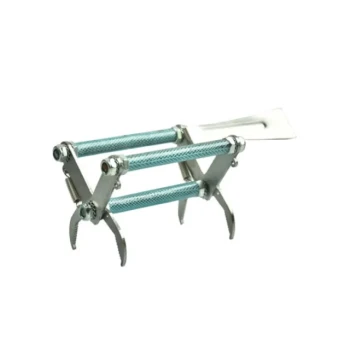
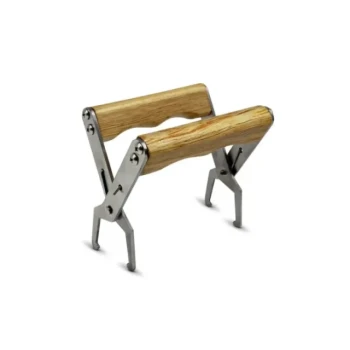
- Multi-Function Plier-Style Frame Grip Hive Tool
- Professional Multi-Function Stainless Steel Hive Tool
- Plastic Bee Frame Beekeeping Hive Frames for Wholesale
People Also Ask
- Under what circumstance are beehive connectors particularly beneficial? Optimize Handling for Full Beehive Attachments
- What is the advantage of using the beehive connector when handling full attachments? Achieve Safe and Efficient Hive Transport
- What are the primary functions of a beehive connector? Ensure Hive Stability and Safe Colony Transport
- How can the connection length and strength of a beehive connector be adjusted? Master Tension with Threaded Mechanics
- What is the purpose of the beehive connector? Secure Your Hive for Safe Transport