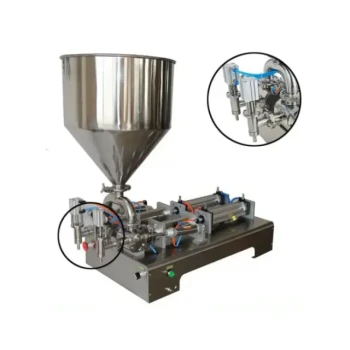
Automated honey-filling machines are critical for economic efficiency because they combine high-precision quantitative filling with strict hygiene protection. By eliminating the inconsistencies of manual labor, these systems prevent costly measurement errors and minimize raw material loss. Furthermore, they ensure compliance with international food safety standards, which is the deciding factor for entering high-value export markets.
While speed is a benefit, the true economic driver is standardization. Automated filling transforms variable harvest yields into consistent, export-grade retail products, securing access to global markets that demand absolute precision and hygiene.
Maximizing Yield Through Precision
Eliminating Overfilling and Waste
Manual filling often leads to inconsistencies, resulting in either product giveaway (overfilling) or regulatory violations (underfilling). Automated machines use precision metering systems to ensure every container meets exact commercial net weight standards.
Mitigating Unstable Yields
Honey production is subject to environmental factors that cause yield instability. Precision filling is essential for protecting valuable output during low-yield seasons. It ensures that every ounce of available product is converted into saleable inventory with minimal loss.
Securing Market Access via Food Safety
Preventing Secondary Contamination
Manual handling introduces a significant risk of biological contamination. Automated machines operate in a closed environment, ensuring strict hygiene during the transfer from storage tanks to retail containers. This protection preserves the honey's physicochemical properties and extends shelf life.
Unlocking High-Value Markets
To enter lucrative export markets or large-scale retail chains, products must meet rigorous international safety standards. Automated filling is the technological prerequisite for this level of compliance. It provides the standardized packaging and tamper-evident sealing required for professional branding and global distribution.
Scaling Production Capability
Handling Seasonal Surges
Honey production is inherently seasonal, often resulting in sudden surges of raw material that manual labor cannot process efficiently. Industrial-grade filling machines significantly increase throughput. This allows apiaries to package bulk harvests rapidly without bottlenecks, maximizing the capitalization of the season.
Transitioning to Commercial Operations
Adopting this technology serves as the foundation for moving from traditional or artisanal methods to large-scale commercial operations. It enables producers to maintain consistent output quality regardless of volume, a necessity for sustaining long-term growth and market competitiveness.
Understanding the Trade-offs
Initial Investment vs. Operational Cost
While automation enhances long-term economic efficiency, it requires a capital investment in specialized hardware. Producers must weigh the upfront cost of industrial-grade equipment against the long-term savings from reduced labor and product waste.
Technical Complexity and Density
Honey varies significantly in viscosity and density (e.g., forest honey vs. floral honey). While these machines are designed for versatility, operators must ensure the equipment is correctly calibrated for specific honey types to maintain filling accuracy and prevent mechanical strain.
Making the Right Choice for Your Goal
To maximize the return on investment for your honey processing operation, consider your specific strategic objectives:
- If your primary focus is entering export markets: Prioritize machines with advanced closed-loop hygiene systems to ensure compliance with strict international food safety regulations.
- If your primary focus is maximizing profit margins: Focus on high-precision metering capabilities to strictly control net weights and eliminate raw material giveaway.
Ultimately, automated filling is not just about packaging faster; it is about securing the consistency and safety required to turn a raw agricultural product into a valuable commercial asset.
Summary Table:
| Feature | Manual Filling | Automated Filling | Economic Impact |
|---|---|---|---|
| Filling Precision | High variance (Over/Under) | High-precision metering | Eliminates product giveaway |
| Hygiene Control | Risk of contamination | Closed-system protection | Ensures export-grade safety |
| Output Speed | Limited by labor | High-throughput capability | Rapidly processes seasonal surges |
| Market Reach | Local/Artisanal | Global/Commercial | Unlocks high-value retail chains |
Scale Your Honey Production with HONESTBEE
At HONESTBEE, we empower commercial apiaries and global distributors to transform raw harvests into high-value commercial assets. Our industrial-grade honey-filling machines are engineered to provide the precision and hygiene required to meet rigorous international standards.
Why partner with HONESTBEE?
- Comprehensive Wholesale Range: From specialized hive-making and honey-filling machinery to a full spectrum of beekeeping tools and consumables.
- Precision Engineering: Minimize product loss and maximize your profit margins with advanced metering technology.
- Commercial Growth: Whether you need robust hardware or honey-themed cultural merchandise, we provide the tools to scale your operation and secure global market access.
Ready to enhance your processing efficiency? Contact us today to discuss your customized equipment solution.
References
- Vidushi Patel, Bryan Boruff. Why bees are critical for achieving sustainable development. DOI: 10.1007/s13280-020-01333-9
This article is also based on technical information from HonestBee Knowledge Base .
Related Products
- Fully Automatic Honey Filling Packaging Machine for Processing Line
- Automatic Honey Filling and Filtering Machine for Beekeeping Bottle Filling
- Precision Durable Efficient HONESTBEE Rotary Honey Filling Machine
- Precision Automated Packaging Turntable Honey Spoon Filling Sealing Packing Machine
- Semi Automatic Small Honey Bottle Filling Machine Honey Filler
People Also Ask
- Why are fully automatic honey filling and packaging lines essential? Boost Your Honey's Market Value and Quality
- What is a fully-automatic honey filler? Streamline Your Production with High-Precision Automation
- How do automated honey filling and packaging machines affect profitability? Boost Margins with HONESTBEE Technology
- How do automated honey filling and packaging machines contribute to the market value of honey products? Maximize Your ROI
- How do industrial-grade automated honey filling and packaging machines mitigate the risk of physical contamination?