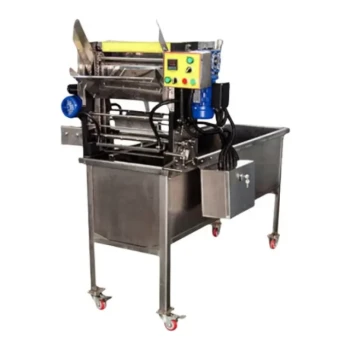
Automated honey-filling machines are the backbone of modern commercial apiary operations, necessary because they bridge the gap between raw extraction and retail-ready standards. By utilizing high-precision metering pumps and advanced sealing systems, these machines achieve a level of hygiene and filling speed that manual labor cannot match. Crucially, they minimize product loss and eliminate manual contact, ensuring the honey's purity while delivering the consistent volume required for regulatory compliance and market distribution.
The transition from bulk material to a high-value consumer product relies on automation to manage honey's unique viscosity. These machines provide a closed, sterile processing environment that guarantees food safety while strictly controlling raw material costs through precise dosage.
Achieving Commercial Precision and Economy
Eliminating Material Waste
Honey is a high-viscosity material that is difficult to handle manually without creating mess or waste. Automated machines utilize high-precision metering systems (often piston or mass-based) to control the flow with exactness.
This technology significantly reduces the overflow and drips common in manual pouring. By ensuring every drop goes into the container, producers minimize the loss of expensive raw materials.
Ensuring Consistent Volume
Regulatory standards and consumer trust depend on the net content of every bottle being identical. Automated filling systems guarantee that the loading volume of each product unit is precise and uniform.
This consistency creates a standardized product essential for large-scale distribution. It prevents the financial loss of overfilling and the legal compliance risks of underfilling.
Protecting Product Purity and Safety
The Closed-Loop Advantage
Manual packaging introduces significant risks of secondary microbial contamination through human contact or exposure to open air. Automated equipment operates within a closed processing environment.
This isolation serves as a strict sanitary barrier. It prevents external impurities and contaminants from entering the product stream during the critical transition from tank to bottle.
Meeting International Standards
To enter the retail market, honey products must meet rigorous international food safety standards. Automated sealing technologies ensure that the hygienic safety of the finished honey is compromised.
By removing the variability of human handling, these machines provide the documented consistency required by large-scale distributors and food safety auditors.
Preserving Biological Integrity
Controlling Heat and Viscosity
One of the greatest challenges in honey processing is maintaining flow without overheating, which can damage honey's chemical properties. Advanced automated equipment utilizes precise flow control that manages viscosity without damaging heat.
This preserves the physical and chemical properties of "green" or raw honey. It ensures the final product retains the original quality found in the apiary.
Preventing Spoilage and Fermentation
Proper encapsulation is vital for shelf life. Sanitary packaging technology effectively blocks external moisture, which is the primary cause of fermentation and spoilage in honey.
Automated capping creates a reliable seal that protects the product during storage and long-distance transportation. This ensures the product remains stable from the factory floor to the consumer's pantry.
Understanding the Operational Trade-offs
Calibration and Complexity
While automation increases speed, it introduces technical complexity regarding setup. Switching between different container sizes or shapes requires calibration of the metering systems.
Operators must be trained to adjust these settings precisely. Improper calibration can lead to the very inconsistencies the machine is designed to avoid.
Maintenance Requirements
The high-precision pumps and sealing mechanisms required for viscous fluids demand regular maintenance. Honey can crystallize or stick within the machinery if not cleaned thoroughly.
A strict cleaning regimen is necessary to maintain the "closed loop" hygiene benefits. Neglecting this can turn the machine itself into a source of contamination or mechanical failure.
Making the Right Choice for Your Goal
To select the right automation level for your operation, consider your specific production targets:
- If your primary focus is Volume and Scale: Prioritize machines with high-speed throughput and robust metering pumps to maximize output efficiency.
- If your primary focus is "Raw" Product Quality: Prioritize equipment with advanced flow control that eliminates the need for heating, preserving biological enzymes.
- If your primary focus is Retail Brand Building: Prioritize machines that offer aesthetic packaging capabilities and precise fill levels to ensure shelf consistency.
Automation is not just about speed; it is the fundamental tool for converting bulk raw honey into a safe, standardized, and competitive retail commodity.
Summary Table:
| Key Feature | Benefit to Operation | Impact on Product Quality |
|---|---|---|
| High-Precision Metering | Minimizes material waste and overfilling | Ensures consistent net volume & trust |
| Closed-Loop System | Reduces labor costs & human error | Prevents secondary microbial contamination |
| Flow Control Tech | Manages viscosity without high heat | Preserves enzymes and biological integrity |
| Automated Sealing | Enables high-speed retail packaging | Blocks moisture to prevent fermentation |
Elevate Your Honey Processing with HONESTBEE
Transitioning from raw extraction to retail excellence requires the right technology. HONESTBEE specializes in empowering commercial apiaries and distributors with high-performance automated honey-filling machines, hive-making hardware, and honey-themed cultural merchandise. Our wholesale solutions are designed to eliminate waste, ensure food safety compliance, and maximize your operational throughput.
Ready to scale your honey brand? Contact us today to discover how our comprehensive range of beekeeping machinery and industry consumables can transform your production efficiency.
References
- Abdullahi Mohammed, B.T. Kwaga. Ecological Potentials of Beekeeping in Mayo-Belwa Local Government Area of Adamawa State, Nigeria. DOI: 10.20546/ijcmas.2019.805.144
This article is also based on technical information from HonestBee Knowledge Base .
Related Products
- Fully Automatic Honey Filling Packaging Machine for Processing Line
- Automatic Honey Filling and Filtering Machine for Beekeeping Bottle Filling
- Precision Durable Efficient HONESTBEE Rotary Honey Filling Machine
- Precision Automated Packaging Turntable Honey Spoon Filling Sealing Packing Machine
- Semi Automatic Small Honey Bottle Filling Machine Honey Filler
People Also Ask
- Why are fully automatic honey filling and packaging lines essential? Boost Your Honey's Market Value and Quality
- What is a fully-automatic honey filler? Streamline Your Production with High-Precision Automation
- How do automated honey filling and packaging machines affect profitability? Boost Margins with HONESTBEE Technology
- How do automated honey filling and packaging machines contribute to the market value of honey products? Maximize Your ROI
- How do industrial-grade automated honey filling and packaging machines mitigate the risk of physical contamination?