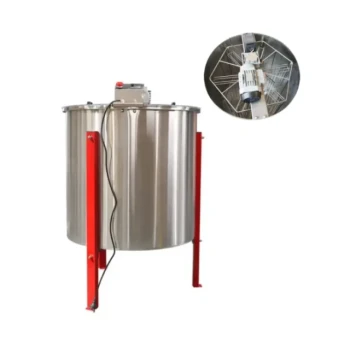
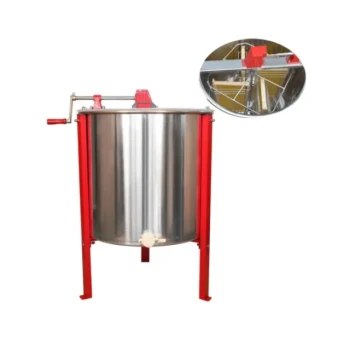
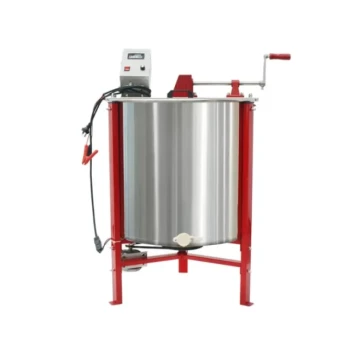
Honey extractor chambers rely on 1.5mm aluminum or galvanized stainless steel primarily to satisfy strict food-grade hygiene standards while maintaining structural integrity. This specific material choice creates a durable vessel that resists corrosion, allows for easy sanitation, and remains lightweight enough for transport between apiary sites.
These materials strike a critical balance between sanitary requirements and operational practicality. They provide the smooth, non-reactive surfaces necessary to prevent bacterial contamination without adding unnecessary weight to the equipment.
Engineering for Food Safety and Hygiene
Preventing Contamination
The primary function of the extraction chamber is to collect honey without altering its composition.
Both aluminum and galvanized stainless steel provide the smooth, non-porous surfaces required to meet food-grade standards. This prevents honey residue from becoming trapped, which significantly reduces the risk of bacterial growth or the introduction of impurities into the harvest.
Ease of Sanitation
To maintain food safety, extraction equipment must undergo frequent and rigorous cleaning.
The materials selected for these chambers are specifically chosen for their ability to withstand sanitization processes. They allow beekeepers to wash and sterilize the equipment repeatedly without degrading the surface, ensuring a contaminant-free environment for each extraction cycle.
Operational Practicality
The Importance of 1.5mm Thickness
The 1.5mm gauge is not an arbitrary measurement; it represents a specific engineering compromise.
This thickness provides sufficient durability to withstand the centrifugal forces and vibrations inherent in the extraction process. Simultaneously, it avoids the excessive bulk of heavier gauge metals, keeping material costs reasonable and the unit manageable.
Mobility for Apiarists
Beekeeping often requires moving equipment between various field locations.
Because aluminum and thin-gauge steel are naturally lightweight, they make the extractors significantly easier to transport. This portability is essential for apiarists who manage hives across multiple locations and need to set up processing stations quickly.
Understanding the Trade-offs
Galvanized vs. High-Grade Stainless Steel
While standard galvanized options meet basic requirements, there is a distinction in longevity and performance when compared to high-grade materials.
High-grade stainless steel offers superior corrosion resistance compared to standard galvanized alternatives. While galvanized steel is effective, the protective coating can eventually wear, whereas high-grade stainless steel maintains its non-corrosive properties throughout its entire structure.
Impact on Product Value and Investment
Choosing between these materials often comes down to a calculation of initial cost versus long-term value.
High-grade stainless steel requires a larger upfront investment but offers an extended service life and better preservation of honey purity. For large-scale professional production, this can enhance the market value of the final product, justifying the cost over time.
Making the Right Choice for Your Goal
When selecting an extractor, align the material choice with your operational scale and budget.
- If your primary focus is mobility and cost-efficiency: Opt for aluminum or standard galvanized steel models to secure food-grade hygiene in a lightweight, portable package.
- If your primary focus is long-term durability and premium purity: Invest in high-grade stainless steel to maximize corrosion resistance and extend the lifespan of your professional equipment.
Ultimately, the right material choice ensures your extraction process remains sanitary, efficient, and scalable to your specific beekeeping needs.
Summary Table:
| Feature | 1.5mm Aluminum / Galvanized Steel | High-Grade Stainless Steel |
|---|---|---|
| Primary Benefit | Cost-effective & Lightweight | Maximum Longevity & Purity |
| Hygiene Level | Food-grade compliant | Superior (Non-reactive) |
| Corrosion Resistance | Moderate (Surface protection) | High (Structural property) |
| Ideal For | Small apiaries & Mobile setups | Commercial honey production |
| Durability | High impact resistance | Exceptional wear resistance |
Elevate Your Honey Production with HONESTBEE
At HONESTBEE, we understand that the right equipment is the foundation of a successful apiary. Whether you are a large-scale commercial operation or a global distributor, our comprehensive wholesale range is designed to meet your exact specifications.
We supply everything from precision-engineered honey extractors and automated honey-filling machines to essential industry consumables and unique honey-themed merchandise. By choosing HONESTBEE, you gain a partner dedicated to providing durable, food-grade machinery that maximizes efficiency and ensures the highest purity for your harvest.
Ready to scale your business with professional-grade beekeeping tools?
Contact our expert team today to discuss your wholesale needs!
References
- Husen Bona. Improvement and Evaluation of Honey Extractor. DOI: 10.54536/ajise.v1i1.875
This article is also based on technical information from HonestBee Knowledge Base .
Related Products
- HONESTBEE 72 Frame Industrial Electric Honey Extractor for Beekeeping
- Commercial Electric 12 Frame Honey Extractor Spinner Motorized Honey Extractor
- HONESTBEE 3-Frame Manual Acrylic Honey Extractor
- electric honey extractor honey centrifuge 3 frame honey extractor stainless steel honey frame extractor
- HONESTBEE 6 Frame Self Reversing Electric Honey Extractor for Beekeeping
People Also Ask
- What is the importance of balancing honeycomb frames within a honey extractor? Ensure Stability and Protect Machinery
- How is honey separated from the frames after they are uncapped? Efficient Extraction Methods for High Yields
- What are the main benefits of using a honey extractor? Maximize Yields and Protect Your Honeycomb
- What are the recommended methods for removing honey from the honeycomb? Top Extraction Techniques for Maximum Efficiency
- How do manual honey extractors compare to electric honey extractors? Choosing the Right Tool for Your Apiary Growth