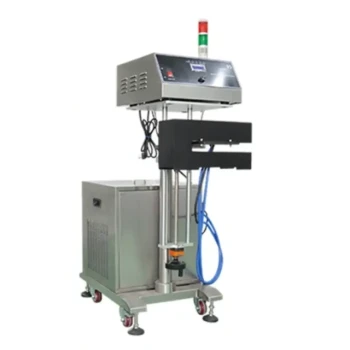
The primary function of industrial deep freezers in Nosemosis detection is to ensure sample integrity through rapid biological inactivation.
When processing live honey bee samples, industrial deep freezers are utilized to instantaneously induce a static state. This prevents stress-induced physiological changes and allows for the precise physical manipulation required during dissection.
Core Takeaway Accuracy in Nosemosis detection relies on analyzing the honey bee's digestive tract exactly as it existed in the hive. Deep freezing serves as a "pause button" for biological processes, ensuring that the distribution of Nosema spores remains undisturbed by the stress of capture or dissection.
The Critical Role of Rapid Inactivation
Preventing Physiological Stress Responses
When a honey bee is handled or dissected while alive or slowly cooled, it undergoes significant physiological stress. This stress can trigger muscular contractions and digestive movements.
These internal movements are problematic because they can disturb the natural distribution of Nosema spores within the digestive tract. By using an industrial deep freezer, you achieve rapid inactivation, effectively locking the internal physiology in place before these stress responses can occur.
Facilitating Precise Dissection
To detect Nosema, technicians must isolate specific parts of the bee's anatomy, specifically the abdomen.
Deep freezing renders the bee into a completely static state. This rigidity allows for the precise removal of the abdomen without the risk of rupturing unrelated organs or dealing with fluid movement that occurs in fresh or chemically preserved samples.
Understanding Sample Preservation Context
The Difference Between Transport and Processing
It is important to distinguish between transporting samples and processing them for dissection.
While industrial freezers are critical for the dissection stage, ethanol fixation (70% concentration) is often used during collection and transport. Ethanol penetrates tissues to inhibit microbial activity and prevent spore decomposition during transit.
Thermal Control for Proteomic Analysis
If the goal extends beyond visual spore counts to molecular analysis, temperature control becomes even more critical.
Supplementary protocols utilize industrial sampling bags and freezing gel packs to maintain low temperatures during collection. This prevents the degradation of sensitive viral and Nosema proteins, ensuring that mass spectrometry can accurately identify molecular markers later in the lab.
Operational Trade-offs and Considerations
Brittle Tissue vs. Tissue Integrity
Deep freezing changes the physical properties of biological samples. While the primary reference highlights the benefit of a static state for dissection, extreme cold makes biological materials brittle.
In related apicultural processes (such as extracting bee bread), freezing makes beeswax fragile enough to shatter. When dissecting bees, this brittleness is an asset for separation, but it requires careful handling to avoid shattering the very tissues needed for analysis.
Equipment Dependency
Reliability on industrial deep freezers introduces a dependency on heavy infrastructure. Unlike ethanol preservation, which is shelf-stable at room temperature (or 4°C), deep freezing requires constant power and monitoring. Any failure in the freezing cycle could lead to thawing, reactivation of biological processes, or degradation of the sample.
Making the Right Choice for Your Goal
To ensure the highest accuracy in your Nosemosis detection workflow, align your preservation method with your specific analytical stage:
- If your primary focus is dissection and spore counting: Prioritize industrial deep freezing to prevent stress-induced spore redistribution and ensure precise abdomen removal.
- If your primary focus is sample transport: Use 70% ethanol or freezing gel packs to prevent microbial decomposition and protein degradation before the samples reach the lab.
- If your primary focus is molecular analysis (Proteomics): Maintain a strict low-temperature chain from the moment of collection to prevent the breakdown of specific protein markers.
By controlling the biological state of the bee through deep freezing, you transform a chaotic biological sample into a stable, quantifiable data point.
Summary Table:
| Preservation Method | Primary Goal | State of Sample | Ideal Use Case |
|---|---|---|---|
| Industrial Deep Freezing | Rapid biological inactivation | Static & Rigid | Precise dissection & spore counting |
| 70% Ethanol Fixation | Microbial inhibition | Chemically preserved | Sample collection and long-distance transport |
| Freezing Gel Packs | Thermal control | Chilled | Proteomic analysis and maintaining protein markers |
Maximize Your Lab’s Precision with HONESTBEE
Accurate Nosemosis detection starts with professional-grade infrastructure. At HONESTBEE, we specialize in empowering commercial apiaries and distributors with the high-performance machinery and tools necessary for advanced bee health monitoring. From industrial-grade freezing solutions for sample processing to specialized honey-filling machines and hive-making hardware, we offer a comprehensive wholesale portfolio tailored to the needs of the modern apiculture industry.
Enhance your operational efficiency and safeguard your bee health data today.
Contact our specialists for wholesale equipment solutions
References
- Mehmet Özüiçli, Suna Aslı Zengin. Nosema ceranae ile doğal enfekte balarısı kolonilerinde NOSEBA®’nın etkinliğinin araştırılması. DOI: 10.30782/jrvm.593762
This article is also based on technical information from HonestBee Knowledge Base .
Related Products
- Economy Small Scale Honey Dryer Dehumidifier Thickening Machine
- Solar Beeswax Melter Easy Solar Wax Melter for Beeswax
- Heavy-Duty Ergonomic Grip Galvanized Pollen Shovel
- HONESTBEE AC Powered Wire Embedder with Alligator Clips
- 5 Gallon Pail Opener Bucket Opener Tool for Honey Bucket
People Also Ask
- What are the benefits of using a honey dryer for honey production? Boost Yield & Quality
- What are the features of the honey dryer? Achieve Premium Quality & Maximize Your Harvest
- What are the key features of the honey dryer? Essential Guide to Advanced Moisture Reduction Technology
- What is the primary construction material of the honey dryer? Durable AISI 304 Stainless Steel for Beekeepers
- How does the design of some honey dryers achieve high drying efficiency without a vacuum system? Boost Your Productivity