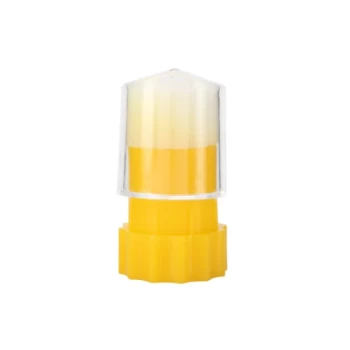
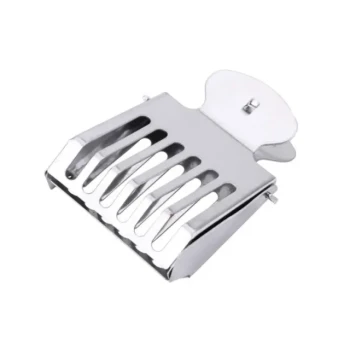
Industrial-grade markers provide a robust system for visual coding in complex hive environments. In behavioral genetics experiments, these markers are applied to the thorax of honeybees to differentiate between specific experimental groups, such as those reared in colonies, incubators, or those with physical modifications like wing resection. This allows researchers to immediately identify and retrieve specific treatment individuals from thousands of other bees.
The primary value of industrial marking is the ability to maintain distinct identity over time. It ensures that behavioral observations are accurately linked to specific developmental stages and genetic profiles without the risk of mistaken identity.
Ensuring Experimental Precision
Visual Coding of Treatment Groups
In a typical hive, thousands of bees look identical. Industrial-grade markers solve this by assigning unique color codes to specific cohorts.
This is essential when comparing distinct groups, such as colony-reared versus incubator-reared bees. Without this visual differentiation, it would be impossible to correlate specific environmental treatments with resulting behaviors.
Tracking Developmental Stages
Honeybee behavior is tightly linked to age and development. Markers enable the precise correlation of an individual's developmental stage with their behavioral performance.
Researchers can mark a bee at emergence and track its transition from hive duties to foraging. This longitudinal data is critical for understanding the progression of behavioral maturation.
The Critical Role of Durability
Withstanding Hive Conditions
A honeybee hive is a physically abrasive environment. Markers must be wear-resistant to remain legible after weeks of activity.
Industrial-grade paint ensures the identifier survives the constant friction of the hive. Standard markers often fade or chip, which would lead to lost data points and wasted experimental effort.
Facilitating Long-Term Studies
Some experiments require tracking bees over extended periods, such as overwintering phases. The persistence of the marker is the only link to the bee's history.
This durability ensures that target samples can be recovered accurately even after months. It prevents the confounding factor of losing track of older, surviving individuals.
Minimizing Variables in Genetic Analysis
Age Synchronization for Transcriptomics
Gene expression in honeybees changes dynamically as they age. Precise age synchronization is vital for reproducibility in transcriptomic analysis.
By marking newly emerged (one-day-old) bees, researchers can harvest them later (e.g., as 18-21 day-old foragers) with certainty. This eliminates age variance, ensuring that differences in gene expression are due to experimental variables, not age discrepancies.
Non-Invasive Identification
While the paint is durable, it must not alter the bee's behavior. Specialized marking methods are designed to avoid interfering with normal physiological activities.
This ensures the data reflects natural behavior rather than stress responses to the marker itself. The goal is to observe the bee, not the burden of the tag.
Understanding the Trade-offs
Application Precision
While the markers are effective, the application process requires high precision. The paint must be applied to the thorax without spreading to the wings or sensory organs.
If applied casually, the marker could physically impede the bee. This would introduce a new variable—physical handicap—that invalidates behavioral data.
Material Selection
Not all "industrial" markers are safe for biological use. Researchers must select formulations that offer adhesion without toxicity.
Using a marker with volatile solvents could chemically alter the bee's physiology or induce hive rejection. The balance between adhesion and biocompatibility is strict.
Maximizing Data Integrity in Behavioral Studies
To ensure your experimental design yields valid genetic and behavioral insights, consider how your marking strategy aligns with your specific goals:
- If your primary focus is Transcriptomics: Prioritize marking newly emerged bees to guarantee age synchronization, as gene expression is highly sensitive to age variances.
- If your primary focus is Long-Term Survival: Select high-adhesion, industrial-grade paints capable of withstanding overwintering conditions to prevent sample loss.
Successful behavioral genetics relies on the certainty that the bee you analyze today is the exact same individual you treated weeks ago.
Summary Table:
| Feature | Importance in Behavioral Genetics | Benefit to Researchers |
|---|---|---|
| Wear Resistance | Survives abrasive hive conditions | Prevents data loss over long-term studies |
| Visual Coding | Differentiates treatment cohorts | Immediate identification among thousands of bees |
| Age Synchronization | Fixes exact emergence date | Ensures reproducibility in transcriptomic analysis |
| Non-Invasive | Minimizes physiological stress | Guarantees data reflects natural behavior |
Elevate Your Apiary Operations with HONESTBEE
Precision is the backbone of successful beekeeping, whether in a research lab or a commercial operation. At HONESTBEE, we specialize in supporting commercial apiaries and distributors with a comprehensive range of professional-grade tools. From specialized beekeeping machinery and hive-making equipment to essential consumables and honey-themed cultural merchandise, our wholesale portfolio is designed to enhance your efficiency and scale.
Partner with a supplier that understands the technical demands of the industry. Contact us today to explore our full spectrum of beekeeping solutions and see how our hardware and expertise can drive your business forward.
References
- Hiroki Kohno, Takeo Kubo. Analysis of Antennal Responses to Motion Stimuli in the Honey Bee by Automated Tracking Using DeepLabCut. DOI: 10.1007/s10905-023-09845-4
This article is also based on technical information from HonestBee Knowledge Base .
Related Products
- Plastic Long Marker Device for Catching and Marking Bees Queen Bee Marking Tube and Cage
- Queen Bee Marking Pen UNI Medium Point for Queen and Bee Marking
- Queen Bee Marking Pen POSCA Queen Marking Pens for Beekeeping Bee Markers
- Professional Engraved Round Hive Number Tags for Beekeeping
- Professional Large-Format Hive Number Set for Beekeeping
People Also Ask
- Where on the queen bee's body should the mark be applied? Master the Art of Safe Queen Identification
- What are the primary objectives for marking a queen bee? Master Hive Management and Data Tracking
- Why is the physical marking of a queen bee important? Ensure Precise Colony Replacement Cycle Tracking
- How do you capture and immobilize a bee for marking? Master Safe Queen Handling for Your Apiary
- What are the different methods for applying a mark to a queen bee? Master Safe and Effective Queen Marking Techniques