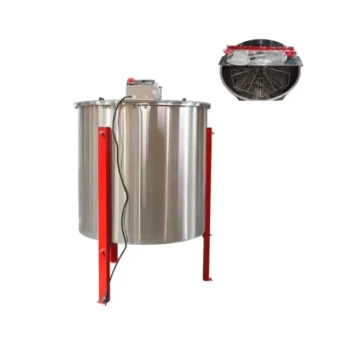
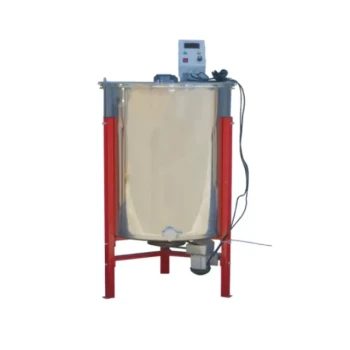
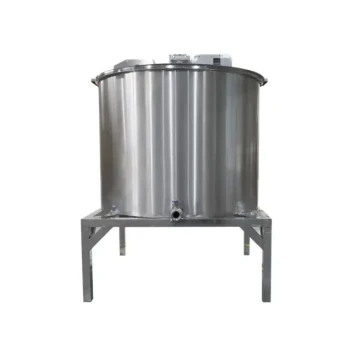
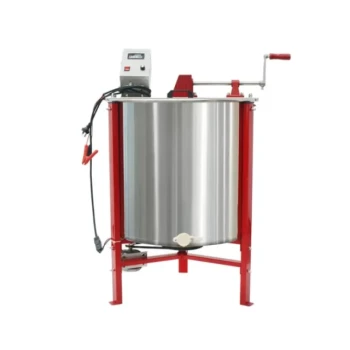
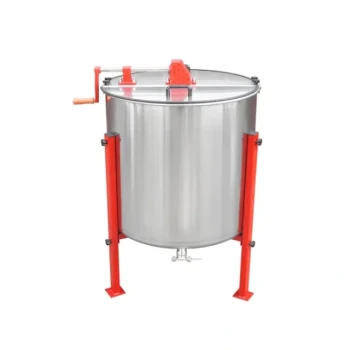
Motor-driven honey extraction tools form the operational core of commercial apiaries by providing the continuous, stable high-speed rotation necessary to process massive volumes of honey frames. Unlike manual methods, these automated systems utilize precise speed controls to ensure thorough extraction, significantly increasing throughput while drastically lowering the physical labor intensity required for industrial-scale production.
Commercial success in beekeeping relies on converting a labor-intensive harvest into a streamlined industrial process. Motor-driven tools provide the automated consistency required to maximize yield, reduce unit costs, and maintain rigorous quality standards at scale.
Achieving Industrial Throughput
To meet the demands of the wholesale and export markets, large-scale apiaries must move beyond the limitations of manual processing.
Continuous High-Speed Rotation
The primary advantage of motor-driven equipment is the ability to sustain high rotational speeds without fatigue. Automated control systems maintain this rotation consistently, ensuring that processing does not slow down during peak harvest times.
Maximizing Extraction Yield
Manual extraction often leaves usable honey behind due to inconsistent speeds. Motor-driven tools use precise speed regulation to generate sufficient centrifugal force, extracting the maximum amount of honey from every frame.
Scalable Volume Processing
Industrial-grade machinery is designed to handle high frame counts simultaneously. This capacity allows commercial operations to process large harvests rapidly, preventing bottlenecks in the production line.
Economic and Operational Efficiency
The shift to motor-driven tools is fundamentally an economic decision that impacts the bottom line through labor allocation and cost reduction.
Reducing Labor Intensity
Manual extraction is physically exhausting and requires a significant workforce. Motor-driven tools automate the heavy lifting, significantly reducing the physical strain on workers and lowering the overall labor intensity of the harvest.
Lowering Production Costs
By utilizing high-efficiency automation, apiaries can process more units per hour. This speed and efficiency directly lower the production cost per unit of honey, enhancing price competitiveness in international markets.
Reallocating Time for Colony Management
Time saved on the extraction line can be reinvested into core beekeeping tasks. Automating the harvest allows apiarists to focus on critical management activities, such as timely Varroa mite treatments, which are essential for reducing winter mortality rates.
Quality Control and Standardization
Beyond speed, motor-driven extraction plays a vital role in maintaining the integrity and value of the final product.
Preserving Honey Quality
High-efficiency centrifugal processes separate honey from the comb without utilizing heat or destructive methods. This preserves the natural nutrients, physical properties, and flavor profiles of the honey, which is critical for maintaining market value.
Ensuring Hygiene Compliance
Standardized, motor-driven equipment is built to meet modern hygiene standards. By reducing manual handling and accelerating the transition from extraction to packaging, these tools minimize the risk of secondary contamination.
Protecting Honeycomb Structure
Precise control over centrifugal force ensures that honey is extracted without destroying the delicate honeycomb structure. This allows beekeepers to reuse combs, saving the bees energy and resources in future seasons.
Understanding the Operational Trade-offs
While motor-driven tools are essential for scale, they introduce specific complexities that must be managed.
Infrastructure Dependencies
Unlike manual extractors, motor-driven systems require a reliable power source and stable infrastructure. A power failure or mechanical breakdown can halt the entire production line, making maintenance protocols critical.
Capital Investment
The initial cost of industrial-grade automated equipment is significantly higher than manual counterparts. Apiaries must ensure their production volume justifies the upfront capital expenditure to realize a return on investment through labor savings.
Optimizing Your Extraction Strategy
Choosing the right equipment depends on the specific bottlenecks in your current operation.
- If your primary focus is increasing throughput: Prioritize equipment with automated control systems that offer the highest continuous rotational speeds to maximize volume processing.
- If your primary focus is product quality: Select machinery with fine-tuned speed regulation to ensure thorough extraction that preserves nutrient profiles and honeycomb integrity.
- If your primary focus is labor management: Leverage high-efficiency automation to free up your workforce, redirecting them toward colony health maintenance and pest control.
Standardizing your extraction process with motor-driven tools is the definitive step toward transforming a beekeeping operation into a high-yield commercial enterprise.
Summary Table:
| Feature | Manual Extraction | Motor-Driven Extraction |
|---|---|---|
| Throughput | Low (Limited by physical stamina) | High (Continuous industrial volume) |
| Labor Intensity | Extremely High | Low (Automated operation) |
| Extraction Yield | Inconsistent (Residual honey left) | Maximized (Precise speed control) |
| Cost Efficiency | High labor cost per unit | Lowered production cost at scale |
| Comb Preservation | Higher risk of damage | Protected via regulated centrifugal force |
| Quality Control | Variable results | Standardized and hygienic |
Scale Your Honey Production with HONESTBEE Industrial Solutions
Transitioning to a high-yield commercial enterprise requires more than just bees—it requires the right industrial infrastructure. HONESTBEE specializes in empowering commercial apiaries and distributors with high-performance beekeeping machinery and tools designed for the global market.
Why partner with HONESTBEE?
- Comprehensive Wholesale Offering: From automated honey-filling machines to hive-making hardware, we supply the full spectrum of equipment.
- Industrial Efficiency: Our motor-driven tools are engineered to maximize your extraction yield while drastically reducing labor costs.
- Full-Spectrum Support: We provide everything from essential consumables to specialized honey-themed cultural merchandise.
Ready to optimize your harvest and enhance your market competitiveness? Contact us today to explore our wholesale catalog and equipment solutions!
References
- Department of Entomology, Gazipur Agricultural University, Gazipur, Bangladesh. Apiculture in Bangladesh: scientific insights and transformation towards modern beekeeping. DOI: 10.59619/ej.7.2.9
This article is also based on technical information from HonestBee Knowledge Base .
Related Products
- Commercial Electric 12 Frame Honey Extractor Spinner Motorized Honey Extractor
- Vertical Motor Kits for 2 3 4 Frame Electric Honey Extractors
- 8-Frame Electric Self-Reversing Honey Extractor Spinner for Commercial Honey Extraction Equipment
- HONESTBEE 6 Frame Three Use Electric Honey Extractor for Beekeeping
- Electric 8 Frame Honey Spinner Extractor Equipment for Beekeeping
People Also Ask
- Who are commercial honey extractors designed for? Scaling Your Industrial Beekeeping Success
- What is a commercial honey extractor? The Essential High-Volume Solution for Large Apiaries
- How is honey extracted commercially? Maximize Your Apiary's Efficiency and Honey Yield
- What are commercial honey extractors used for? Boost Your Apiary's Efficiency & Profitability
- What are the advantages of motorized extractors? Boost Honey Production and Save Time