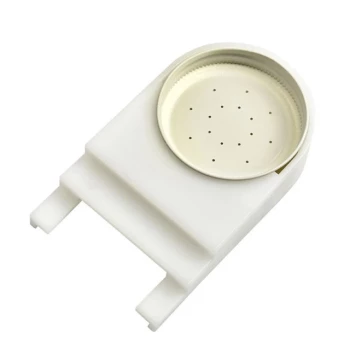
Plastic feeders and standardized honey syrup function as critical experimental controls to isolate the effects of venom collection on honeybee health. By utilizing a fixed 50% syrup concentration delivered through a measurable vessel, researchers can precisely track consumption rates without the interference of natural environmental variables. This methodology allows for the quantification of hoarding behavior and compensatory feeding, directly linking these shifts to the metabolic stress caused by electro-stimulation.
Standardization is the key to accurate metabolic analysis. By removing the variability of natural foraging, researchers ensure that any change in food intake is a direct response to the energy demands of the venom harvesting process.
Establishing Experimental Control
The Role of Consistent Delivery
To accurately measure metabolic impact, the method of food delivery must be uniform. Plastic feeders provide a stable, controlled interface for the colony.
Unlike natural flowers, which vary in accessibility and distance, a feeder allows researchers to present food in the exact same way to every test subject. This ensures that the physical act of accessing food does not skew the energy data.
The Necessity of Nutrient Standardization
A 50% honey syrup solution acts as a calibrated baseline for nutrition. Natural nectar varies significantly in sugar content and chemical composition depending on the plant source.
By using a standardized syrup, scientists know exactly how much energy is contained in every milliliter consumed. This transforms food intake from a vague observation into a hard data point regarding energy input.
Measuring the Metabolic Impact
Quantifying Hoarding Behavior
Hoarding is a natural instinct in bees, but its intensity can fluctuate based on colony stress. The primary reference indicates that tracking syrup consumption reveals shifts in this specific behavior.
When researchers observe a change in how rapidly the syrup is depleted, they are observing the colony's psychological and physiological response to the harvest. This helps determine if the bees feel a sudden need to stockpile resources following electro-stimulation.
Identifying Compensatory Feeding
Venom collection is an energy-intensive event for the bees. The study uses the syrup consumption rate to identify "compensatory feeding habits."
If bees consume significantly more syrup after the harvest, it suggests they are metabolically depleted. The standardized syrup allows researchers to measure exactly how much extra energy is required to recover from the harvesting process.
Understanding the Trade-offs
Artificiality vs. Precision
While plastic feeders and syrup offer excellent data precision, they create an artificial feeding environment. This setup isolates the variable of "energy intake" but removes the complex physical exertion of natural foraging flights.
Nutritional Simplicity
A 50% honey syrup focuses primarily on carbohydrate energy. It is a simplified diet compared to the complex mix of nectar and pollen bees access in the wild.
Therefore, while this method is excellent for measuring raw energy metabolism, it may not capture the full spectrum of nutritional needs or deficiencies that could arise from long-term venom collection.
Interpreting the Data for Application
When reviewing studies or designing experiments regarding bee health and venom collection, understanding the input variables is crucial.
- If your primary focus is quantitative data: Prioritize methods that use standardized inputs like 50% syrup to eliminate environmental noise and ensure reproducibility.
- If your primary focus is colony welfare: Look for "compensatory feeding" metrics as a direct indicator of the physiological stress and recovery time imposed by the harvesting equipment.
Standardized feeding protocols transform subjective observations of bee behavior into objective, measurable data regarding colony energy metabolism.
Summary Table:
| Component | Role in Research | Benefit to Metabolic Analysis |
|---|---|---|
| Plastic Feeders | Uniform Delivery Interface | Eliminates energy variables related to food accessibility. |
| 50% Honey Syrup | Calibrated Energy Source | Provides a hard data point for energy intake vs. expenditure. |
| Hoarding Metrics | Behavioral Indicator | Measures psychological and physiological stress responses. |
| Compensatory Feeding | Recovery Assessment | Quantifies the exact energy required to recover from harvesting. |
Elevate Your Commercial Apiary with HONESTBEE
At HONESTBEE, we understand the delicate balance between high-yield production and colony welfare. Whether you are conducting research or scaling up operations, our comprehensive wholesale portfolio is designed to meet the rigorous demands of commercial apiaries and distributors.
Our Value to You:
- Precision Machinery: From specialized hive-making equipment to advanced honey-filling machines.
- Total Equipment Solutions: A full spectrum of professional beekeeping tools and essential consumables.
- Industry Expertise: We supply the hardware and knowledge necessary to optimize honey and venom harvesting without compromising bee health.
Ready to enhance your productivity with industry-leading tools? Contact us today to discuss your wholesale needs and see how HONESTBEE can support your business growth.
References
- A. El-Saeady, Amira Metwaly. Effect of Bee Venom Collecting on The Behavior of Honeybee Colonies. DOI: 10.21608/jppp.2016.50576
This article is also based on technical information from HonestBee Knowledge Base .
Related Products
- Rapid Bee Feeder White Plastic 2L Round Top Feeder for 8 or 10-Frame Bee Hives
- White Plastic 0.5L Beekeeping Entrance Feeder for Bees
- 3.5L Plastic Beehive Frame Feeder Deep Frame Water Feeder for In Hive Use
- Professional Plastic Honey Dipper for Easy Honey Drizzling
- Yellow Plastic Bucket Pail Perch for Beekeeping
People Also Ask
- What should be done with feeders and equipment after feeding bees? Essential Steps for Apiary Health
- What should be done if feed in a feeder is not consumed by the bees? Prevent Hive Mold with Prompt Feed Management
- What is the necessity of specialized internal or entrance feeders? Secure Your Hive with Professional Feeding Tools
- How do bee feeders work to preserve colony health during nectar shortages? Essential Guide for Beekeepers
- How quickly does a medium to strong colony usually empty a feeder? A Beekeeper's Guide to Hive Health