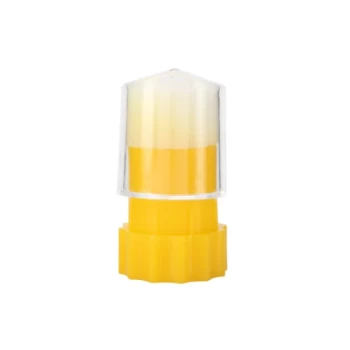
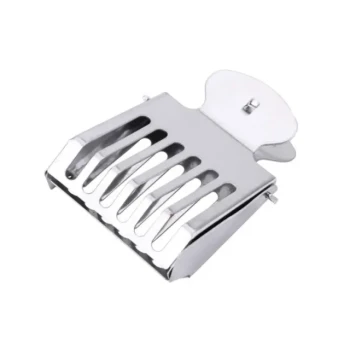
Professional queen marking tools are the absolute prerequisite for data integrity in apicultural research. These specialized paints, pens, or tags allow researchers to apply a unique identifier to the queen bee’s thorax. This visual distinction is the only reliable method to differentiate the original experimental queen from a "supersedure" queen raised by the colony to replace her, thereby ensuring that long-term data regarding survival rates and longevity remains accurate.
The core value of professional marking is the elimination of variable ambiguity. By permanently distinguishing the subject queen from natural replacements, these tools prevent the accidental collection of false survival data, ensuring that observed outcomes are strictly tied to your specific experimental conditions.
The Critical Role of Identification in Field Studies
Distinguishing Original vs. Supersedure Queens
In any long-term experiment, a colony may naturally decide to replace its queen—a process known as supersedure.
Without a professional mark on the thorax, a new daughter queen looks nearly identical to the original mother.
Professional marking tools allow you to immediately recognize if the experimental subject is still present or if she has been secretly replaced by the colony.
Ensuring Accurate Survival Data
The validity of longevity studies hinges on tracking the same biological entity over time.
If a researcher mistakes a new supersedure queen for the original, the survival rate data becomes corrupted.
Marking ensures that mortality statistics reflect the actual lifespan of the treated queen, rather than the collective lifespan of a succession of queens.
Managing Lineage and Productivity
Tracking Age and Birth Years
Beyond simple identification, professional tools utilize specific color codes to represent different years.
This allows beekeepers and researchers to instantly visually verify the age of a queen without consulting complex records.
This chronological tracking is essential for correlating age with performance metrics over multi-year studies.
Maintaining Genetic Standards
By explicitly identifying individual queens, apiarists can track specific lineage origins and production performance.
This data enables the timely replacement of older or underperforming queens to maintain optimal genetic standards.
It ensures that the colony's vigor and egg-laying rates remain uniform and controllable across the entire apiary.
Understanding the Trade-offs
Durability vs. Safety
Professional tools are formulated to be non-toxic to the insect while remaining highly durable against hive conditions.
Using ad-hoc markers (like standard office supplies) introduces the risk of toxicity or rapid fading.
If a mark fades before the experiment concludes, the "chain of custody" for that data point is broken, rendering the results inconclusive.
Application Risks
While essential, the application of marking material requires physical handling of the queen.
Improper application can lead to injury or cause the colony to reject ("ball") and kill the queen due to foreign scents.
Therefore, the use of professional tools must be paired with skilled handling techniques to avoid introducing handling-induced mortality as a confounding variable.
Making the Right Choice for Your Goal
- If your primary focus is Survival Studies: Prioritize high-contrast, durable paints to definitively rule out supersedure events during data collection.
- If your primary focus is Production Management: Utilize industry-standard color coding (such as the 5-year color cycle) to streamline age tracking and replacement schedules.
Professional marking is not merely an administrative task; it is the fundamental control mechanism that validates the biological accuracy of your research.
Summary Table:
| Feature | Professional Marking Tools | Ad-hoc/Office Markers |
|---|---|---|
| Data Integrity | Eliminates supersedure ambiguity | High risk of false survival data |
| Durability | Long-lasting under hive conditions | Fades quickly; breaks data chain |
| Safety | Non-toxic to bees | Risk of toxicity and colony rejection |
| Tracking | Standardized 5-year color coding | Manual, inconsistent record-keeping |
| Primary Use | Survival studies & lineage control | Temporary identification only |
Secure Your Apiary’s Data Integrity with HONESTBEE
At HONESTBEE, we understand that for commercial apiaries and distributors, precision is the foundation of productivity. We provide a comprehensive wholesale range of professional beekeeping tools, from specialized queen marking equipment and hive-making machinery to honey-themed cultural merchandise. Whether you are conducting long-term research or managing large-scale honey production, our high-quality consumables and hardware ensure your operations remain efficient and your genetic standards stay peak.
Ready to scale your beekeeping business with professional-grade equipment? Contact HONESTBEE Today to explore our wholesale offerings and discover how we can streamline your honey production and hive management.
References
- Veeranan Chaimanee, Jeffery S. Pettis. Gene expression, sperm viability, and queen (Apis mellifera) loss following pesticide exposure under laboratory and field conditions. DOI: 10.1007/s13592-019-00645-4
This article is also based on technical information from HonestBee Knowledge Base .
Related Products
- One Hand Yellow Queen Marking Catcher Tube Cage Beekeeper Tool Accessory for Queen Bee
- Queen Bee Marking Pen UNI Medium Point for Queen and Bee Marking
- Stainless Steel Queen Grafting Tool for Beekeeping and Bee Queen Grafting
- Plastic Long Marker Device for Catching and Marking Bees Queen Bee Marking Tube and Cage
- Queen Bee Marking Tube Cage Bottle Catcher Holder with Clear Plastic Plunger Marker
People Also Ask
- What is the significance of using queen marking tools in apiary performance monitoring? Optimize Your Hive Productivity
- Why are high-quality queen bee marking tools essential for pedigree tracking? Master Honey Bee Genetic Integrity
- What tools are commonly used for marking queen bees? A Guide to Safe and Effective Marking
- What tools are recommended for marking a Queen bee? Ensure a Safe and Successful Mark
- What physical risks are involved in marking a queen bee? Expert Safety Tips for Successful Hive Management