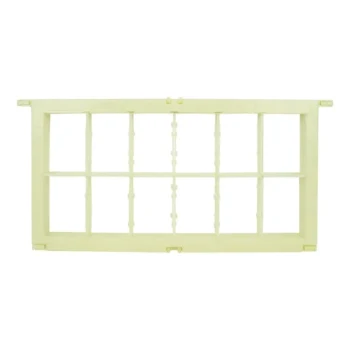
Small fixed-comb hives are the primary standard for transport because they provide the most efficient balance between low manufacturing costs and logistical flexibility. Their design allows them to serve as lightweight, economical shipping containers that act as a bridge between remote swarm capture sites and commercial markets.
The Core Insight Think of these hives not as permanent apiary equipment, but as the "cardboard boxes" of the bee trade. They are purpose-built to be disposable and portable, prioritizing the logistics of moving live stock over the features required for long-term colony management.
The Economic Logic of Fixed-Comb Hives
Minimizing Overhead Risks
In the colony trade, the container itself represents a significant portion of the cost structure. Small fixed-comb hives are extremely cost-effective to produce, often utilizing inexpensive or local materials. This allows sellers to trade colonies without losing valuable, permanent equipment in the transaction.
The "Disposable" Advantage
Because production costs are so low, these hives function effectively as disposable containers. If a hive is not returned by the buyer or is damaged during transit, the financial loss to the supplier is negligible. This single-use model simplifies the supply chain by removing the need for reverse logistics to return empty hives.
Logistical and Functional Benefits
Accessibility to Remote Areas
Honeybee breeding and swarm trapping often occur in remote locations inaccessible to heavy vehicles. The compact size of these hives facilitates manual portage or transport via public transit systems. This portability ensures that bees can be moved from deep rural areas to market hubs without specialized freight infrastructure.
Optimization for Colony Development
Beyond transport, the specific volume of these hives is functionally ideal for the biological needs of the bees. The size is perfectly calibrated for swarm trapping, attracting natural colonies effectively. Furthermore, the compact space supports initial colony development, allowing a swarm to establish itself securely before being subjected to the stress of travel.
Understanding the Operational Trade-offs
The Transfer Requirement
While excellent for transport, the "fixed-comb" design presents a hurdle at the destination. Buyers cannot simply swap frames into a modern hive; they must perform a transfer process to move the bees into permanent housing. This shifts the labor burden of colony establishment to the buyer.
Durability Limitations
As these containers are often designed to be disposable, they lack the robustness of permanent apiary equipment. They are engineered for the short-term goals of capture and transport, rather than long-term weathering or predator protection.
Strategic Application for Beekeepers
## Assessing Your Logistics Strategy
To determine if small fixed-comb hives fit your operation, consider your position in the supply chain:
- If your primary focus is capturing swarms: Utilize these hives to maximize the number of traps you can deploy and retrieve manually from difficult terrain.
- If your primary focus is selling starter colonies: Adopt this format to eliminate the risk of losing expensive woodenware during sales transactions.
- If your primary focus is purchasing bees: Be prepared to immediately transfer the colony into standard movable-frame equipment upon arrival.
Ultimately, the small fixed-comb hive persists because it solves the specific problem of mobility, treating the hive as a vessel for transit rather than a permanent home.
Summary Table:
| Feature | Small Fixed-Comb Hives | Standard Movable-Frame Hives |
|---|---|---|
| Primary Use | Transportation & Swarm Capture | Long-term Colony Management |
| Cost per Unit | Very Low (Disposable) | High (Capital Investment) |
| Portability | Excellent (Lightweight/Compact) | Moderate to Low (Heavy/Bulky) |
| Logistics | No return shipping required | Requires reverse logistics/tracking |
| Management | Difficult (Comb is fixed) | Easy (Removable frames) |
| Durability | Short-term/Single-use | Long-term (Multi-season) |
Scale Your Apiary Operations with HONESTBEE
Transitioning from transport to production requires the right equipment. Whether you are a commercial apiary needing to transfer colonies or a distributor looking to supply the latest in apiculture technology, HONESTBEE has you covered.
We provide a comprehensive wholesale range, including:
- Advanced Machinery: Hive-making and honey-filling machines to automate your workflow.
- Professional Hardware: Full spectrum beekeeping tools and durable equipment.
- Industry Consumables: Every essential needed to keep your colonies thriving.
- Unique Merchandise: Honey-themed cultural products to diversify your retail offering.
Maximize your efficiency and minimize overhead today. Contact our team to discuss wholesale solutions and let us help you build a more robust beekeeping business.
References
- Teweldemedhn Gebretinsae Hailu, Martin Hasselmann. Rapid transformation of traditional beekeeping and colony marketing erode genetic differentiation in Apis mellifera simensis, Ethiopia. DOI: 10.1007/s13592-022-00957-y
This article is also based on technical information from HonestBee Knowledge Base .
Related Products
- Reusable Aluminium Beetle Trap for Small Hive Beetles Silver Bullet
- Reusable Clear Small Hive Beetle Traps for Beehives Beetle Trapping Tools
- Wholesales Dadant Size Wooden Bee Hives for Beekeeping
- Portable Bee Mating Hive Boxes Mini Mating Nucs 8 Frames for Queen Rearing
- Styrofoam Mini Mating Nuc Box with Frames Feeder Styrofoam Bee Hives 3 Frame Nuc Box
People Also Ask
- How should powdered substances be used in beetle traps for hive beetle control? Expert Guide for Maximum Colony Protection
- Why are beetle traps less effective during winter? Seasonal Shifts in Pest Control Explained
- When is the best time to use small hive beetle traps in cold climates? Protect Your Honeybee Winter Stores Now
- When and how should disposable traps for small hive beetles be removed? Master Hive Hygiene and Efficiency
- How do small hive beetle traps contribute to colony management? Enhance Diagnostic Accuracy and Protect Hive Health