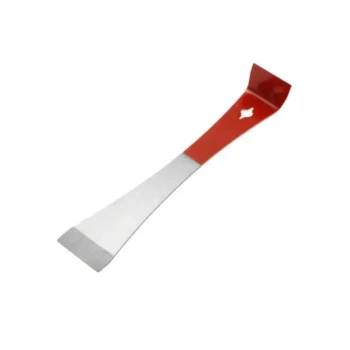
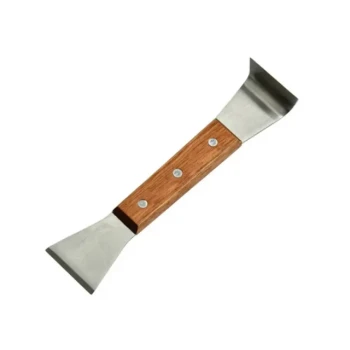
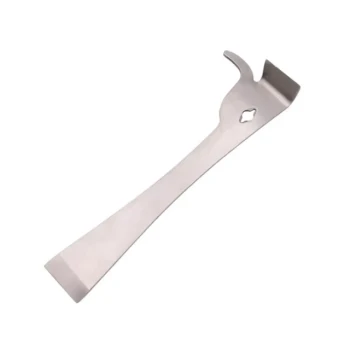
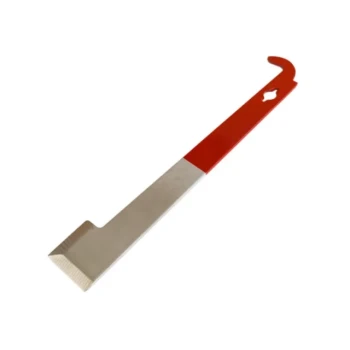
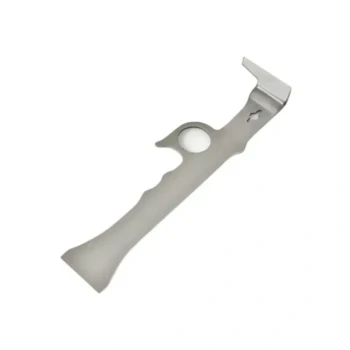
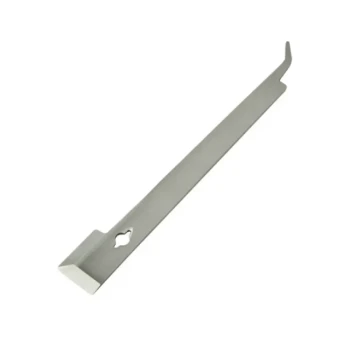
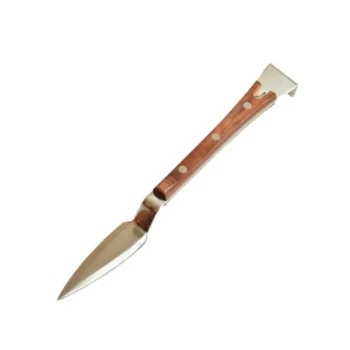
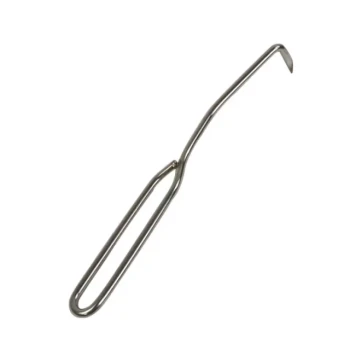
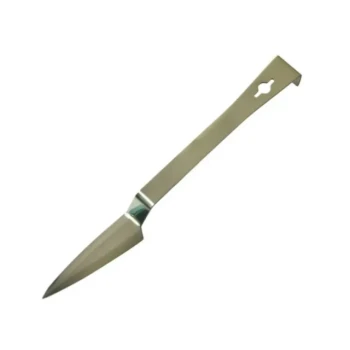
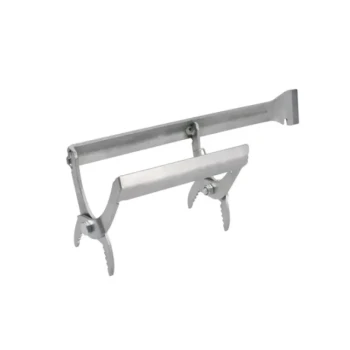
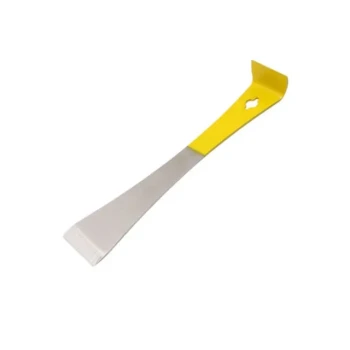
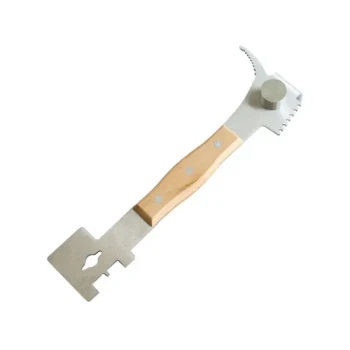
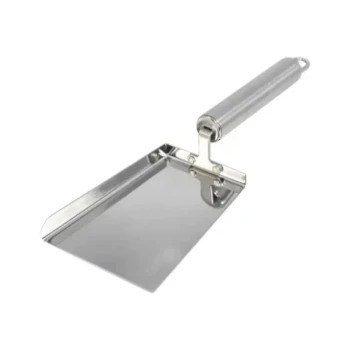
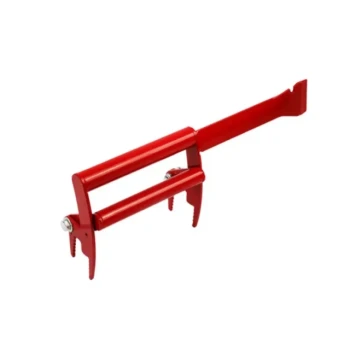
Specialized metal hive tools are recommended because they deliver controlled leverage, durability, and scraping performance that general workshop tools often cannot. Their pry ends separate propolis-sealed frames and hive boxes, while their sharp edges remove wax and propolis with less risk of damaging wooden components. For sanitation, clean the tool between colonies and use a validated heat or chemical disinfection method; inserting it into clean soil may remove visible residue, but should not be treated as dependable pathogen sterilization.
A purpose-built metal hive tool protects hive equipment, reduces colony disturbance, and withstands repetitive prying forces. Because the same tool can transfer disease between colonies, sanitation must be part of every professional inspection routine.
Why General Workshop Tools Are a Poor Substitute
Hive components are bonded by propolis
Honeybees use propolis and wax to seal covers, boxes, and frames together. Separating these components requires a narrow, strong lever that can apply force precisely at the joint.
A screwdriver or improvised scraper may lack the correct geometry, making it harder to control the force and increasing the chance of slipping or damaging the hive.
Purpose-built leverage reduces equipment damage
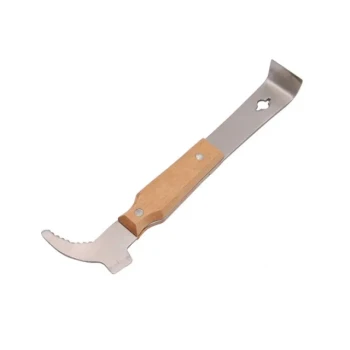
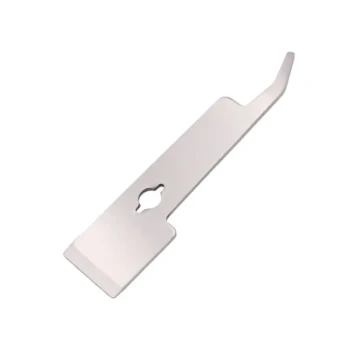
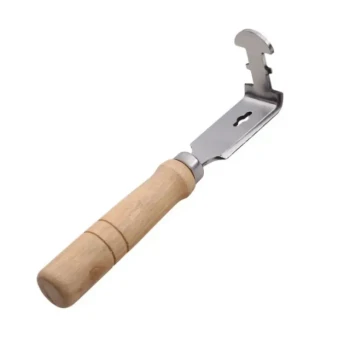
A specialized hive tool typically combines a bent pry end with a flat or notched scraping end. The pry end separates frames and hive bodies, while the opposite end removes excess propolis, wax, and cappings.
This design concentrates force where it is needed without unnecessarily crushing frame edges or gouging wooden hive bodies.
Tempered metal withstands repetitive work
Apiary maintenance involves repeated prying under substantial resistance. A properly manufactured, tempered metal tool is less likely to bend, snap, or become unusable than an ordinary hardware-store scraper.
Tool failure is more than an inconvenience. A broken or slipping tool can interrupt inspections, damage equipment, or injure the operator.
Slim profiles work with protective gloves
Hive tools are designed to provide useful mechanical advantage while beekeepers wear protective gloves. Their compact profile also allows access between frames and around hive components without excessive disturbance to the colony.
For commercial operations, this supports more consistent inspections, hive splitting, cleaning, and maintenance procedures.
What a Specialized Hive Tool Does Better
Separating frames and hive boxes
The hooked or bent end can be placed between propolis-sealed frames or hive bodies. Its geometry gives the beekeeper leverage while keeping the point of contact relatively controlled.
This is especially important in brood chambers and honey supers, where forceful handling can damage frames or disturb bees.
Scraping wax and propolis
The flat, sharp edge removes buildup from frame rests, box edges, and other contact surfaces. Keeping these areas clear helps frames remain movable and allows hive components to sit properly.
A tool that performs both prying and scraping also reduces the need to switch between multiple implements during an inspection.
Pulling embedded nails when necessary
Many hive tools include a notch that can assist with pulling nails or similar fasteners. This is a secondary function, but it can be useful during equipment repair or replacement.
The tool should still be used with controlled force rather than as a general-purpose demolition bar.
How to Sanitize Hive Tools
Remove visible material first
Before disinfection, scrape away accumulated wax, propolis, soil, and other organic residue. Disinfectants and heat work less reliably when heavy contamination remains on the metal surface.
Cleaning and disinfection are separate steps: cleaning removes material, while disinfection reduces or destroys infectious organisms.
Use heat when appropriate
Field cleaning can include heating the metal blade in the fire bowl of a bee smoker. Proper heat exposure can destroy pathogens on the metal surface, making flame or high-heat treatment a practical option for suitable all-metal tools.
Keep the heating process controlled and avoid exposing heat-sensitive handles, coatings, or nearby combustible materials. Allow the tool to cool safely before handling or returning it to equipment.
Use an appropriate chemical disinfectant
Chemical disinfection is another option, particularly when heat is impractical or when the tool includes components that should not be heated. Use a product approved for the intended application and follow its label for concentration, contact time, ventilation, and rinsing requirements.
After chemical treatment, dry the tool thoroughly to reduce corrosion and prevent contaminated residues from contacting hive components or bees.
Treat soil cleaning as temporary field cleaning
Pushing the blade into clean soil can help remove visible wax, propolis, and debris during fieldwork. However, soil contact alone should not be considered reliable disinfection because it does not provide a controlled pathogen-killing process.
For disease-risk situations or movement between colonies, follow soil cleaning with a validated heat or chemical method.
Sanitize between colonies
Hive tools frequently move from one colony to another, making them potential mechanical vectors for pathogens. Cleaning and disinfecting between colonies is therefore an important biosecurity measure, especially where infectious brood diseases are suspected or known to be present.
Tools used in affected colonies should be managed according to the apiary’s disease-control protocol rather than simply returned to general use.
Understanding the Trade-offs
Specialized tools cost more than improvised tools
A purpose-built hive tool may have a higher purchase price than a screwdriver or putty knife. That difference is generally justified when durability, reduced equipment damage, and repeated professional use are considered together.
For distributors and commercial apiaries, consistent quality also reduces replacement risk and supports standardized field procedures.
Heat is fast but requires control
Smoker-fire heating is convenient in the field, but it requires attention to safe handling, complete exposure of the working metal, and protection of any nonmetal parts. It may also be unsuitable for coated or heat-sensitive tool designs.
Chemicals require disciplined use
Chemical disinfectants can be effective, but incorrect dilution or insufficient contact time reduces their value. Residues, corrosion, ventilation requirements, and compatibility with handles or coatings must also be considered.
No tool replaces biosecurity procedures
A sanitized hive tool cannot compensate for contaminated gloves, clothing, boxes, smokers, or other equipment. Tool disinfection should form part of a broader colony-to-colony sanitation and disease-management process.
How to Apply This to Your Apiary or Product Program
Select tools according to operating conditions, sanitation requirements, and the number of colonies they will serve.
- If your primary focus is equipment protection: Choose a strong, purpose-built tempered metal hive tool with dedicated pry and scraping ends to reduce damage to frames and hive bodies.
- If your primary focus is field efficiency: Use a dual-ended tool that combines leverage, scraping, and limited fastener removal in one compact implement.
- If your primary focus is disease prevention: Clean visible residue and disinfect the tool between colonies using a validated heat or chemical process rather than relying on soil alone.
- If your primary focus is commercial supply: Standardize durable tool specifications across your product range and support customers with responsive fulfillment, sanitation guidance, and reliable after-sales service.
The right hive tool is not merely a convenience—it is a durable maintenance instrument and a practical part of apiary biosecurity.
Summary Table:
| Feature | Specialized Metal Hive Tool | General Workshop Tool |
|---|---|---|
| Leverage and Control | Designed with bent pry end for precise leverage | Often lacks proper geometry, causing slipping |
| Durability | Tempered metal withstands repetitive prying | May bend or snap under heavy use |
| Scraping Efficiency | Sharp edge removes wax and propolis | Poor scraping performance, damaging wood |
| Glove Compatibility | Compact profile works with protective gloves | Bulky, hard to handle with gloves |
| Cost | Higher initial cost but longer lifespan | Lower cost but more frequent replacement |
Upgrade your apiary with HONESTBEE's specialized metal hive tools. Our comprehensive wholesale portfolio includes durable, professionally designed tools that protect your equipment and enhance biosecurity. As a trusted B2B partner, we offer rapid response, dedicated service, and ultra-fast delivery to keep your operations running smoothly. Whether you're a distributor seeking profit margins or a commercial beekeeper needing reliable supply, we provide OEM/ODM support, certifications, and consistent quality. Contact us today to discuss your requirements and experience the HONESTBEE advantage!
Related Products
- Professional Steel Pry-Bar Hive Tool with Painted Grip
- Professional Dual-End Stainless Steel Hive Tool for Beekeeping
- Professional Multi-Function Stainless Steel Hive Tool
- Professional Stainless Steel J-Hook Hive Tool
- HONESTBEE Advanced Ergonomic Stainless Steel Hive Tool for Beekeeping
People Also Ask
- What is the specific design and purpose of a frame lifter hive tool? Master Gentle Hive Inspections
- How does the frame lifter hive tool function? Master Safe and Gentle Frame Removal
- What is the primary purpose of using professional scrapers for red propolis sampling? Maximize Purity and B2B Value
- What specific sanitation issues do beehive scrapers resolve? Master Spring Hive Maintenance and Pest Control
- What is the role of a professional hive scraper in honey DNA metabarcoding? Ensure Precision in Genetic Analysis