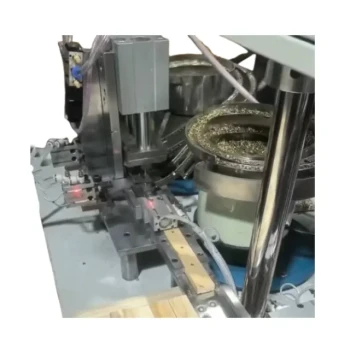
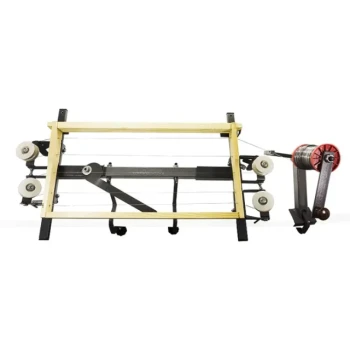
Standardized package bees are the cornerstone of reproducible honey bee research because they remove the biological chaos inherent in natural colonies. By utilizing specialized assembly equipment, researchers can mechanically enforce consistent starting conditions, ensuring that experimental results are driven by the variables being tested rather than random pre-existing differences between hives.
The Core Value of Standardization In biological research, starting with variable baselines makes it impossible to attribute causation accurately. Standardized package bees align the critical biological inputs—population, genetics, and resources—creating a "clean slate" that allows for the precise measurement of long-term environmental and nutritional effects.
The Necessity of Precision Control
Eliminating Systemic Error
Natural honey bee colonies are inherently diverse. They vary wildly in population size, brood stages, and resource stores.
If researchers initialize a study using existing colonies, these individual differences introduce systemic errors. One colony might collapse not because of the experimental treatment, but because it started with fewer resources or an older queen. Standardized packages remove this noise.
The Role of Specialized Assembly Equipment
To achieve true standardization, manual estimation is insufficient. Specialized assembly equipment is essential to mechanically control specific biological metrics.
This equipment allows for the precise measuring of adult bee numbers, ensuring every test unit starts with the exact same population density. It also regulates initial honey volume, preventing nutritional imbalances from skewing data before the experiment even begins.
Controlling Queen Variables
The queen is the biological engine of the colony. Her age and health dictate the colony's growth trajectory.
Standardized packaging protocols allow researchers to introduce queens of a uniform age into every test unit. This ensures that egg-laying capacity is consistent across all groups, rather than having some colonies led by vigorous young queens and others by failing older ones.
Enabling Long-Term Research Validity
Isolating Specific Variables
The primary goal of many large-scale studies is to isolate the effects of a single factor, such as a specific feeding pattern or external environmental exposure.
By stabilizing the biological components at the start, researchers can be confident that subsequent changes in the colony are direct results of these specific factors. This isolation is impossible without the baseline homogeneity provided by standardized packages.
Ensuring Replicability
Science relies on the ability to replicate results. Standardized packages create a repeatable "recipe" for colony initialization.
When different researchers or labs use the same assembly protocols and equipment, their results become comparable. This moves the field away from anecdotal observation and toward rigorous, data-driven science.
Understanding the Trade-offs
The Limitations of Artificial Initialization
While standardized packages are excellent for controlling variables, they represent an artificial starting point. A package bee cluster is not a natural swarm; it lacks the established comb and brood structure of a mature colony.
Initial Stress Factors
The process of shaking bees into packages and transporting them causes stress. Researchers must account for a stabilization period after installation. Data collected immediately after installation may reflect the stress of the packaging process rather than the experimental variable.
Scope of Applicability
Standardized packages are ideal for feeding and environmental studies. However, they may not be the best fit for evaluating established genetic traits or overwintering success in mature colonies. In those cases, standardized full-size hives or nucleus colonies (as noted in broader breeding methodologies) may be more appropriate tools.
Making the Right Choice for Your Research
To determine if standardized package bees are the right initialization method for your study, consider your primary variables:
- If your primary focus is nutritional impact or toxicity: Use standardized packages to ensure every colony starts with the exact same metabolic and population baseline.
- If your primary focus is breeding or queen traits: Consider using standardized full-size hives or nucleus colonies to evaluate egg-laying capacity and genetic correlations in a more established environment.
- If your primary focus is pathogen dynamics: Use standardized packages to rule out pre-existing infection loads that might exist in established comb or brood.
True scientific insight requires a stable baseline; standardized package bees provide the control necessary to turn observation into data.
Summary Table:
| Feature | Natural Colonies | Standardized Package Bees |
|---|---|---|
| Population Consistency | Highly variable population sizes | Mechanically measured for exact density |
| Queen Age/Vitality | Random ages and health status | Uniform age and known health history |
| Resource Baseline | Varying honey/pollen stores | Precisely regulated initial volumes |
| Research Application | General observation | Feeding, toxicity, and environmental studies |
| Scientific Value | High noise; low replicability | Clean slate; high replicability |
Elevate Your Research with HONESTBEE Precision Solutions
At HONESTBEE, we understand that commercial success and scientific breakthrough both rely on precision. We empower commercial apiaries, distributors, and researchers by supplying the industry's most reliable beekeeping tools, machinery, and equipment.
Whether you need specialized hive-making and honey-filling machines to scale your operations or essential industry consumables to maintain colony health, our comprehensive wholesale offering is designed to meet your specific needs.
Ready to optimize your production or research? Contact us today to discover how HONESTBEE can provide the specialized hardware and cultural merchandise your business requires to thrive.
References
- Farah Abi‐Akar, Silvia Hinarejos. Simulating Honey Bee Large-Scale Colony Feeding Studies Using the BEEHAVE Model—Part II: Analysis of Overwintering Outcomes. DOI: 10.1002/etc.4844
This article is also based on technical information from HonestBee Knowledge Base .
Related Products
- High-Efficiency Pneumatic Bee Hive Making Machine for Rapid Box Assembly
- Semi-Auto Bee Frame Assembly and Stapling Machine for Bee Frame
- Mini Desktop Bee Hive Frame Forming Making Machine
- Assembled Wooden Bee Frames with Beeswax Foundation Ready to Use by HONESTBEE
- Assembled Wooden Bee Frames with Plastic Foundation for Durability and Convenience by HONESTBEE
People Also Ask
- How does the introduction of professional beehive-making machinery benefit sustainable beekeeping? Scale Your Apiary
- Why is specialized beehive-making machinery critical for low-defense breeding? Enhance Selection with Precision Tools
- How does the introduction of specialized beehive making machinery contribute to increasing the scale of regional beekeeping industries?
- What is the importance of specialized beehive making machinery in a circular bio-economy? Build Local Sustainability
- Why is specialized beehive-making machinery essential? Scale Your Apiary with Precision Industrial Standards