Commercial beekeepers replace queens every 1 to 2 years because a queen’s practical productivity often declines well before her natural lifespan of 3 to 4 years. Age, injury, disease, parasites, reduced pheromone production, poor egg laying, undesirable genetics, and colony management decisions can all make replacement necessary. Specialized queen-rearing tools, mating equipment, queen cages, and hive tools make planned replacement more reliable and efficient.
The goal is not simply to replace an old queen—it is to maintain a consistently strong, healthy, and productive colony. Planned requeening reduces the risk of colony failure while allowing commercial operators to control queen quality, genetics, timing, and labor.
Why Commercial Colonies Need Regular Queen Replacement
Natural lifespan is not the same as commercial service life
Honey bee queens may live for 3 to 4 years under favorable conditions. However, commercial apiaries often face greater pathogen, parasite, transport, production, and environmental pressures, causing queen performance to decline in less than one year in some colonies.
For this reason, many operators use a 1- to 2-year replacement cycle rather than waiting for a queen to fail visibly.
The queen controls colony population
The queen is the colony’s primary reproductive female. Her egg-laying capacity directly influences the number of workers available for foraging, brood care, temperature control, and honey processing.
An aging or marginal queen may produce an inconsistent brood pattern or too few eggs. The resulting worker shortage can reduce honey production and weaken the colony’s ability to withstand stress.
Queen pheromones support colony cohesion
The queen also produces pheromones that help regulate colony organization and behavior. Reduced pheromone output can contribute to poor colony cohesion and may increase the likelihood that workers respond to the queen as failing or inadequate.
Replacing the queen with a young, well-mated individual helps restore reproductive performance and colony stability.
Replacement can solve more than age-related decline
Commercial beekeepers may requeen colonies because of:
- Low or inconsistent brood production
- Aggressive or undesirable temperament
- Declining honey yields
- Injury or physical defects
- Poor mating or inadequate sperm reserves
- Disease susceptibility or weak colony traits
- Colony splitting and intentional queenlessness
- The need to introduce improved genetics
Requeening is therefore both a maintenance practice and a genetic-management strategy.
How Controlled Queen Rearing Improves Results
Natural queen replacement is unpredictable
When a colony becomes queenless, nurse bees can raise queens from young female worker larvae by enlarging their cells and feeding them royal jelly. This natural process can preserve the colony, but it does not give the beekeeper precise control over queen quantity, age, timing, or parentage.
Emergency queen production may also reproduce undesirable characteristics, such as excessive swarming, aggression, poor productivity, or weaker hygienic behavior.
Grafting tools support genetic selection
Commercial queen rearing allows operators to select larvae from strong colonies with desirable characteristics, including:
- High productivity
- Gentle temperament
- Consistent brood patterns
- Strong colony development
- Hygienic behavior
- Suitability for local production conditions
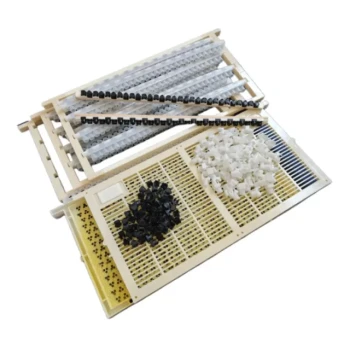
Grafting tools, artificial queen cups, and cell bars help transfer suitable young larvae into an organized queen-rearing system. This creates more uniform queen batches and improves scheduling across a commercial operation.
Cell bars and queen cups organize production
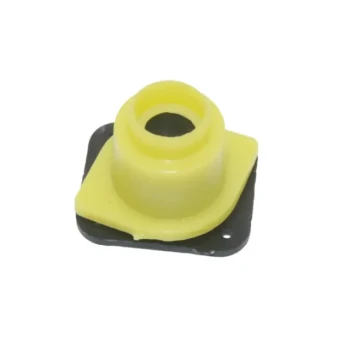
Frame cell bars and artificial queen cups provide a structured platform for raising multiple queens in one rearing colony. They allow beekeepers to manage queen cells in batches instead of relying on scattered emergency cells.
For distributors and resellers, these products are important parts of a broader queen-rearing portfolio because they are used together with grafting tools, frames, cages, and mating equipment.
Timing becomes easier to manage
Controlled queen rearing helps align queen production with planned colony splits, mating schedules, seasonal honey flows, and replacement programs. Uniform queen age also makes inspection, transfer, and introduction more systematic.
Hive tools and scrapers support these inspections by allowing operators to open colonies carefully, examine cell development, and remove weak or malformed cells when appropriate.
How Mating Equipment Supports Queen Supply
Mating nucs protect young queens
A newly emerged queen is virgin and cannot immediately head a productive colony. After approximately one week, she makes one or more mating flights to a drone congregation area, where she mates with multiple drones.
Mating nucs provide a smaller, manageable colony environment for this stage. Their entrances and internal configuration help maintain the young queen’s colony while allowing normal orientation and mating behavior.
Drone management supports breeding programs
Commercial breeders may maintain strong drone-producing colonies with drone comb frames. This helps provide an adequate local population of healthy drones and supports genetic diversity within the mating program.
Mating success still depends on weather, queen development, drone availability, and local conditions. Equipment improves management, but it cannot eliminate biological variability.
Queen cages protect valuable queens during handling
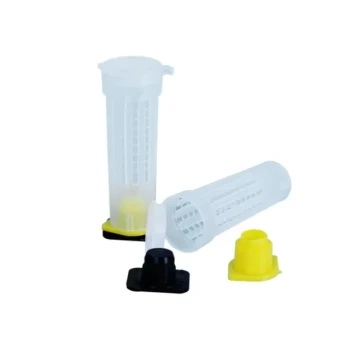
Once a queen is mated and laying fertilized eggs, she must be moved safely to a production colony or holding area. Queen marking cages and queen introduction cages help prevent injury during transport, inspection, and installation.
Introduction cages also give the receiving colony time to accept the new queen before she is fully released. This is particularly important when replacing a queen in a colony that has recently lost or rejected its previous queen.
Isolation and holding equipment improve workflow
Isolation cages and related queen-management hardware allow operators to hold, identify, and transfer queens with less handling risk. In a large apiary, these tools support repeatable procedures across many colonies rather than relying on improvised methods.
How Hive Tools Fit Into a Requeening Program
Inspection requires controlled access
Hive tools, scrapers, and related equipment are essential for opening covers, separating frames, removing excess propolis, and inspecting brood and queen cells without unnecessary disturbance.
They support routine checks at key stages of the rearing and introduction process, including the examination of developing queen cells and confirmation that a new queen has emerged.
Tools help standardize labor
Commercial apiaries manage large numbers of colonies under time pressure. Reliable hive tools reduce handling delays and help workers follow the same inspection and replacement procedures from hive to hive.
This matters to operators purchasing through distributors because product availability, durability, and fast fulfillment directly affect seasonal labor planning.
Equipment works as a system
A queen-replacement program rarely depends on one product. A typical equipment set may include:
- Grafting tools for transferring selected larvae
- Artificial queen cups and cell bars for organized queen-cell production
- Mating nucs for developing and mating young queens
- Drone comb frames for supporting breeding yards
- Queen cages for marking, transporting, and introducing queens
- Queen excluders and isolation equipment for managing queen movement
- Hive tools and scrapers for inspection and colony access
A supplier able to provide this full range can simplify purchasing, reduce compatibility issues, and improve order efficiency for commercial customers.
Understanding the Trade-offs
Frequent replacement increases cost and labor
Requeening requires queens, cages, mating equipment, inspections, transport, and trained labor. Annual replacement may not be necessary for every colony if a queen remains productive and healthy.
The appropriate interval should therefore reflect colony performance, local disease pressure, production goals, and the operator’s breeding strategy.
Equipment improves control but does not guarantee success
Queen-rearing tools make production more precise, but queen quality still depends on larval selection, nurse-bee strength, nutrition, mating conditions, and colony acceptance.
Mating nucs and cages reduce handling and introduction risks, but they cannot eliminate weather-related mating failures or queen loss.
Poor introduction procedures can waste a good queen
A high-quality queen can be rejected or injured if introduced into a colony with unresolved queen cells, strong queen-right conditions, excessive stress, or unsuitable timing.
Equipment must be paired with correct inspection and introduction practices. Cages are safeguards, not substitutes for sound colony management.
Standardization must allow for local conditions
A replacement calendar based solely on a fixed date may overlook differences in climate, forage availability, disease pressure, and colony strength. Commercial operators should use scheduled replacement as a framework while confirming queen performance through brood and population inspections.
How to Apply This to Your Apiary or Product Program
A successful strategy combines biological evaluation with dependable equipment and supply planning.
- If your primary focus is honey production: Prioritize young, well-mated queens and inspection equipment that helps maintain strong brood production and worker populations.
- If your primary focus is pollination capacity: Use planned replacement and mating equipment to maintain colonies with reliable population growth and consistent field strength.
- If your primary focus is queen breeding: Build a coordinated system around grafting tools, cell bars, queen cups, mating nucs, and drone-management frames.
- If your primary focus is commercial resale: Offer a full-spectrum product portfolio, responsive technical support, dependable quality, and fast fulfillment across the complete queen-management workflow.
- If your primary focus is operational efficiency: Standardize cages, hive tools, inspection procedures, and replacement timing so workers can manage large numbers of colonies consistently.
Planned requeening, supported by the right tools and reliable supply chain, turns queen replacement from an emergency response into a controllable productivity program.
Summary Table:
| Reason | Benefit |
|---|---|
| Age-related decline | Maintains high egg-laying and pheromone production |
| Genetic improvement | Selects for productivity, temperament, and disease resistance |
| Disease/parasite pressure | Reduces colony loss and improves resilience |
| Colony cohesion | Restores social order and worker harmony |
Optimize your queen-rearing strategy with HONESTBEE's comprehensive beekeeping equipment. From grafting tools to mating nucs and hive tools, we supply everything you need for efficient, productive colonies. Our one-stop sourcing, rapid response, and ultra-fast delivery ensure you can maintain healthy hives year-round. For distributors and beekeepers seeking premium service and OEM/ODM support, contact us today to enhance your operation.
Related Products
- Retractable Chinese Queen Rearing Grafting Tools Equipment
- Plastic Chinese Queen Grafting Tool for Bee Queen Rearing
- Stainless Steel Queen Grafting Tool for Beekeeping and Bee Queen Grafting
- Stainless Steel Beekeeping Queen Grafting Tool for Honey Bee Rearing
- Plastic Beekeeping Honey Bee Larvae Grafting Tools for Queen Rearing and Chinese Grafting
People Also Ask
- Which specialized tools are necessary for implementing standardized queen rearing? Scale Your High-Yield Apiary
- Why are specialized queen rearing tools necessary to mitigate winter hive losses? Boost Apiary Survival and Recovery
- What operational workflows and queen rearing tools are required for implementing instrumental insemination and isolated mating in commercial queen breeding programs?
- How do queen-rearing tools facilitate the sustainability and expansion of a commercial apiary? Drive Scalable Growth
- In what ways do modern queen rearing equipment and grafting tools improve competitiveness? Boost Breeding Success Rate