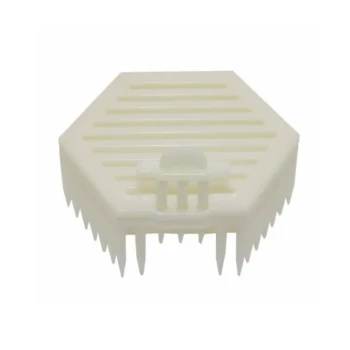
The primary function of a 10 cm x 15 cm metal mesh cage in beekeeping research is to physically isolate honeybee combs containing emerging brood, enabling the collection of worker bees that are exactly the same age. By placing this barrier over the comb, researchers prevent newly hatched bees from dispersing into the general colony population.
Honeybee defensive mechanisms are biologically linked to age, with older bees producing significantly higher levels of alarm pheromones. Isolating emerging brood eliminates age-related variables, ensuring that metabolic data remains unbiased and strictly comparable across samples.
The Physiology of Defensive Behavior
The Link Between Age and Aggression
In honeybee colonies, defensive behavior is not uniform across all workers; it is strictly age-dependent. As worker bees mature, their physiological profiles change, specifically regarding the production of chemical signals.
Controlling Alarm Pheromones
Older bees naturally produce higher concentrations of alarm pheromones compared to younger bees. If a sample group contains mixed ages, the varying pheromone levels will skew the data regarding the colony's defensive response.
Eliminating Metabolic Data Bias
To conduct accurate proteomics or behavioral analysis, the metabolic baseline of the subjects must be consistent. The metal mesh cage ensures that every bee in the sample group is at the same developmental stage, effectively removing metabolic data bias caused by age discrepancies.
Achieving Experimental Standardization
Physical Isolation of Emerging Brood
The metal mesh cage creates a controlled environment directly on the comb. It allows the brood to emerge naturally while preventing interaction with older bees outside the cage.
Ensuring Sample Purity
Without this physical barrier, a researcher cannot visually distinguish a bee that hatched one hour ago from one that hatched two days ago once they mix in the hive. The cage guarantees that the collected sample represents a specific, known age cohort.
Understanding the Constraints
The Necessity of Pre-Synchronization
While the metal mesh cage effectively isolates emergence, it relies on the brood being at a similar developmental stage to begin with. If the queen was not restricted to that specific comb for a precise duration (often using a separate queen isolation cage), the emergence within the mesh cage will be staggered over days, reducing the precision of the age cohort.
Spatial Limitations
The 10 cm x 15 cm size is standardized for specific experimental protocols, but it limits the sample size to the number of cells covered by that footprint. Researchers requiring massive sample sizes may need to replicate this setup across multiple frames rather than using a larger cage, which could introduce variable conditions across different combs.
Ensuring Data Integrity in Your Research
To maximize the accuracy of your behavioral or metabolic data, consider your specific experimental needs:
- If your primary focus is behavioral analysis: Use the metal mesh cage to strictly control for alarm pheromone levels, as age variation will invalidate your defensive behavior metrics.
- If your primary focus is developmental synchronization: Ensure you combine this method with a queen isolation cage to guarantee that egg-laying occurred within a tight window before brood isolation.
Precise physical isolation is the only way to convert a biological variable into a controlled constant.
Summary Table:
| Feature | Purpose in Research | Impact on Data Quality |
|---|---|---|
| Physical Isolation | Prevents newly hatched bees from dispersing | Ensures a 100% pure, known-age sample cohort |
| Age Control | Eliminates physiological differences between bees | Standardizes alarm pheromone levels for behavior tests |
| Standardized Size | 10 cm x 15 cm footprint on the comb | Provides consistent sample density for metabolic analysis |
| Bias Elimination | Removes metabolic data fluctuations | Guarantees results are comparable across different colonies |
Elevate Your Apiary Operations with HONESTBEE Professional Equipment
Precision is the backbone of successful beekeeping, whether in a research lab or a commercial apiary. At HONESTBEE, we understand the technical demands of the industry. We provide a comprehensive wholesale range of high-quality beekeeping tools, specialized machinery, and essential consumables designed for commercial apiaries and global distributors.
From honey-filling and hive-making machines to professional-grade hardware and honey-themed cultural merchandise, our portfolio empowers your business to achieve greater efficiency and consistency. Partner with a supplier that values your success as much as you do.
Ready to scale your production? Contact us today to explore our wholesale solutions and see how HONESTBEE can streamline your beekeeping supply chain.
References
- C. Andere, Enrique Bedascarrasbure. Evaluation of the defensive behavior of two honeybee ecotypes using a laboratory test. DOI: 10.1590/s1415-47572002000100011
This article is also based on technical information from HonestBee Knowledge Base .
Related Products
- Wood and Mesh Push-In Queen Cage
- Classic Wooden and Mesh California Queen Cage
- Premium Wood and Steel Push In Queen Cage
- Durable Galvanized Steel Spring Queen Bee Cage
- Hexagonal Direct Comb Introduction Queen Bee Cage
People Also Ask
- When is a queen introduced with a push-in cage ready for full release? Key Signs for Maximum Colony Acceptance
- How are queen cages used to protect newly hatched queens? Secure Your Virgin Queens During Development
- Why are queen cages or grid cages used in bee studies? Achieve Precise Biological Data for Research
- What advantages do push-in queen cages offer? Boost Acceptance Rates for Artificially Inseminated Queens
- What is a push-in queen cage and how does it differ from a standard queen cage? Boosting Your Queen Acceptance Rates