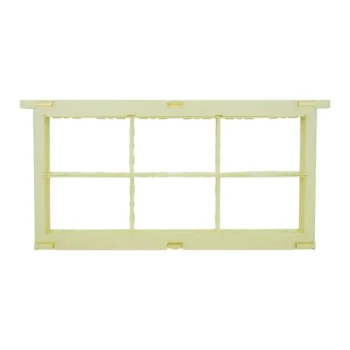
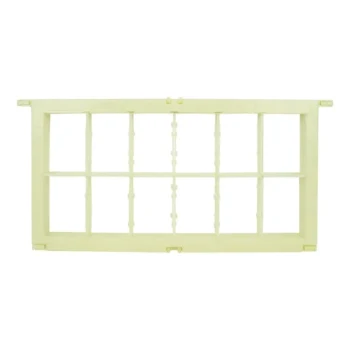
Standardization is the cornerstone of professional apiculture. A five square centimeter calibration grid is used as a physical reference point to calibrate image dimensions and provide a fixed scale for field measurements. By introducing a known size into the analysis, technicians can accurately convert pixel area or visual surface area into precise physical metrics, such as the total count of capped brood cells, worker bee density, and honey weight.
The calibration grid acts as a high-precision benchmark that translates raw visual data into actionable biological metrics. It allows distributors and professionals to scientifically quantify colony productivity, queen performance, and resource reserves with repeatable accuracy.
Precision Calibration for Digital and Visual Analysis
The Role of Image Normalization
When photographing honey bee frames, environmental variables like camera distance and angle can distort the perceived size of the comb. A 5x5 cm grid provides a fixed physical scale that allows image analysis software to normalize pixel data.
Quantifying Population Density
By establishing a precise 25 square centimeter reference, professionals can calculate the distribution density of worker bees and immature individuals. This data is essential for wholesalers who need to verify the strength and value of colonies before transit or sale.
Converting Area to Tangible Data
Standardized grids allow for the immediate translation of surface area into worker bee counts. For instance, using a known density of approximately 4 worker cells per square centimeter enables a rapid transition from visual observation to hard population data.
Standardized Metrics for Colony Health
Measuring Brood Volume and Productivity
Each 25 square centimeter square in the grid corresponds to approximately 100 honeycomb cells. This ratio allows technicians to quantify the total brood volume, providing a scientific basis for evaluating the development rate of a colony.
Evaluating Resource Reserves
The grid is used to divide the comb surface into manageable units for measuring honey and pollen storage. Because each grid unit corresponds to a specific weight of honey, this tool converts area measurements into concrete weight values to ensure winter survival.
Assessing Queen Performance
By using the grid to calculate the daily egg-laying rate of a queen bee, professionals can evaluate colony recovery speeds. This is a critical indicator of colony fertility and the overall reproductive potential of the stock.
Understanding the Trade-offs
Precision vs. Field Efficiency
While manual grid placement provides high-precision data, it can be time-consuming for large-scale operations involving hundreds of hives. Professionals must weigh the need for granular data against the requirement for rapid response and efficient order fulfillment.
Subjectivity in Manual Counting
Even with a grid, human error can occur when estimating the contents of partially filled squares. Digital analysis using the grid as a calibration tool is significantly more reliable than manual estimation for high-stakes ROI assessments.
Dependency on Standardized Tools
The accuracy of the data is entirely dependent on the precision of the grid itself. Using non-standardized or poorly manufactured grids can lead to incorrect calculations of colony value and resource needs.
Optimizing Your Technical Sourcing Strategy
How to Apply This to Your Portfolio
In the competitive B2B landscape, providing the tools and expertise for precise measurement is a key differentiator. Success depends on offering a full-spectrum portfolio that supports data-driven hive management.
- If your primary focus is one-stop sourcing for commercial beekeepers: Stock high-precision, standardized 5x5 cm grid frames as part of your core inventory to ensure your clients have the professional tools required for accurate colony auditing.
- If your primary focus is demonstrating the ROI of nutritional supplements: Use grid-based measurement data to provide your customers with scientific proof of how your products increase queen productivity and brood density.
- If your primary focus is rapid order fulfillment and logistics: Ensure your technical team can explain the conversion factors—such as 100 cells per grid square—to help clients make fast, informed decisions during busy seasonal transitions.
Empowering your clients with precision measurement tools and professional expertise transforms a simple transaction into a high-value technical partnership.
Summary Table:
| Metric | Purpose | Key Conversion / Technical Insight |
|---|---|---|
| Image Normalization | Corrects camera distance/angle | Translates pixel area into physical dimensions |
| Population Density | Quantifies bee distribution | Evaluates colony strength before transit or sale |
| Brood Volume | Measures productivity | 1 grid unit (25 cm²) ≈ 100 honeycomb cells |
| Resource Reserves | Calculates honey/pollen weight | Converts surface area into concrete storage weight |
| Queen Performance | Evaluates egg-laying rate | Critical indicator for colony fertility and recovery |
Empower Your Apiary Network with HONESTBEE
At HONESTBEE, we understand that precision is the foundation of profitable beekeeping. As a dedicated partner to distributors, wholesalers, and B2B resellers, we offer a one-stop sourcing solution tailored to the demands of professional apiary management.
- Comprehensive Portfolio: Access our full spectrum of beekeeping tools, specialized hive-making and honey-filling machinery, and essential industry consumables.
- B2B Service Excellence: Benefit from our deep professional expertise, rapid response times, and ultra-fast order fulfillment designed to keep your supply chain moving.
- Strategic Growth: We support your business with reliable OEM/ODM capabilities and premium trading services that prioritize your profit margins and supply reliability.
Ready to elevate your inventory with industry-leading equipment? Contact HONESTBEE today to explore our wholesale offerings and professional technical support!
References
- Francisco Javier Balvino‐Olvera, Maurício Quesada. Effects of floral resources on honey bee populations in Mexico: Using dietary metabarcoding to examine landscape quality in agroecosystems. DOI: 10.1002/ece3.11456
This article is also based on technical information from HonestBee Knowledge Base .
Related Products
- Professional Bee Frame Machine for Side Bar Shaping
- HONESTBEE Bee Frame Grooving Machine | Precision Slotting for Bee Frame Making
- Professional Wooden Requeening Frame for Beekeeping
- Ergonomic Plastic Frame Spacer Tool for Rapid Hive Management Beekeeping
- HONESTBEE Durable Frame Wiring Board with Integrated Tensioner
People Also Ask
- What are the differences between wedged-top and grooved-top frames? Choose the Right Foundation System
- What types of damage on bee frames indicate they can be cleaned for reuse? Save Costs with Proper Frame Restoration
- What should I look for in a bee frame? A Beekeeper's Guide to Hive Health Assessment
- Can old bee frames be reused? Weighing the Risks vs. Rewards for Your Hive
- How long do bee frames last? A Guide to Lifespan and Replacement for Healthy Hives