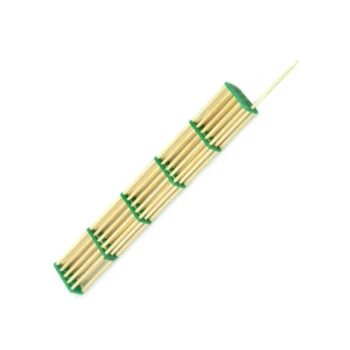
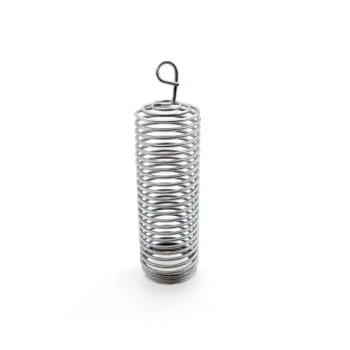
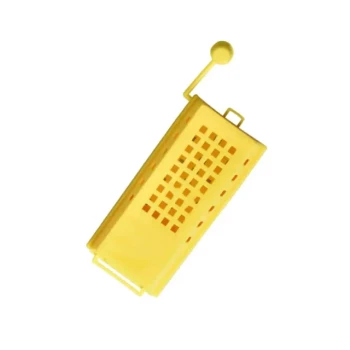
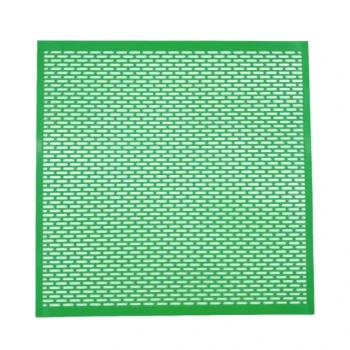
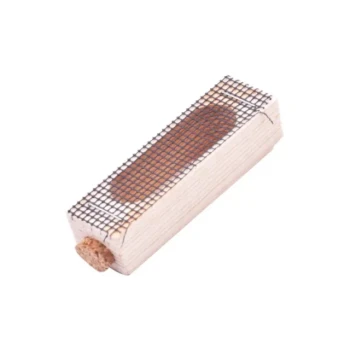
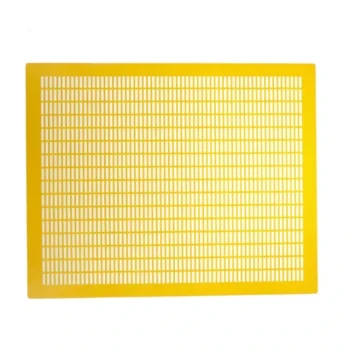
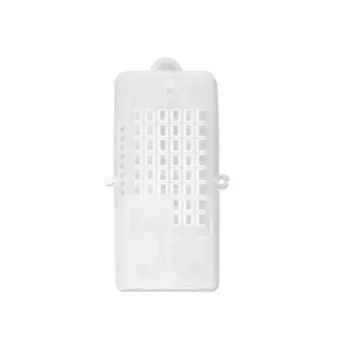
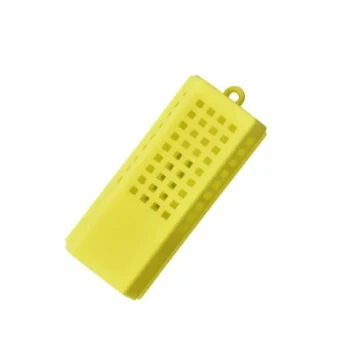
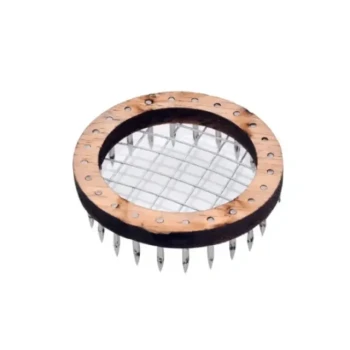
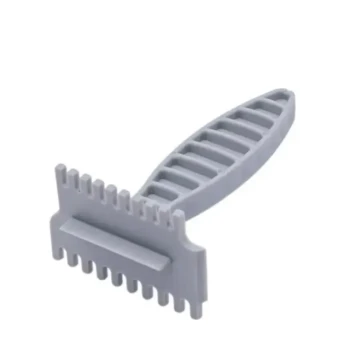
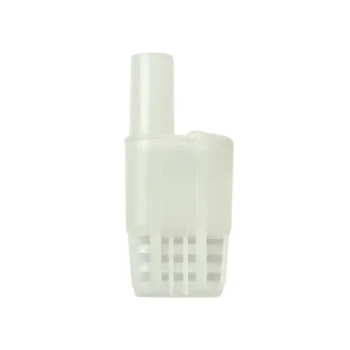
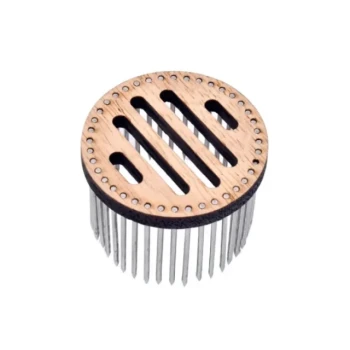
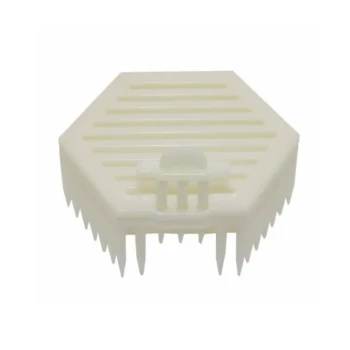
In the context of infection model experiments, a queen excluder cage is a precision instrument for temporal synchronization. Its primary function is to confine the queen to a specific area of the hive frame, compelling her to lay eggs within a strictly controlled timeframe. This allows researchers to harvest larvae that are consistently less than 24 hours old, eliminating developmental variables that could invalidate the study.
Core Insight: In experimental settings, the queen excluder is not about honey purity; it is about biological standardization. By restricting the queen's movement, researchers guarantee that all test subjects (larvae) are at the exact same developmental stage, which is critical because pathogen susceptibility fluctuates drastically with age.
The Critical Need for Age Synchronization
Controlling Susceptibility Variables
Honey bee larvae do not have a static immune response; their susceptibility to pathogens changes rapidly as they develop.
A larva that is 12 hours old may react completely differently to an artificial infection than one that is 36 hours old.
Without a queen excluder to force a tight egg-laying window, a sample group would contain mixed ages, making it impossible to determine if survival rates are due to the pathogen or the larvae's developmental maturity.
Defining the "Time Zero"
To run a valid time-course experiment, researchers must establish a precise starting point.
The excluder cage allows the scientist to insert a frame, confine the queen, and remove her after a set period (e.g., 24 hours).
This creates a distinct cohort of eggs that will hatch simultaneously, providing a reliable supply of synchronized larvae for infection.
Mechanism of Action
Physical Restriction
The cage utilizes a mesh or grid structure that physically blocks the larger queen bee from leaving the designated comb area.
This forces her to lay eggs only in the cells available within the cage, concentrating the sample in a known location.
Permeable Social Access
Crucially, the mesh allows smaller worker bees to pass through freely.
This ensures that while the queen is trapped, the eggs and resulting larvae still receive necessary care and nursing from the colony.
Without this worker access, the brood would be neglected and unsuitable for biological experimentation.
Operational Challenges and Trade-offs
Maintenance and Obstruction
While necessary for precision, queen excluders introduce maintenance challenges.
Bees often attach wax comb to the excluder mesh, which can narrow the passageways and restrict worker movement.
If the mesh becomes clogged, it can isolate the queen too severely or prevent nurse bees from tending to the brood effectively.
Stress and Crowding
Confining a queen to a small area can lead to localized crowding within the cage.
In commercial settings, excluders can sometimes discourage travel or reduce production; in experiments, this stress must be monitored to ensure it does not impact the health of the eggs being laid.
Making the Right Choice for Your Goal
Whether you are managing a hive for harvest or setting up a clinical trial, the function of the excluder shifts based on your objective.
- If your primary focus is Infection Modeling: Prioritize the timing of confinement to ensure all larvae are within a narrow <24-hour age window for consistent pathogen data.
- If your primary focus is Honey Production: Prioritize the location of confinement to keep the queen out of honey supers, preventing brood contamination and wax moth infestation.
- If your primary focus is Drone Studies: Use the excluder to isolate the queen on drone comb specifically, ensuring you can track the exact sexual maturity timeline of the resulting males.
Ultimately, the queen excluder transforms the hive from a chaotic natural environment into a controlled laboratory condition, turning the variable of age into a constant.
Summary Table:
| Feature | Research Purpose | Practical Outcome |
|---|---|---|
| Temporal Synchronization | Confines egg-laying window | Guaranteed <24-hour-old larvae |
| Physical Restriction | Limits queen to specific comb | Concentrated, easy-to-harvest sample area |
| Worker Permeability | Allows nurse bee access | Brood remains healthy and nourished |
| Biological Control | Eliminates age variables | Consistent pathogen susceptibility data |
Elevate Your Research & Apiary Efficiency with HONESTBEE
Precision is the backbone of successful beekeeping research and commercial operations. At HONESTBEE, we specialize in providing high-quality queen excluders and a comprehensive range of beekeeping tools designed to meet the rigorous demands of researchers and commercial apiaries alike.
Whether you need specialized machinery for hive-making, honey-filling, or a steady supply of essential consumables, our wholesale offerings are tailored to empower distributors and large-scale beekeepers. Partner with us to access professional-grade hardware and honey-themed cultural merchandise that drives industry growth.
Ready to scale your operation or refine your experiments?
Contact HONESTBEE today to explore our full spectrum of beekeeping solutions!
References
- Meihua Wu, Mikio Yoshiyama. Inhibitory effect of gut bacteria from the Japanese honey bee, Apis cerana japonica, against Melissococcus plutonius, the causal agent of European foulbrood disease. DOI: 10.1093/jis/14.1.129
This article is also based on technical information from HonestBee Knowledge Base .
Related Products
- Professional Bamboo Queen Isolation Cage
- Professional Queen Catcher and Introduction Queen Cage
- Durable Galvanized Steel Spring Queen Bee Cage
- Premium Wood Framed Metal Wire Queen Bee Excluder
- Professional Queen Cage with Sliding Gate and Feeder Plug
People Also Ask
- Why are specialized queen bee cages used for the banking of mated queen bees? Maximize Commercial Apiary Storage Efficiency
- What is the mechanism of action for using temporary queen bee cages? Master Successful Queen Introduction
- How does the side ventilation design of a queen bee cage impact the safety of the queen during long-distance transport?
- What should you do if the queen is still in the cage and the worker bees have not accepted her? Protect Your Colony from Queen Rejection
- What technical precaution must be taken regarding the mesh or grill side of a queen bee cage? Ensure Queen Survival