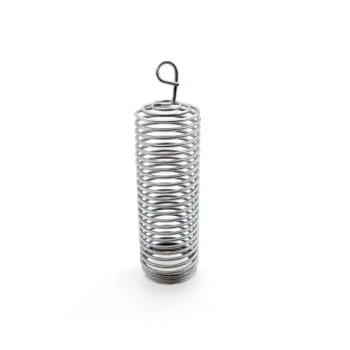
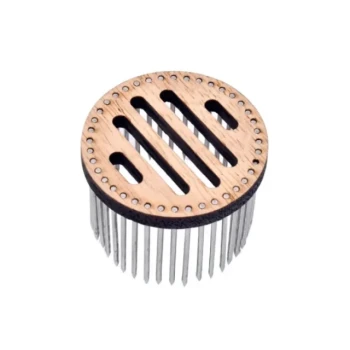
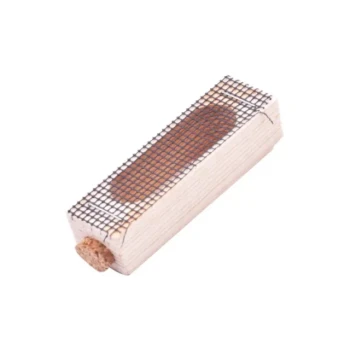
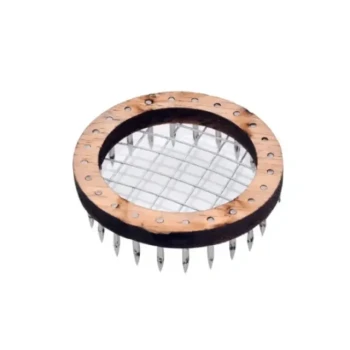
Precision requires isolation. A specialized test bee cage is necessary because it creates a controlled, small-scale social environment that isolates experimental bees from the chaotic variables of a full colony. This containment allows researchers to manage groups with rigor, enabling daily survival counts, the removal of debris, and the administration of precise drug dosages without disrupting the bees' natural behaviors.
Core Takeaway While standardized hives are excellent for monitoring macro-level colony growth and honey production, the specialized test bee cage is the only tool suitable for micro-level interaction studies. It provides the isolation required to measure exact survival rates and quantitative chemical intake—specifically for experiments involving parasites and pesticides—where external environmental factors must be strictly eliminated.
Creating a Controlled Micro-Environment
Isolating Social Variables
Researching honeybee dynamics often requires separating a specific cohort of bees to observe them without the noise of a full hive. A specialized test bee cage provides a "small-scale social environment."
This structure facilitates organized group management. It ensures that the behavior observed is a result of the experimental variables, rather than random interactions within a massive colony population.
Precision in Chemical Dosing
One of the most critical functions of the test cage is facilitating quantitative drug doses. In a standard hive, tracking exactly how much of a substance an individual bee consumes is nearly impossible.
The test cage environment allows researchers to administer specific amounts of treatments. This is essential for toxicology studies or testing the efficacy of veterinary medicines against pathogens.
Enhancing Data Granularity
Accurate Mortality Tracking
To calculate true survival rates, researchers must account for every single bee. In a full hive, "undertaker" bees often remove deceased colony members before they can be counted.
The specialized cage structure allows for daily survival counts. Researchers can identify and remove deceased bees immediately, ensuring that mortality data is exact and time-specific.
Investigating Multi-Factor Interactions
Complex experiments often look at how two factors, such as parasites and pesticides, interact to affect bee health. These studies require a "clean" environment to establish causality.
The test cage acts as an essential container for these interaction experiments. It prevents outside pathogens or unmeasured nectar sources from contaminating the results, isolating the specific relationship between the introduced parasite and the chemical agent.
Understanding the Trade-offs
Artificial vs. Natural Context
While the test cage offers control, it sacrifices the holistic environment of a full colony. Supplementary data suggests that standardized beehives are better for assessing broad "biological fitness" and "brood area" growth.
Production vs. Survival
The test cage is not designed to measure productivity. For metrics regarding honey storage, foraging activity, or brood rearing, high-precision electronic scales and standard frames are superior tools. The cage restricts the colony's capacity to expand, making it unsuitable for assessing total yield or population growth dynamics.
Making the Right Choice for Your Research Goal
To ensure the validity of your data, you must align your equipment with your specific experimental endpoints.
- If your primary focus is Toxicology or Pathology: Use the specialized test bee cage to control dosage, isolate interactions between pesticides and parasites, and track daily mortality with precision.
- If your primary focus is Colony Productivity: Use standardized beehives and electronic scales to measure macro-dynamics like honey yield, brood expansion, and foraging weight changes without artificially restricting space.
By selecting the specialized test bee cage, you prioritize data purity and variable isolation over broad ecological context, a necessary compromise for rigorous physiological research.
Summary Table:
| Feature | Specialized Test Bee Cage | Standardized Beehive |
|---|---|---|
| Primary Goal | Micro-level interaction & toxicology | Macro-level growth & production |
| Environment | Controlled, isolated micro-environment | Holistic, natural colony context |
| Data Precision | High (daily survival, exact dosing) | General (total yield, brood area) |
| Best Use Case | Pesticide & parasite interaction studies | Monitoring honey storage & foraging |
| Scalability | Small-scale group management | Full-scale colony expansion |
Elevate Your Apiary Research and Operations with HONESTBEE
At HONESTBEE, we understand that precision is the backbone of successful beekeeping, whether you are conducting rigorous laboratory research or managing a commercial honey operation. We provide a comprehensive wholesale range of professional-grade beekeeping tools, from specialized hardware like hive-making and honey-filling machines to essential industry consumables.
Whether you are a distributor looking to stock high-quality equipment or a commercial apiary aiming to optimize your production and research capabilities, HONESTBEE delivers the expertise and infrastructure you need to thrive. From high-precision tools to unique honey-themed cultural merchandise, we are your all-in-one partner in the apiculture industry.
Ready to scale your impact? Contact us today to discuss our wholesale offerings and discover how our specialized solutions can enhance your efficiency and data purity.
References
- Julie Aufauvre, Nicolas Blot. Parasite-insecticide interactions: a case study of Nosema ceranae and fipronil synergy on honeybee. DOI: 10.1038/srep00326
This article is also based on technical information from HonestBee Knowledge Base .
Related Products
- Durable Galvanized Steel Spring Queen Bee Cage
- Professional Queen Bee Introduction and Transport Cage
- Premium Wood and Steel Push In Queen Cage
- Professional Queen Cage with Sliding Gate and Feeder Plug
- Professional Multi-Compartment Queen Cage with Sliding Lid
People Also Ask
- Why are specialized queen bee cages used for the banking of mated queen bees? Maximize Commercial Apiary Storage Efficiency
- What is the mechanism of action for using temporary queen bee cages? Master Successful Queen Introduction
- What is the step-by-step process for installing a queen bee's cage onto a frame? Ensure Hive Acceptance Safely
- What is the optimal placement for a queen bee cage? Essential Strategies for Successful Re-queening
- What are the advantages and disadvantages of introducing a queen bee by embedding the cage? Boost Your Queen Acceptance