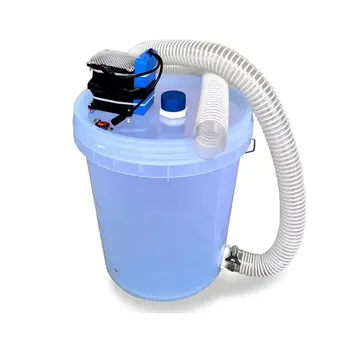
Vacuum freeze-drying is the critical standard for processing bee venom because it removes moisture without applying the heat that destroys biological potency. Since bee venom consists of complex, heat-sensitive proteins and enzymes, this system ensures the final powdered product retains the same therapeutic properties as fresh venom.
The Core Value Bee venom derives its therapeutic value from fragile bioactive compounds that decompose easily. A vacuum freeze-drying system solves this by using sublimation to lock in chemical stability, ensuring components like Melittin remain potent while significantly extending the product's shelf life.
Preserving Bioactive Complexity
The Fragility of the Raw Material
Bee venom is not a simple chemical compound; it is a biological cocktail containing complex proteins, polypeptides, and enzymes.
These components are extremely heat-sensitive. Exposure to standard drying temperatures can cause rapid decomposition, rendering the venom therapeutically useless.
Protecting Melittin
One of the most valuable components in bee venom is Melittin, a bioactive polypeptide.
The primary role of the freeze-drying system is to preserve the chemical stability of Melittin. By avoiding heat, the system ensures this critical ingredient remains active in the final powder.
The Mechanics of Lyophilization
How Sublimation Works
The system operates through a process called lyophilization (freeze-drying).
Instead of evaporating water as a liquid (which requires heat), the system freezes the venom and creates a vacuum. This causes the ice to turn directly into vapor, a process known as sublimation.
Structural Integrity
By skipping the liquid phase transition, the physical structure of the venom's molecules is preserved.
This maintains the chemical activity of the substance, preventing the denaturation of proteins that often occurs during traditional evaporation methods.
Logistics and Commercial Viability
Extending Shelf Life
Raw bee venom is unstable in its liquid form and prone to degradation.
Vacuum freeze-drying converts this liquid into a stable powder. This conversion is essential for stopping biological degradation, allowing the product to be stored for long periods without losing potency.
Ensuring Transport Stability
High-value bee products must maintain their quality across global supply chains.
This technology guarantees that the therapeutic value of the venom remains stable during transportation, regardless of the duration.
Understanding the Trade-offs
Freeze-Drying vs. Controlled Air Drying
While freeze-drying is the superior method for maximum preservation, it is not the only method used in the industry.
Air circulation ovens can also be used to remove moisture, typically operating at a controlled low temperature of around 30°C.
Precision vs. Cost
Air drying is a critical controlled method to prevent denaturation at a lower operational cost than lyophilization.
However, for high-value pharmaceutical grade venom, vacuum freeze-drying offers a higher assurance of preserving the microscopic physical structure of enzymes compared to standard air drying.
Making the Right Choice for Your Goal
To determine the best processing method for your specific requirements, consider the intended end-use of the product:
- If your primary focus is maximum therapeutic potency: Prioritize vacuum freeze-drying to ensure virtually zero degradation of Melittin and sensitive enzymes.
- If your primary focus is meeting basic moisture standards: A low-temperature air circulation oven (approx. 30°C) may suffice for general drying needs while still avoiding high-heat damage.
Ultimately, the vacuum freeze-drying system is the only technology that guarantees the biological integrity of bee venom remains identical to its fresh state.
Summary Table:
| Feature | Vacuum Freeze-Drying (Lyophilization) | Low-Temp Air Drying (30°C) |
|---|---|---|
| Mechanism | Sublimation (Ice to Vapor) | Controlled Evaporation |
| Heat Exposure | None (Cold Processing) | Minimal (Controlled Low Heat) |
| Potency Retention | Maximum (Preserves Melittin & Enzymes) | Moderate to High |
| Structural Integrity | Excellent (No Denaturation) | Standard |
| Shelf Life | Long-term Stability | Moderate Stability |
| Best Use Case | Pharmaceutical & High-End Medical Grade | General Industrial Use |
Maximize Your Bee Venom Value with HONESTBEE
At HONESTBEE, we understand that commercial apiaries and distributors require precision to maintain the therapeutic value of high-value bee products. Our comprehensive wholesale offering includes professional-grade vacuum freeze-drying systems, honey-filling machines, and specialized hive-making equipment designed to preserve bioactive compounds like Melittin.
Whether you are scaling up production or supplying the global market, we provide the tools, machinery, and essential consumables needed to ensure your products meet the highest industry standards.
Ready to elevate your processing efficiency?
Contact us today to explore our full spectrum of beekeeping machinery and tools!
References
- Nurten ABACI, İlkay Erdoğan Orhan. BEE VENOM AND ITS BIOLOGICAL EFFECTS. DOI: 10.38093/cupmap.1127949
This article is also based on technical information from HonestBee Knowledge Base .
Related Products
- Portable Electric Bee Vacuum with Lithium Battery and 20L Collection Bucket
- 12V Bee Mite Removal Evaporator Oxalic Acid Vaporizer for Bee Fumigation Treatment 180W Atomization
- Full Set Beekeeping Electronic Bee Venom Collector Machine Device for Bee Venom Collecting
- Oxalic Acid Vaporizer 12V for Bee Varroa Mite Treatment
- Durable 12V Oxalic Acid Vaporizer for Varroa Mite Treatment Beehive Beekeeping Tool
People Also Ask
- What are the advantages of using portable bee vacuums for sampling honey bees? Optimize Nosema Detection Efficiency
- Who is qualified to use a bee vacuum? Essential Safety and Experience Requirements for Effective Bee Relocation
- What potential problems can occur when using a bee vacuum? Prevent Colony Mortality and Ensure Safe Bee Removal
- What are the benefits of using a bee vacuum? Safely Remove & Preserve Honey Bee Colonies
- Why do people use bee vacuums? A Humane Solution for Live Bee Removal