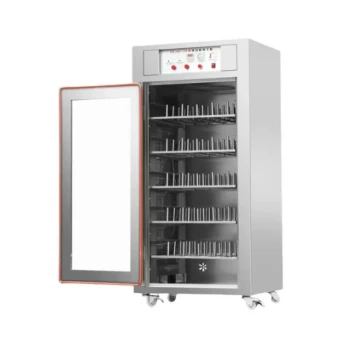
Precision is critical in biomass processing. Electronic constant temperature drying equipment is required to strictly control the dehydration environment for drone larvae and pupae. By maintaining specific temperatures and durations, this equipment lowers moisture content to prevent spoilage and physically alters the raw material to ensure it can be ground efficiently into powder.
Core Takeaway The primary function of this equipment is to secure long-term preservation by inhibiting microbial growth while simultaneously making the biological material brittle enough for effective mechanical processing.
The Critical Role of Moisture Control
To transform raw drone brood into a viable powder, managing water content is the most significant challenge. Electronic constant temperature drying provides the stability needed to navigate this phase successfully.
Inhibiting Microbial Growth
Raw drone larvae and pupae are biological materials with high moisture content, making them susceptible to rapid spoilage.
Electronic drying reduces this moisture to safe levels. By removing the water required for life processes, the equipment effectively creates an environment that inhibits the growth of harmful microbes and bacteria.
Extending Shelf Life
The direct result of microbial inhibition is stability.
Precise dehydration ensures the final powder does not degrade over time. This process is essential for extending the shelf life of the drone brood powder, allowing it to be stored and transported without compromising quality.
Optimizing for Mechanical Processing
Beyond preservation, the drying process serves a functional mechanical purpose. The physical state of the raw material must change before it can be processed further.
Modifying Physical Properties
Raw larvae are naturally soft and pliable. Processing them in this state is ineffective.
The drying process fundamentally modifies the physical properties of the biomass. It transitions the material from a soft biological state to a dry, structured form.
Enhancing Grinding Efficiency
The ultimate goal of the physical modification is texture.
Drying renders the larvae and pupae brittle. This brittleness is a strict requirement for the subsequent grinding stage, allowing the material to be pulverized into a fine powder with higher efficiency than would be possible with pliable raw material.
Understanding the Risks of Improper Drying
While the benefits are clear, understanding the specific risks associated with moisture variability highlights why constant temperature equipment is necessary.
The Risk of Residual Moisture
If drying temperatures fluctuate, the dehydration process becomes uneven.
Pockets of residual moisture can remain within the biomass. This failure to reach a uniform dry state reintroduces the risk of microbial activity, negating the effort to extend shelf life.
The Impact on Grindability
Inconsistent drying results in material that is not uniformly brittle.
If the material retains elasticity or softness, it resists grinding. This leads to poor powder consistency and significantly reduces processing efficiency, potentially clogging machinery or requiring repeated processing cycles.
Making the Right Choice for Your Goal
The use of electronic constant temperature drying is about balancing preservation with processability.
- If your primary focus is Product Safety: Prioritize temperature settings that guarantee moisture reduction to levels that completely inhibit microbial growth.
- If your primary focus is Production Efficiency: Ensure the drying duration is sufficient to render the biomass completely brittle, maximizing throughput during the grinding phase.
Ultimately, precise temperature control is the essential bridge that transforms perishable raw material into a stable, workable commercial product.
Summary Table:
| Feature | Function in Drone Brood Processing | Business Benefit |
|---|---|---|
| Precise Temperature Control | Maintains stable heat to prevent nutrient degradation | Consistent product quality |
| Moisture Reduction | Lowers water activity to inhibit microbial growth | Extended shelf life & food safety |
| Physical Modification | Transforms soft larvae into a brittle state | High grinding efficiency & fine powder |
| Uniform Dehydration | Eliminates residual moisture pockets | Reduced risk of spoilage and clumping |
Scale Your Apiary Production with HONESTBEE Professional Solutions
To produce premium-grade drone brood powder, your facility needs more than just equipment—it needs industrial precision. HONESTBEE specializes in supporting commercial apiaries and distributors with a comprehensive wholesale portfolio.
Whether you require specialized hive-making machinery, honey-filling systems, or high-performance drying and processing tools, we provide the hardware and industry consumables needed to maximize your output and product stability.
Ready to optimize your beekeeping business?
Contact HONESTBEE Today to discuss how our professional equipment can enhance your processing efficiency and market competitiveness.
References
- Ratko Pavlović, Nenad M. Zarić. Recycling honey bee drone brood for sustainable beekeeping. DOI: 10.1093/jee/toae303
This article is also based on technical information from HonestBee Knowledge Base .
Related Products
- Economy Small Scale Honey Dryer Dehumidifier Thickening Machine
- HONESTBEE Adjustable Voltage Wire Embedder with Digital Display
- Professional Thermostatic Conical Honey Melter
- HONESTBEE AC Powered Wire Embedder with Alligator Clips
- HONESTBEE Professional Cabinet Bottle Dryer
People Also Ask
- What are the benefits of using a honey dryer for honey production? Boost Yield & Quality
- What are the features of the honey dryer? Achieve Premium Quality & Maximize Your Harvest
- What are the key features of the honey dryer? Essential Guide to Advanced Moisture Reduction Technology
- What is the primary construction material of the honey dryer? Durable AISI 304 Stainless Steel for Beekeepers
- How does the design of some honey dryers achieve high drying efficiency without a vacuum system? Boost Your Productivity