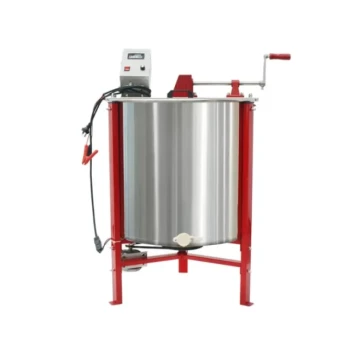
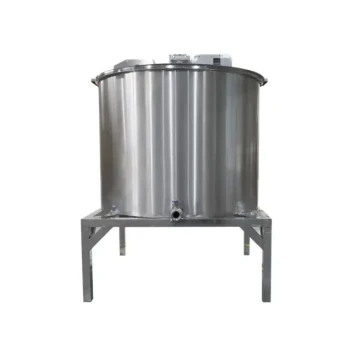
High-cleanliness honey extraction and filling machinery is non-negotiable for atmospheric metal tracing because honey acts as a sensitive geochemical record. Without pharmaceutical-grade cleanliness, the equipment introduces secondary contamination, making it impossible to distinguish between environmental metals collected by bees and residue from the machinery itself.
Honey is not just food; it is a biological archive of environmental data. Using high-standard processing equipment is the only way to validate that trace metal signals are genuine environmental indicators rather than manufacturing byproducts.
The Science of Geochemical Biomonitoring
Honey bees are effective samplers of their environment, collecting nectar and pollen that contain microscopic atmospheric particles. To utilize this data effectively, the processing phase must be as controlled as a laboratory environment.
Honey as an Environmental Sensor
Bees forage across wide areas, inadvertently collecting data on atmospheric fluctuations. The honey they produce serves as a cumulative sample of the local air and soil quality.
Because honey is an extremely sensitive tool for this type of monitoring, it captures even minute traces of metals. This sensitivity makes it a powerful asset for environmental science, but also highly susceptible to external interference.
The Problem of Secondary Contamination
The extraction phase represents the highest risk to data integrity. Standard industrial machinery may leave microscopic metallic residues or organic contaminants during processing.
If the machinery lacks high-cleanliness standards, these residues mix with the honey. This creates "noise" in the data, obscuring the true environmental signal with cross-contamination from the production equipment.
Ensuring Data Fidelity
High-cleanliness machinery functions as a sterile conduit. By utilizing high-standard processing equipment, researchers minimize the introduction of foreign elements.
This ensures that the detected trace metal signals accurately represent the environmental data collected by the bees. It guarantees the accuracy of source tracing, allowing scientists to pinpoint pollution sources without false positives generated by the factory floor.
Critical Operational Factors
While cleanliness is the priority for metal tracing, the machinery must also support the biological requirements of the product.
Preservation of Chemical Integrity
Honey and beeswax are biological products with strict stability windows. Delays in processing can lead to degradation or changes in chemical composition.
Advanced machinery provides the efficiency needed to process honey within these seasonal windows. This prevents the honey from becoming over-ripe or chemically altered while still in the hive, maintaining the sample's validity.
Closed-Loop Protection
Industrial-grade systems often utilize sealed designs. While primarily intended for hygiene and volume, this feature is vital for scientific analysis.
Sealed systems prevent environmental dust or localized factory contaminants from entering the sample during extraction. This isolation is critical for preserving the quality of the honey against external variables that could skew metal analysis.
Understanding the Trade-offs
While high-cleanliness machinery is essential for accuracy, it introduces specific challenges that must be managed.
Complexity and Cost
Equipment designed to prevent secondary contamination often requires advanced materials and engineering. This significantly increases the initial investment compared to standard agricultural extractors.
Maintenance Rigor
High-cleanliness does not just mean buying the right machine; it requires strict maintenance protocols. A "clean" machine that is improperly serviced can still become a source of cross-contamination.
Throughput vs. Precision
There is often a balance between high-speed industrial throughput and the delicate handling required for trace analysis. While industrial machines can handle vast forest nectar reserves, they must be calibrated to ensure speed does not compromise the hygiene and quality standards required for scientific tracing.
Making the Right Choice for Your Goal
Select your equipment based on the specific fidelity of data you require.
- If your primary focus is Atmospheric Metal Tracing: Prioritize machinery with certified high-cleanliness standards and inert contact materials to eliminate secondary metal contamination.
- If your primary focus is Commercial Volume: Prioritize industrial-grade systems with high throughput and sealed designs to ensure sanitary compliance and market competitiveness.
Ultimately, for environmental tracing, the machinery is not just a production tool; it is a critical component of the scientific measurement chain.
Summary Table:
| Feature | Impact on Metal Tracing | Scientific Benefit |
|---|---|---|
| Pharmaceutical-Grade Cleanliness | Eliminates secondary metal residues | Guarantees data fidelity and purity |
| Inert Contact Materials | Prevents equipment leaching | Ensures signals are strictly environmental |
| Closed-Loop Protection | Blocks ambient factory dust/particles | Prevents external cross-contamination |
| Efficiency & Speed | Minimizes chemical degradation | Preserves the honey's geochemical archive |
Elevate Your Beekeeping Standards with HONESTBEE
For commercial apiaries and distributors, the difference between a food product and a scientific resource lies in the equipment used. HONESTBEE provides the precision-engineered solutions you need to maintain absolute purity and data integrity.
Whether you require specialized honey-filling machines, high-capacity hive-making machinery, or essential beekeeping tools and consumables, we offer a comprehensive wholesale portfolio tailored to the needs of the modern industry. Our equipment ensures your honey remains a pristine record of the environment, free from secondary contamination.
Unlock the full potential of your production—contact our experts today to discuss our wholesale machinery and industrial-grade supplies.
References
- Dominique Weis, Jasmine Chase. How clean is our city? Let our biomonitors (honey, salmon, ...) tell us.. DOI: 10.7185/gold2023.17045
This article is also based on technical information from HonestBee Knowledge Base .
Related Products
- Precision Durable Efficient HONESTBEE Rotary Honey Filling Machine
- Automatic Honey Filling and Filtering Machine for Beekeeping Bottle Filling
- Economy Small Honey Filling Machine Honey Bottle Filler Packaging Machine
- Fully Automatic Honey Filling Packaging Machine for Processing Line
- Commercial Rotary Honey Filling Machine for Production
People Also Ask
- What are the common types of bottling machines used for honey? Choosing the Right Solution for Your Apiary
- How do honey filling and processing machines aid native bee product conservation? Boost Value with HONESTBEE Technology
- What is a key feature of the new generation of the honey filling machine? The Advanced Electronic Control Unit
- How do honey filling machines work? Achieve Precision & Speed for Your Apiary
- How do high-precision honey filling machines ensure quality? Optimize Your Commercial Production with HONESTBEE