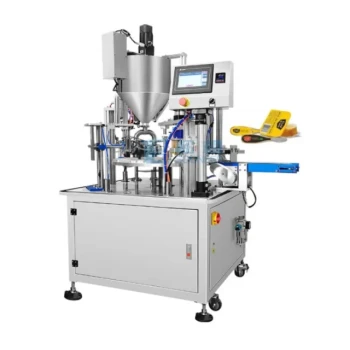
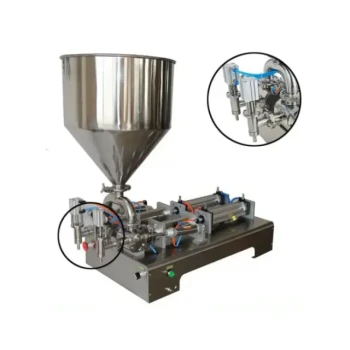
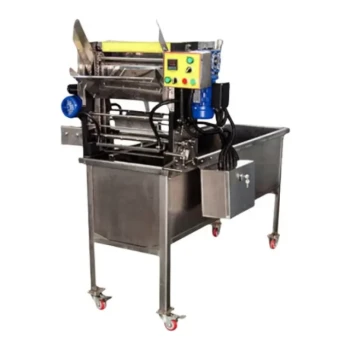
High-precision automated machinery is the only reliable method for managing honey's complex physical properties at an industrial scale. By utilizing advanced piston or weighing systems, these machines overcome high viscosity to ensure consistent product weight while significantly reducing the time honey is exposed to air. This rapid, closed-loop processing is critical for controlling Hydroxymethylfurfural (HMF) levels, thereby preserving the honey’s medicinal ingredients, sensory characteristics, and microbial safety.
Modern honey production relies on automation not just for speed, but to chemically stabilize a sensitive product. Precision machinery bridges the gap between industrial efficiency and biological preservation, ensuring strict weight compliance and extended shelf life by minimizing environmental exposure.
Preserving Chemical and Sensory Integrity
Controlling HMF and Oxidation
Honey is a biologically active substance that degrades upon prolonged contact with air. Automated lines significantly reduce the time honey is exposed to oxygen during the filling process.
This speed is vital for controlling the increase of Hydroxymethylfurfural (HMF), a key indicator of honey freshness and quality. By limiting exposure, automation protects the honey's medicinal active ingredients and prevents oxidative degradation.
Managing Hygroscopic Properties
Honey is naturally hygroscopic, meaning it readily absorbs moisture from the surrounding environment. Excess moisture can lead to fermentation and spoilage.
Automated machinery often operates within a closed environment, preventing the honey from pulling humidity from the air. This ensures the final product maintains the correct water content for long-term stability.
Economic Efficiency and Regulatory Compliance
Precision Metering to Reduce Waste
Due to honey's high viscosity, manual or low-tech filling often results in inconsistent volumes and product "giveaway." High-precision machinery employs precise piston or weighing systems to control fill levels down to the gram.
This accuracy minimizes raw material waste caused by overflow. It ensures that every bottle contains exactly what is stated on the label, maximizing yield from every batch.
Standardization for Global Markets
International trade requires strict adherence to net weight regulations and packaging standards. Automated systems produce standardized packaging that meets these rigorous measurement regulations.
This consistency allows producers to meet large-scale demand during peak harvest seasons. It supports industrial expansion by ensuring every unit is identical in weight and airtightness.
Hygiene and Contamination Control
Eliminating Human Contact
Manual operations invariably introduce the risk of secondary contamination. Automation replaces manual handling with high-speed mechanical processing.
By removing human contact from the filling stage, producers significantly lower the risk of introducing pathogens. This is essential for meeting food safety standards required for large-scale distribution.
Ensuring a Sterile Environment
Advanced packaging lines often feature integrated sealing technologies within a sterile zone. This prevents the entry of external impurities like dust or airborne microbes.
A sterile filling environment is particularly vital for organic honey and royal jelly. It directly contributes to extending the product's shelf life and maintaining its purity.
Understanding the Trade-offs
While automation offers immense benefits, it introduces specific operational challenges. The equipment required to handle high-viscosity fluids is complex and requires significant initial capital investment.
Furthermore, maintenance and cleaning are more demanding than with simpler systems. Because honey is sticky and crystallizes, these machines require rigorous cleaning protocols (often Clean-in-Place systems) to prevent clogging and cross-contamination between batches.
Making the Right Choice for Your Production
To select the appropriate machinery, you must align the technology with your specific production targets.
- If your primary focus is Product Quality: Prioritize machines with closed-loop systems and rapid sealing to minimize HMF growth and oxidation.
- If your primary focus is Profit Margins: Prioritize equipment with high-precision weighing systems to eliminate overfilling and reduce raw material loss.
- If your primary focus is Scalability: Prioritize high-speed automated lines that can handle peak harvest volumes without creating bottlenecks.
Ultimately, high-precision automation is the mechanism that transforms raw apiary output into a stable, compliant, and commercially viable consumer product.
Summary Table:
| Key Requirement | Role of Automation | Impact on Quality & Profit |
|---|---|---|
| HMF Control | Rapid, closed-loop processing | Preserves medicinal properties & freshness |
| Moisture Control | Minimized air exposure | Prevents fermentation & spoilage |
| Filling Accuracy | Piston or weighing systems | Eliminates product giveaway & ensures compliance |
| Food Safety | Zero-touch mechanical processing | Reduces contamination & extends shelf life |
| Throughput | High-speed standardized lines | Enables scaling for peak harvest & global trade |
Scale Your Apiary with Industrial Precision
Transitioning from manual bottling to industrial scale requires equipment that understands the unique viscosity and sensitivity of honey. HONESTBEE empowers commercial apiaries and distributors with the high-performance tools needed to thrive in global markets.
Our Value to You:
- Comprehensive Range: From advanced honey-filling and hive-making machines to essential beekeeping consumables.
- Precision Engineering: Reduce product waste and ensure 100% regulatory compliance with our high-accuracy weighing systems.
- Market Growth: We provide more than just machinery; we supply the cultural merchandise and hardware that build your brand's presence.
Ready to eliminate production bottlenecks and preserve the integrity of your harvest?
Contact HONESTBEE Today for a Wholesale Consultation
References
- Marina França Elias da Silva, Eryka Maria dos Santos Alves. Scientific trends and research networks on Apis mellifera honey: a bibliometric study (2018–2024). DOI: 10.55905/oelv23n5-058
This article is also based on technical information from HonestBee Knowledge Base .
Related Products
- Precision Automated Packaging Turntable Honey Spoon Filling Sealing Packing Machine
- Precision Durable Efficient HONESTBEE Rotary Honey Filling Machine
- Automatic Single-Dose Snap & Squeeze Honey Sachets Packing Machine
- Fully Automatic Honey Filling Packaging Machine for Processing Line
- Commercial Rotary Honey Filling Machine for Production
People Also Ask
- Why is the use of professional filling and sealing packaging machinery necessary for the production of high-value honey?
- What role do automated filling and packaging machines play in the honey supply chain? Scale Your Retail Distribution
- What are the benefits of automated honey filling and packaging? Scale Your Apiary with Industrial Precision
- What role do professional automated filling and packaging machines play in honey processing? Boost Efficiency & Value
- How do automated honey filling and packaging machines contribute to the market value of honey products? Maximize Your ROI