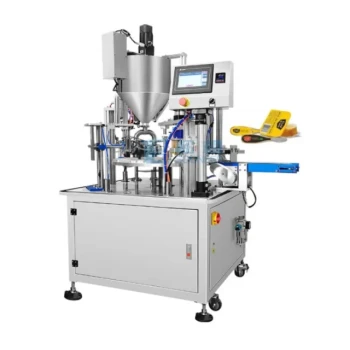
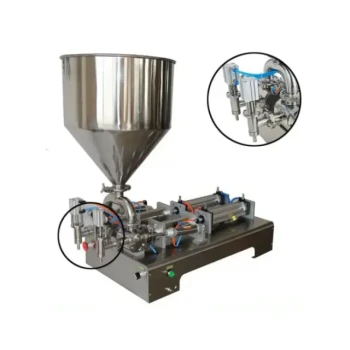
High-precision honey-filling equipment is the distinct operational requirement for producers aiming to enter the pharmaceutical and cosmetic markets, as it guarantees the consistent net weight and absolute purity these sectors demand. By automating the filling process, you eliminate the variability and contamination risks inherent in manual handling, ensuring your product meets the strict commercial and safety standards of high-value industries.
The Core Takeaway To sell to the medical or cosmetic industries, honey is treated as an active ingredient rather than a foodstuff. High-precision automation provides the necessary closed-loop environment to guarantee sterility, chemical stability, and precise dosage, transforming raw honey into a compliant commercial asset.
Achieving Pharmaceutical-Grade Hygiene
For buyers in the medical and cosmetic sectors, purity is not a luxury; it is a regulatory requirement.
Eliminating Contamination Risks
The primary value of high-precision equipment is the significant reduction of manual contact.
According to rigorous quality control standards, minimizing human interaction with the product is the most effective way to maintain high hygiene levels.
The Closed-Loop Advantage
Advanced filling machines operate in a closed environment.
This isolation prevents the introduction of environmental impurities, such as dust or airborne microbes.
It effectively blocks microbial contamination and prevents moisture absorption, which is critical for maintaining the product's shelf stability and safety profile.
Protecting High-Value Inventory
When producing for high-value sectors, the honey itself is often a costly resource (e.g., Manuka or Stingless Bee honey).
Precise Dosage Control
High-precision equipment ensures consistent net weight per container.
This adherence to strict commercial measurement standards prevents the financial loss associated with overfilling.
It also ensures you meet the exact dosage specifications often required for cosmetic formulations or medicinal packaging.
Minimizing Material Waste
Manual filling often leads to spills and drips.
Automated systems utilize anti-drip technology and precision metering.
This significantly reduces overflow loss, ensuring that virtually all of your high-value raw material makes it into the final package rather than being wasted on the production floor.
Preserving Chemical and Physical Integrity
Pharmaceutical and cosmetic buyers value honey for its bioactive properties, such as enzyme activity and moisture content.
Preventing Oxidation
Exposure to air can degrade honey’s quality.
Precision machines minimize the contact between the honey and the surrounding air during the filling process.
This prevents oxidation and air entrainment, which protects the unique flavor profile and prevents the degradation of active enzymes.
Handling Complex Viscosities
Specialty honeys often vary in texture, from high-viscosity crystallization to the high water content of stingless bee honey.
Professional equipment uses precise flow control systems to handle these variances without compromising speed or accuracy.
This ensures the biochemical stability of the product is maintained from the vat to the jar, preventing issues like fermentation caused by improper handling.
Understanding the Trade-offs
While automation is essential for scaling into high-value markets, it requires a shift in operational mindset.
Rigidity vs. Flexibility
Transitioning to automated systems standardizes your output for large-scale retail channels.
However, this standardization can reduce the flexibility associated with small-scale, manual batching.
Technical Maintenance
Reliability relies on the calibration of precision metering pumps.
To maintain the benefits of non-drip and exact measuring, the equipment requires regular maintenance and technical oversight to ensure flow control systems remain accurate over time.
Making the Right Choice for Your Goal
Transitioning to high-precision equipment allows you to differentiate your product based on technical specifications.
- If your primary focus is Pharmaceutical Compliance: Prioritize machines with a fully closed-loop operation to eliminate secondary contamination and ensure sterility.
- If your primary focus is High-Value Niche Honey: Prioritize equipment with anti-drip and oxidation prevention to maximize yield and preserve delicate enzyme activity.
Precision filling is not just about packaging; it is the final step of quality assurance that validates your product for the world's most demanding markets.
Summary Table:
| Feature | Benefit for High-Value Sectors | Impact on Product Quality |
|---|---|---|
| Closed-Loop Operation | Eliminates microbial & environmental contamination | Ensures pharmaceutical-grade purity |
| Precision Metering | Guarantees consistent net weight & exact dosage | Minimizes waste of high-value raw honey |
| Anti-Drip Technology | Prevents spills and material loss | Maintains a sterile and efficient workspace |
| Oxidation Prevention | Protects bioactive enzymes and flavor profiles | Preserves chemical stability & shelf life |
| Flow Control Systems | Handles various viscosities (e.g., Manuka) | Prevents fermentation & texture degradation |
Scale Your Production with HONESTBEE Precision Engineering
Transitioning from local food markets to high-value pharmaceutical and cosmetic sectors requires more than just premium honey—it requires industrial-grade precision. HONESTBEE specializes in empowering commercial apiaries and global distributors with the professional machinery needed to meet these rigorous standards.
Our Value to Your Business:
- Comprehensive Wholesale Range: From high-precision honey-filling and hive-making machines to essential beekeeping tools and industry consumables.
- Quality Assurance: Our automated solutions ensure the sterility, stability, and dosage accuracy your B2B clients demand.
- Tailored Support: We cater to your specific scale, helping you transform raw materials into compliant, high-margin commercial assets.
Ready to upgrade your production line and capture high-value niche markets?
Contact HONESTBEE Today to Discuss Your Equipment Needs
References
- Joyce Monteiro da Silva, Geany Cleide Carvalho Martins. The Bee Honey Market in the State of Pará, Brazilian Amazon: An Econometric Model. DOI: 10.5296/jas.v10i3.19630
This article is also based on technical information from HonestBee Knowledge Base .
Related Products
- Precision Durable Efficient HONESTBEE Rotary Honey Filling Machine
- Commercial Rotary Honey Filling Machine for Production
- Precision Automated Packaging Turntable Honey Spoon Filling Sealing Packing Machine
- Fully Automatic Honey Filling Packaging Machine for Processing Line
- Pneumatic Double Nozzle Honey Filling Bottling Packaging Machine
People Also Ask
- What quality control role does professional honey filling equipment perform? Ensure Consistency and Product Stability
- What is a key feature of the new generation of the honey filling machine? The Advanced Electronic Control Unit
- How do high-precision honey filling machines ensure quality? Optimize Your Commercial Production with HONESTBEE
- What are the common types of bottling machines used for honey? Choosing the Right Solution for Your Apiary
- How do honey filling and processing machines aid native bee product conservation? Boost Value with HONESTBEE Technology