High-precision temperature control is the definitive safeguard for maintaining the biological integrity of honey during large-scale processing. It is essential because honey’s core pharmacological components are extremely heat-sensitive; without strict thermal regulation, these components denature, and toxic byproducts form, stripping the honey of its medicinal value.
Core Takeaway Processing honey requires a delicate balance: you must maintain temperatures low enough to preserve vital enzymes like diastase and invertase, yet stable enough to prevent chemical degradation. Failure to control this variable results in a product that is biologically inert and potentially chemically compromised.
Preserving Pharmacological Potency
Protection Against Enzyme Denaturation
The therapeutic value of natural honey relies heavily on specific enzymes, including catalase, invertase, and diastase.
These proteins are the drivers of honey's biological activity but are notoriously unstable under thermal stress.
High-precision equipment ensures temperatures remain below the threshold where these enzymes begin to unravel, or denature, preserving the honey's status as a functional food or medicine.
Preventing Cytotoxic Byproduct Formation
Beyond preserving good components, temperature control is vital for stopping the creation of bad ones.
Excessive heat triggers the dehydration of hexoses (sugars) found in honey.
This chemical reaction produces 5-hydroxymethylfurfural (HMF), a cytotoxic substance that compromises chemical safety and indicates a loss of quality.
Ensuring Consistency and Traceability
Controlling Sedimentation and Homogeneity
In large-scale apiary production, maintaining a uniform product is a logistical challenge.
Precise thermal regulation during the packaging phase prevents the uneven sedimentation of pollen.
This ensures that every bottle contains a consistent ratio of bioactive solids, rather than having them settle at the bottom of the vat.
Guaranteeing Reliable Sampling
When temperature fluctuations are eliminated, the batch remains homogeneous.
This uniformity means that random quality control samples accurately represent the biological characteristics of the entire production run.
This reliability is critical for traceability and meeting strict industrial standards for medicinal preparations.
Common Pitfalls to Avoid
The Viscosity Trap
A common processing error is using excessive heat to lower honey's viscosity to make it flow faster through bottling machinery.
While this increases speed, it creates localized hot spots that immediately destroy enzyme activity in portions of the batch.
The Illusion of Average Temperature
Operators often rely on "average" tank temperature readings, ignoring the reality of thermal inertia.
Without high-precision equipment, the honey near the heating elements may burn while the center remains cool.
True preservation requires uniform thermal distribution, not just a safe average reading.
Making the Right Choice for Your Goal
To maximize the value of your processing line, align your temperature strategy with your end-product requirements:
- If your primary focus is Medicinal Grade Honey: Prioritize equipment with the tightest thermal variance to prevent HMF formation and strictly preserve catalase and diastase activity.
- If your primary focus is Large-Scale Commercial Bottling: Focus on automated systems that integrate temperature control with mixing to ensure pollen homogeneity and batch-to-batch consistency.
Precision in temperature control is not merely a feature; it is the prerequisite for selling a biologically active product.
Summary Table:
| Key Factor | Impact of Precise Control | Consequence of Poor Control |
|---|---|---|
| Enzyme Activity | Preserves Diastase & Invertase | Thermal denaturation (Biologically inert) |
| Chemical Safety | Inhibits HMF formation | Cytotoxic byproduct (5-hydroxymethylfurfural) |
| Consistency | Uniform pollen & solid distribution | Uneven sedimentation & sampling errors |
| Viscosity | Smooth flow without localized burning | Localized hot spots & destroyed nutrients |
| Market Value | Medicinal & Premium Grade quality | Low-grade, commercially compromised product |
Elevate Your Honey Production with HONESTBEE Precision Engineering
Maintaining the biological integrity of natural honey requires more than basic heating—it demands industrial-grade precision. HONESTBEE empowers commercial apiaries and global distributors with the professional tools needed to safeguard honey quality at scale.
From honey-filling machines equipped with advanced thermal regulation to complete processing lines that prevent enzyme denaturation and HMF formation, our comprehensive wholesale offering covers all your specialized hardware and consumable needs.
Ready to maximize the medicinal value and consistency of your honey?
Contact our technical experts today to discover how HONESTBEE machinery can optimize your processing workflow and secure your brand's reputation for quality.
References
- Rizwana Afroz, Tanvir EM. Molecular Pharmacology of Honey. DOI: 10.4172/2161-1459.1000212
This article is also based on technical information from HonestBee Knowledge Base .
Related Products
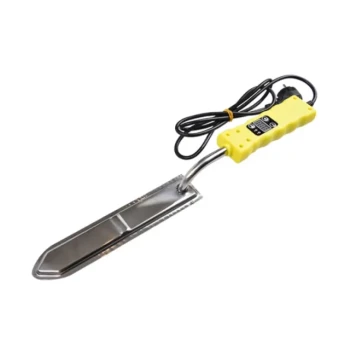
- Professional Electric Honey Uncapping Knife with Heated Digital Temperature Control for Beekeeping
- High Quality Honey Dehumidifier Dryer Thickening Machine for Beekeeping
- Precision Durable Efficient HONESTBEE Rotary Honey Filling Machine
- Commercial Rotary Honey Filling Machine for Production
- Digital Honey Refractometer for Precision Measurement of Optimal Honey Quality
People Also Ask
- Why are electric honey uncapping knives essential? Boost Efficiency & Preserve Comb for Professional Honey Extraction
- What is an electric uncapping knife and how is it used? Master Faster Honey Extraction with Heat
- What are the advantages and disadvantages of using an electric knife for uncapping honey frames? Boost Extraction Speed
- What are the drawbacks of using an electric knife for uncapping honey frames? Cost and Power Constraints Explained
- How should an electric uncapping knife be utilized? Master Efficient Honey Extraction with Heated Precision