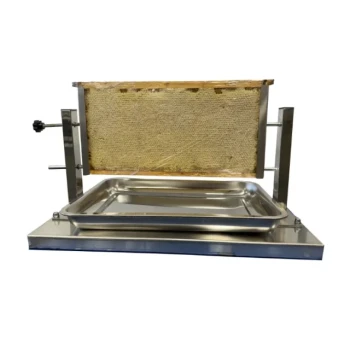
Industrial cold storage is the primary method for protecting surplus honeycombs from destructive pests, specifically the Greater Wax Moth, without the use of toxic chemicals. By utilizing deep freezers to maintain temperatures between -15°C and -20°C for at least 24 hours, beekeepers can destroy pests at every life stage—eggs, larvae, pupae, and adults—effectively sanitizing the equipment.
Core Takeaway: Cold storage functions as a "physical control" method that ensures product purity. Unlike fumigation, it eliminates latent parasites and pathogens through thermal shock, preventing chemical residue contamination while securing the biological safety of recycled beekeeping equipment.
The Mechanism of Pest Elimination
Targeting the Lifecycle
The primary threat to stored honeycombs is the Greater Wax Moth. Industrial cold storage targets the physiological structures of these pests, causing fatal damage.
Breaking the Cycle
Effective preservation requires more than just inhibition. The extreme cold destroys the pest at all developmental stages, including the eggs and larvae, which are often difficult to detect visually.
The Critical Temperature Threshold
To achieve total elimination, the environment must be stable and extremely low. Industrial-grade deep freezers typically operate in the -15°C to 0°C range, with -20°C often cited as the standard for ensuring efficacy.
Duration Matters
Temperature alone is not enough; exposure time is critical. Honeycombs must be subjected to these freezing temperatures for a continuous 24-hour period to ensure high penetration through the wax and total pest mortality.
Ensuring Product Purity and Safety
Avoiding Chemical Contamination
Traditional methods often rely on fumigation to control pests. Industrial cold storage avoids this entirely, ensuring no chemical residues are left on the comb or in the honey.
A Physical Control Method
This approach is classified as a physical control method rather than a chemical one. It preserves the natural integrity of the comb, ensuring that the wax remains safe for future honey production.
Biological Safety
Beyond simple pest control, this process ensures the biological safety of the equipment. It eliminates latent pathogens and parasites hidden within the wax, making the equipment safe to reintroduce to the apiary.
Operational Biosecurity
Preventing Cross-Contamination
Recycling old honeycombs is a standard practice, but it carries risks. Freezing ensures that when equipment is moved between colonies, it does not act as a vector for disease or infestation.
Protecting the Asset
Drawn comb (wax that bees have already built) is a beekeeper's most valuable resource. Cold storage protects this investment from being physically consumed and destroyed by wax moth larvae during storage.
Understanding the Trade-offs
Energy and Infrastructure Dependence
While biologically superior, industrial cold storage requires significant infrastructure. It depends on a reliable power supply and specialized industrial-grade freezers capable of maintaining deep freeze temperatures constantly.
Space Limitations
Unlike chemical strips which take up no room, cold storage requires physical space for large freezers. This can create a bottleneck if the volume of surplus combs exceeds the available freezer capacity.
Making the Right Choice for Your Goal
Industrial cold storage is the gold standard for beekeepers prioritizing long-term sustainability and product quality. Here is how to apply this to your operation:
- If your primary focus is Organic Certification or Purity: Rely exclusively on cold storage to guarantee zero chemical residue in your wax and honey.
- If your primary focus is Asset Protection: Prioritize the 24-hour deep freeze cycle (-20°C) immediately after harvesting to prevent immediate destruction of drawn comb by hatching larvae.
By substituting chemical management with thermal precision, you protect both the integrity of your current harvest and the health of your future colonies.
Summary Table:
| Feature | Industrial Cold Storage | Traditional Fumigation |
|---|---|---|
| Primary Goal | Physical pest elimination (thermal shock) | Chemical pest control |
| Temperature | -15°C to -20°C | Ambient temperature |
| Exposure Time | Minimum 24 hours | Variable (days to weeks) |
| Chemical Residue | 100% Zero (Safe for Organic) | Potential for wax contamination |
| Life Stages Killed | Eggs, Larvae, Pupae, & Adults | Mostly Larvae and Adults |
| Asset Protection | Preserves drawn comb integrity | Risk of chemical buildup over time |
Maximize Your Apiary Efficiency with HONESTBEE
Protecting your drawn comb is protecting your bottom line. At HONESTBEE, we specialize in supporting commercial apiaries and distributors with the robust infrastructure and professional-grade tools required for high-volume honey production. From high-capacity honey-filling machines and hive-making equipment to essential consumables, we provide the industrial solutions needed to maintain biological safety and product purity.
Ready to scale your operation with sustainable, chemical-free equipment solutions? Contact us today to discuss your wholesale needs and see how our comprehensive portfolio of beekeeping machinery and cultural merchandise can add value to your business.
References
- Marwan M Keshlaf. Beekeeping In Libya. DOI: 10.5281/zenodo.1326813
This article is also based on technical information from HonestBee Knowledge Base .
Related Products
- Professional Adjustable Stainless Steel Honeycomb Display Stand
- Plastic Honey Comb Frames Cassette Box for Honey
- Classic Glass Honey Jar with Metal Lug Cap for Beehive Storage
- Stainless Steel Honey Storage and Settling Tank with Double Strainer
- Stainless Steel Honey Storage Tank with Lid for Honey
People Also Ask
- How do adjustable beehive stands address ergonomic needs? Optimize Health and Efficiency in Professional Beekeeping
- Why are professional honey display racks and climate-controlled storage facilities necessary? Protect Your Honey Quality
- Why are constant temperature control cabinets critical for research on long-term honey storage? Ensure Quality Stability
- What are the primary hardware bottlenecks in industrial pollination? Unlocking Scalability with Standardized Equipment
- What role do industrial-grade automatic weather stations play in the management of an apiary? Boost Precision & Yield