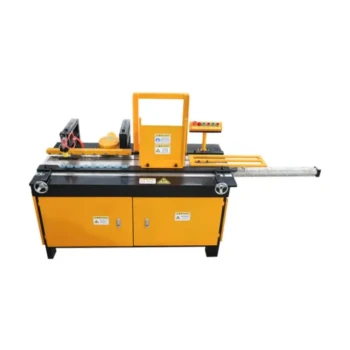
Industrial-grade beehive manufacturing equipment is the engine of scalability for regional pollination services. It provides the precision and volume necessary to deploy thousands of healthy bee colonies within tight seasonal windows, ensuring that agricultural demands are met without delay. By automating the production of standardized, high-quality hive components, this machinery removes the bottlenecks of traditional manual assembly and allows for the rapid expansion of apiary operations across vast geographic areas.
Core Takeaway: Industrial-grade machinery facilitates the mass production of standardized, interchangeable beehive components, which is essential for reducing unit costs and enabling the rapid deployment of healthy bee colonies needed for large-scale pollination contracts.
Maximizing Operational Efficiency Through Standardization
The Power of Interchangeable Components
Industrial-grade machinery ensures that every brood box, honey super, and frame is produced with high precision and uniform dimensions. For a commercial pollination provider, this interchangeability is vital because it allows equipment to be swapped seamlessly across thousands of colonies without manual adjustment. This uniformity simplifies asset management and reduces the labor hours required for hive maintenance and colony inspections.
Precision Engineering and "Bee Space"
Sophisticated manufacturing equipment guarantees that internal components adhere to strict bee space standards. Maintaining these precise physical gaps is critical for preventing the buildup of excessive wax or propolis, which can hinder hive inspections. Hives built to these specifications promote better colony health, improved overwintering success, and higher disease resistance, ensuring the "pollination assets" remain productive.
Facilitating Mechanized Operations
Standardized hardware is the prerequisite for apiary automation and mechanized honey processing lines. When every hive is identical, providers can utilize forklifts for rapid trans-regional transfers and automated extractors for efficient harvesting. This integration of hardware and machinery significantly lowers the technical barriers to entry for industrial-scale beekeeping.
Meeting the Surging Demands of Seasonal Pollination
Rapid Response and Supply Chain Reliability
Pollination services are time-sensitive, often requiring the deployment of thousands of hives within a few weeks of a crop’s bloom. Industrial manufacturing allows for rapid production cycles, enabling distributors to fulfill large-scale orders with ultra-fast delivery times. This responsiveness is critical for regions where agricultural productivity is vulnerable to sudden pollinator shortages.
Scaling Regional Adoption
High-capacity machinery, such as automated woodworking and injection molding systems, reduces the per-unit production cost. These cost savings make modern beekeeping equipment more accessible to farmers and smaller cooperatives. By lowering the initial investment threshold, industrial equipment facilitates the rapid regional adoption of advanced, scalable beekeeping techniques.
Supporting Migratory Beekeeping
Large-scale pollination often involves moving colonies across different nectar-producing areas as seasons change. Industrial-grade durability ensures that hives can withstand the rigors of frequent transport and varying environmental conditions. Standardized dimensions also ensure that hives stack perfectly on trucks, maximizing transport efficiency and reducing the risk of damage during transit.
Understanding the Trade-offs and Pitfalls
Capital Investment vs. Long-Term Yield
The primary challenge of industrial-grade equipment is the high initial capital expenditure required for setup. While manual methods have lower entry costs, they cannot achieve the volume or consistency required for regional scaling. Distributors must weigh the upfront cost of high-precision machinery against the long-term benefits of reduced labor and increased service capacity.
The Risk of Equipment Incompatibility
Purchasing non-standardized equipment from multiple sources can lead to a fragmented inventory where parts are not interchangeable. This lack of consistency creates significant operational friction and increases management costs over time. Relying on a full-spectrum product portfolio from a single, expert source is the most effective way to avoid these integration headaches.
Making the Right Choice for Your Goal
As a distributor or B2B reseller, your choice of equipment should align with the specific growth trajectory of your clients' pollination services.
- If your primary focus is rapid regional expansion: Invest in high-capacity, automated manufacturing solutions that offer the fastest order fulfillment and ultra-fast delivery to meet seasonal peaks.
- If your primary focus is operational cost reduction: Prioritize equipment that guarantees high-precision standardization to ensure interchangeability and seamless integration with automated honey processing lines.
- If your primary focus is long-term asset durability: Choose industrial-grade hardware built to strict bee space standards to ensure colony health and equipment longevity during migratory transport.
By providing standardized, high-precision hardware, industrial manufacturing serves as the essential material foundation for modern, profitable, and sustainable pollination enterprises.
Summary Table:
| Key Feature | Impact on Scaling | Primary Benefit |
|---|---|---|
| Standardization | Universal interchangeability | Dramatically reduced labor & maintenance |
| Precision Engineering | Adherence to "Bee Space" | Healthier colonies & improved overwintering |
| High-Capacity Output | Rapid production cycles | Reliable fulfillment of large-scale contracts |
| Industrial Durability | Rugged, migratory-ready build | Long-term asset protection during transport |
Scale Your Apiary Business with HONESTBEE
Are you ready to dominate the regional pollination market? HONESTBEE empowers distributors, wholesalers, and B2B resellers with a one-stop sourcing solution for the full spectrum of beekeeping equipment. From high-precision hive-making and honey-filling machinery to essential industry consumables and cultural merchandise, we provide the tools you need to ensure rapid expansion and high profit margins.
Why partner with us?
- Full-Spectrum Portfolio: Everything from specialized hardware to essential consumables.
- Ultra-Fast Delivery: Rapid response times and efficient order fulfillment to meet seasonal peaks.
- Industry Expertise: Deep professional knowledge to support your OEM/ODM needs.
- Exceptional Service: Dedicated support to ensure your supply chain remains reliable.
Maximize your operational efficiency and service capacity today—contact HONESTBEE for a wholesale consultation!
References
- Kedar Devkota, Thomas P. Timberlake. Assessing the economic and nutritional value of pollination services in Nepal. DOI: 10.1038/s41598-024-75584-x
This article is also based on technical information from HonestBee Knowledge Base .
Related Products
- High-Efficiency Pneumatic Bee Hive Making Machine for Rapid Box Assembly
- Beeswax Machine Press Embosser Wax Foundation Mold Printer Bee Hive Equipment Making Sheet
- Mini Desktop Bee Hive Frame Forming Making Machine
- Beehive Handle and Frame Rest Cutting Machine: Your Specialized Hive Machine
- Professional Bee Frame Machine for Side Bar Shaping
People Also Ask
- How does the introduction of professional beehive-making machinery benefit sustainable beekeeping? Scale Your Apiary
- Why is specialized beehive-making machinery critical for low-defense breeding? Enhance Selection with Precision Tools
- How does the introduction of specialized beehive making machinery contribute to increasing the scale of regional beekeeping industries?
- What is the importance of specialized beehive making machinery in a circular bio-economy? Build Local Sustainability
- Why is specialized beehive-making machinery essential? Scale Your Apiary with Precision Industrial Standards