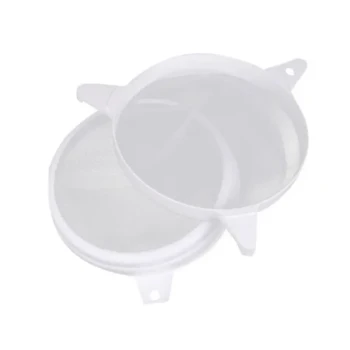
Industrial-grade filtration is the foundation of honey quality control. This equipment is essential because it removes beeswax residues, propolis, and physical debris from raw honey immediately following the harvest. By eliminating these impurities, processors ensure food safety, protect downstream automated filling machinery, and establish the baseline sensory standards required for global commercial trade.
Core Takeaway: Industrial-grade filtration is a strategic necessity that secures product clarity, extends shelf life by reducing crystallization nuclei, and ensures strict compliance with international food safety standards, directly impacting a distributor's market competitiveness.
Protecting Product Integrity and Sensory Standards
Removing Physical Contaminants
Raw honey arrives from the field containing beeswax fragments, larval residues, and bee parts. Industrial-grade filtration uses multi-stage, fine-pore stainless steel meshes to physically strip these contaminants without compromising the honey's chemical integrity.
Enhancing Aesthetic Appeal and Texture
Distributors require honey with high transparency and a smooth texture to meet consumer expectations. Professional filtration achieves a clear, attractive appearance that allows the product to be positioned for higher market pricing and premium branding.
Preserving Nutritional Value
While removing debris, high-precision tools are designed to retain natural enzymes and pollen content. This ensures the honey meets the "natural" criteria defined by regulatory bodies like the EU, which prohibits the removal of natural constituents during the cleaning process.
Maximizing Supply Chain Efficiency and Value
Optimizing Downstream Automation
Physical impurities can cause significant wear and tear or clogs in automated filling and packaging lines. Implementing rigorous filtration at the initial stage prevents costly equipment downtime and ensures a seamless transition to high-speed order fulfillment.
Extending Shelf Life through Crystallization Control
Filtration removes crystal nuclei, such as microscopic dust and wax particles, which are the primary triggers for honey crystallization. By slowing this natural process, distributors can maintain the liquid state of the honey longer, reducing the need for reprocessing and inventory loss.
Meeting Global Regulatory Requirements
International standards, such as EU Council Directive 2001/110/EC, use cleanliness as a primary grading metric for export. Industrial-grade equipment ensures that every batch meets these stringent safety and purity benchmarks, facilitating smoother cross-border trade.
Understanding the Trade-offs and Technical Challenges
Purity vs. Pollen Retention
A common pitfall is using filters that are too fine, which may inadvertently remove natural pollen. While this creates ultra-clear honey, it can lead to legal challenges regarding the product's "raw" or "natural" status in certain jurisdictions.
Pressure and Heat Management
High-speed filtration often requires increased pressure, which can introduce micro-bubbles or heat friction. If not managed by professional-grade systems, this can degrade the honey's delicate enzyme profile and affect its long-term stability.
Maintenance and Sanitation Costs
Industrial systems require rigorous cleaning protocols to prevent cross-contamination or microbial growth within the filter housing. Distributors must account for these operational requirements when selecting a one-stop sourcing partner.
Choosing the Right Filtration Strategy for Your Portfolio
How to Evaluate Solutions for Your Business
When selecting filtration systems or sourced products, your choice should align with your specific market positioning and logistical capabilities.
- If your primary focus is high-end retail and export: Prioritize multi-stage, high-precision stainless steel systems that guarantee clarity while strictly adhering to EU pollen-retention standards.
- If your primary focus is rapid order fulfillment and high-volume turnover: Invest in heavy-duty industrial filters designed for high flow rates that protect your automated packaging lines from debris-related downtime.
- If your primary focus is raw or organic niche markets: Utilize specialized physical filtration that operates at lower temperatures to preserve the honey's natural enzymatic activity and nutritional profile.
By integrating professional filtration early in the supply chain, you secure a product that is safe, shelf-stable, and ready for the demands of the global market.
Summary Table:
| Key Benefit | Impact on Honey Supply Chain | Technical Advantage |
|---|---|---|
| Contaminant Removal | Ensures food safety and purity | Strips wax, larvae, and debris while retaining enzymes |
| Machinery Protection | Reduces downtime and maintenance | Prevents clogs in automated filling and packaging lines |
| Shelf Life Extension | Minimizes inventory loss | Removes crystal nuclei to delay natural crystallization |
| Market Compliance | Facilitates global export | Meets stringent EU and international grading standards |
| Aesthetic Appeal | Supports premium branding | Achieves high transparency and smooth liquid texture |
Scale Your Honey Business with HONESTBEE
As a premier partner for commercial apiaries and B2B distributors, HONESTBEE provides a comprehensive one-stop sourcing solution for the entire honey supply chain. Whether you need high-precision industrial filtration systems, automated honey-filling machinery, or specialized hive-making hardware, our portfolio covers the full spectrum of professional beekeeping equipment and consumables.
Why partner with us?
- Deep Industry Expertise: Professional guidance to ensure your products meet global export standards.
- Rapid Order Fulfillment: Ultra-fast delivery and efficient logistics to keep your operations running.
- Premium Trading Services: Exceptional customer support and dedicated response times for wholesalers.
Optimize your production efficiency and maximize your profit margins with a reliable supply partner.
Contact Our Export Experts Today
References
- Niswatin Hasanah, Ery Setiyawan Jullev Atmaji. Agribusiness Supply Chain Management of “Rainbee”: Apis cerana in Forests of Bondowoso, Indonesia. DOI: 10.25047/ijossh.v2i2.6708
This article is also based on technical information from HonestBee Knowledge Base .
Related Products
- Electric Double Wall Honey Filtering Machine Purifier Equipment for Honey Processing Plant
- Professional Stainless Steel Honey Filtering Machine with Water Bath Heating for Beekeeping
- 0.5T Capacity Honey Dehumidifier Dryer with Vacuum Heating and Thickening Filtering Machine
- Honey Concentrating and Filtering Dehumidifier Machine 2T Capacity for Honey
- Professional Stainless Steel Honey Filter with Support Handle
People Also Ask
- What types of equipment are used in honey filtering? Build an Efficient System for Pure, Marketable Honey
- What is the process of filtering honey? A Guide to Clean, Pure, and Market-Ready Honey
- What is the overall importance of using the right equipment in honey filtering? Boost Quality & Marketability
- What role do professional honey harvesting and filtering equipment play in meeting honey market quality standards? Boost ROI
- What steps are involved in maintaining honey filtering equipment? A Guide to Protecting Your Honey Quality