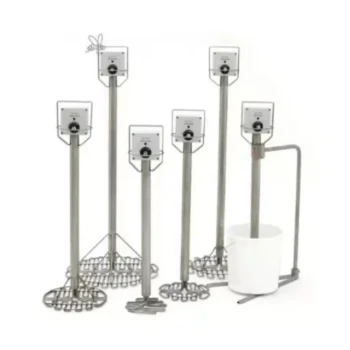
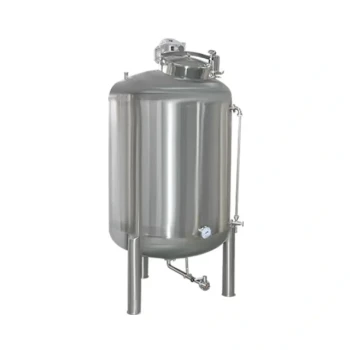
Industrial-grade thermal treatment equipment is essential because it creates the precise, controlled temperature environment required to neutralize spoilage risks inherent in high-moisture honey. It effectively inhibits the growth of osmophilic yeasts and prevents fermentation, ensuring the product remains chemically stable and safe for long-term storage without requiring a cold chain.
High moisture content significantly reduces honey stability, making it vulnerable to fermentation and spoilage. Industrial thermal processing bridges the gap between safety and quality by reducing water activity and neutralizing microbes, all while maintaining the precise temperatures needed to preserve the honey's commercial value.
The Critical Role of Biological Stabilization
Inhibiting Microbial Growth
Honey with high moisture content is naturally prone to spoilage because it provides an environment where osmophilic yeasts can thrive. Industrial thermal treatment raises the temperature of the honey to a specific level that effectively inhibits these yeasts, preventing the fermentation process that leads to acidity spikes and spoilage.
Reducing Water Activity
For specialized varieties like Yateí honey, which naturally possess moisture levels exceeding 20%, simple heating is not enough. Industrial dehydration equipment is required to physically reduce water activity. This eliminates the biological conditions necessary for microbial reproduction, allowing high-moisture honey to be preserved long-term even in non-cold chain environments.
Preserving Chemical and Physical Integrity
Regulating Crystallization
Beyond biological safety, thermal treatment regulates the physical state of the honey. High moisture and unstable temperatures can lead to excessive or uneven granulation (crystallization). Precise thermal processing ensures the honey maintains a desirable consistency and texture, which is vital for commercial quality.
Protecting Heat-Sensitive Enzymes
One of the greatest challenges in processing honey is that key enzymes, specifically diastase and invertase, are extremely sensitive to heat. Research indicates activity drops significantly as temperatures rise from 50°C to 75°C. Industrial-grade equipment, such as high-precision water baths, provides a uniform thermal field, ensuring no part of the batch is overheated, which preserves these vital chemical indicators.
Ensuring Accurate Moisture Measurement
Industrial processing relies on high-precision monitoring, often utilizing industrial-grade refractometers. These devices utilize the refractive index to rapidly and precisely determine moisture content. This real-time data allows operators to confirm that the thermal treatment has achieved the necessary moisture reduction to meet international food standards.
Understanding the Trade-offs
The Heat vs. Quality Balance
The primary trade-off in thermal treatment is balancing microbial safety against enzymatic degradation. While higher temperatures ensure the destruction of yeast, they risk denaturing the enzymes that define premium raw honey. Industrial equipment mitigates this by offering tight tolerance controls, but the operator must prioritize parameters carefully based on the honey type.
Processing Uniformity
Inadequate equipment often creates temperature gradients, where the honey near the heating element scorches while the center remains under-processed. Industrial-grade machinery is designed to eliminate these gradients. Without this uniformity, you risk a product that is partially fermented and partially degraded by heat, failing both safety and quality metrics.
Making the Right Choice for Your Goal
To select the appropriate thermal treatment strategy, you must define your end-product requirements.
- If your primary focus is Commercial Shelf Stability: Prioritize dehydration capabilities to lower water activity below fermentation thresholds, ensuring the product survives non-cold chain logistics.
- If your primary focus is Premium Enzymatic Quality: Prioritize high-precision temperature control systems (like water baths) that maintain uniform heat below 50°C to preserve diastase and invertase activity.
Ultimately, industrial thermal treatment is the only reliable method to transform unstable, high-moisture honey into a durable commercial product without sacrificing its essential chemical properties.
Summary Table:
| Feature | Industrial Equipment Benefit | Impact on Honey Quality |
|---|---|---|
| Microbial Control | Inhibits osmophilic yeasts | Prevents fermentation and spoilage |
| Moisture Reduction | Lowers water activity | Ensures long-term shelf stability |
| Temperature Precision | Uniform thermal field | Protects heat-sensitive enzymes (Diastase) |
| Physical Regulation | Controlled heating cycles | Prevents uneven crystallization/granulation |
| Monitoring | Integrated refractometers | Guaranteed compliance with food standards |
Elevate Your Honey Production with HONESTBEE
Processing high-moisture honey requires precision that standard tools simply cannot provide. At HONESTBEE, we specialize in supporting commercial apiaries and distributors with a full spectrum of professional beekeeping solutions. From high-precision honey-filling and hive-making machines to essential industrial consumables, our equipment is designed to protect your honey’s enzymatic integrity while ensuring total shelf stability.
Ready to scale your operations and minimize spoilage? Contact us today to discuss your wholesale equipment needs and see how our specialized machinery can transform your commercial output.
References
- Mohamad Al Kilani. Optimizing Good Apiculture Practices for Premium Honey Production: An Overview. DOI: 10.59735/arabjhs.vi25.376
This article is also based on technical information from HonestBee Knowledge Base .
Related Products
- Professional Thermostatic Conical Honey Melter
- Honey Concentrating Vacuum Heating Thickening Machine Dehumidifier for Honey
- 0.5T Capacity Honey Dehumidifier Dryer with Vacuum Heating and Thickening Filtering Machine
- HONESTBEE Commercial Upright Honey Melter
- Heavy Duty Stainless Steel Honey Processing Machine Decrystallizing Tank
People Also Ask
- What is melter honey used for? A Low-Cost Ingredient for Bakers and Brewers
- How do you melt a bucket of honey? Safely Reliquefy Crystallized Honey Without Damage
- How does a honey melter address the issue of crystallized honey in storage? Restore Flow and Quality Efficiently
- When is a honey melter necessary? Optimize Your Facility's Workflow for Crystallized Honey
- How to heat a bucket of honey? Safely Restore Liquid Honey While Preserving Quality