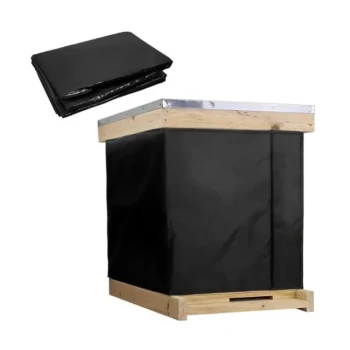
Greenhouse environments are inherently unstable for insect physiology, creating a critical need for artificial regulation. The necessity of specialized small shelters and connection tunnels lies in their ability to create a "micro-environment buffer system." By physically isolating the beehive from the main greenhouse space using materials like polyethylene film and insect nets, these structures protect the colony from the extreme thermal volatility typical of enclosed agricultural facilities.
The greenhouse interior functions as a climate trap, often reaching extreme temperatures that can stress or kill a colony. The shelter system decouples the hive from these ambient swings, preserving the colony's vitality and ensuring the continuous brood rearing required for reliable pollination.
The Challenge of the Greenhouse Climate
Extreme Temperature Fluctuations
Greenhouses are designed to maximize heat retention for plants, but this creates a hostile environment for honeybees.
During the day, internal temperatures can spike to levels that overheat the hive, while nighttime temperatures may drop drastically.
These rapid, extreme fluctuations disrupt the colony's ability to thermoregulate, directly impacting their survival and work efficiency.
The Buffer Mechanism
To mitigate this, the hive cannot simply be placed inside the open greenhouse space.
Specialized small shelters act as a secondary enclosure, creating a stable air pocket around the hive.
This physical isolation ensures that the hive does not experience the immediate thermal shock of the surrounding greenhouse air.
Anatomy of the Protection System
Material Composition
The shelters are typically constructed using polyethylene film and insect nets.
This combination allows for necessary ventilation while maintaining a distinct boundary from the larger greenhouse volume.
The materials serve as the primary barrier against the harsh environmental conditions of the facility.
The Role of Connection Tunnels
Connection tunnels bridge the gap between the protected micro-environment of the shelter and the foraging area of the greenhouse.
They allow bees to navigate between their stable hive climate and the crop area without compromising the isolation of the hive itself.
This hardware setup is essential for maintaining high-frequency pollination flights in a non-natural environment.
Understanding the Trade-offs
Complexity vs. Colony Health
Implementing a system of shelters and tunnels adds complexity and hardware costs to the agricultural operation compared to open-field beekeeping.
However, omitting this hardware risks colony collapse or reduced foraging activity due to environmental stress.
The trade-off is an investment in infrastructure in exchange for consistent biological performance.
Maintenance of the Buffer
The effectiveness of this system relies entirely on the integrity of the physical barriers.
Tears in the polyethylene film or gaps in the insect netting will compromise the buffer zone, effectively neutralizing the protection.
Regular inspection of these specialized components is required to ensure the micro-environment remains stable.
Ensuring Pollination Success
To achieve uniform fruit quality and high set rates, you must prioritize the stability of your pollinators.
- If your primary focus is consistent daily pollination: Ensure your shelters are constructed with high-quality insulation materials to prevent midday heat from suppressing bee activity.
- If your primary focus is long-term colony sustainability: Prioritize the integrity of the connection tunnels and insect nets to maintain a stress-free micro-climate for brood rearing.
By stabilizing the hive's immediate environment, you transform a volatile greenhouse into a productive ecosystem for your pollinators.
Summary Table:
| Component | Material/Structure | Primary Function |
|---|---|---|
| Small Shelter | Polyethylene film & Insect nets | Creates a thermal buffer and prevents ambient heat shock |
| Connection Tunnel | Enclosed pathway | Enables safe foraging while maintaining the hive micro-climate |
| Isolation Layer | Physical barrier | Decouples the hive from volatile greenhouse temperature swings |
| Ventilation Mesh | Fine insect netting | Ensures airflow for brood rearing without compromising isolation |
Maximize Your Greenhouse Yield with HONESTBEE
Maintaining a stable micro-environment is critical for the success of commercial apiaries and agricultural distributors. HONESTBEE provides the industrial-grade beekeeping tools and machinery needed to sustain healthy colonies in challenging environments. From specialized hive-making equipment to essential consumables, we empower our partners to deliver consistent biological performance.
Ready to optimize your pollination infrastructure? Contact our experts today to explore our wholesale equipment solutions and see how we can support your commercial success.
References
- Masaaki Miyamoto, Isao Kenmochi. Development of Fruiting Promotion System Using Honeybees in Semi-forced Eggplant Culture. DOI: 10.1303/jjaez.2007.265
This article is also based on technical information from HonestBee Knowledge Base .
Related Products
- Durable Plastic Interlocking Hive Connector for Beekeeping
- Multi-Functional Sliding Hive Entrance for Beekeeping
- Heavy Duty Adjustable Hive Connector
- Professional Reversible Beehive Hive Entrance
- Inner Beehive Cover for Beekeeping Bee Hive Inner Cover
People Also Ask
- How do plastic bee hives compare to wooden hives in handling? Reduce Strain & Boost Efficiency
- Are plastic bee hives any good? Unlock Durability & Efficiency for Your Apiary
- Under what circumstance are beehive connectors particularly beneficial? Optimize Handling for Full Beehive Attachments
- Are plastic bee hives good? Durable, Low-Maintenance Hives for Modern Apiaries
- What is the advantage of using the beehive connector when handling full attachments? Achieve Safe and Efficient Hive Transport