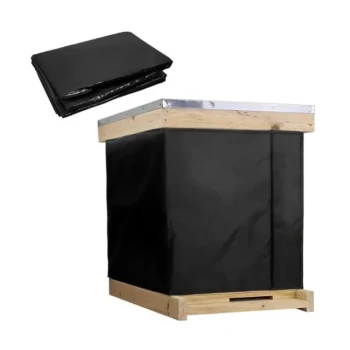
Using high-efficiency insulation is critical when applying dark-colored coatings, such as blue, to beehives in semi-arid climates because these colors significantly increase solar heat absorption. Without robust insulation to offset this thermal load, the internal hive temperature rises, disrupting the biological balance and causing the colony to produce more drone cells at the expense of essential worker bees.
In semi-arid environments, dark hive colors act as heat magnets that can destabilize the colony's microclimate. High-efficiency insulation is the necessary counterbalance, neutralizing excess heat to preserve the colony's focus on worker productivity rather than survival.
The Physics of Hive Color and Heat
Solar Radiation Absorption
Darker coatings, including shades of blue, possess a lower albedo than light colors. This means they reflect less sunlight and absorb a significantly higher percentage of solar radiation.
The Thermal Load in Semi-Arid Climates
In semi-arid regions characterized by intense sun exposure, this absorption creates a substantial "thermal load." The exterior surface of the hive heats up rapidly, transferring thermal energy into the hive's interior.
Internal Temperature Spikes
Without intervention, this heat transfer leads to elevated internal temperatures. The hive becomes a heat trap, forcing the internal environment to deviate from the optimal range required for healthy brood development.
Biological Consequences for the Colony
Shift in Brood Production
The most critical biological impact of uninsulated dark hives is the alteration of brood patterns. High internal temperatures have been linked to an increase in the area of drone cells.
Reduction in Worker Population
This shift comes at a direct cost: as drone production rises, worker bee production decreases. Since worker bees are responsible for foraging and hive maintenance, a reduction in their numbers impacts the overall productivity and viability of the colony.
Stress on Thermoregulation
Bees must expend energy to maintain their hive's biological thermal balance. Excess heat forces the colony to divert energy toward cooling efforts rather than resource gathering or brood rearing.
The Role of High-Efficiency Insulation
Offsetting the Thermal Load
Materials such as plasterboard act as a physical barrier against the heat absorbed by the dark paint. They decouple the hot exterior surface from the sensitive interior living space.
Maintaining Microclimate Stability
High-performance insulation ensures a stable internal microclimate regardless of external fluctuations. This stability is essential for maintaining the "biological thermal balance" mentioned in the primary reference.
Supporting Brood Rearing
By preventing heat spikes, insulation keeps the temperature within the narrow window suitable for worker brood rearing. This allows the colony to maintain its population structure without environmental interference.
Understanding the Trade-offs
Aesthetic vs. Functionality
Choosing a dark color is often an aesthetic or identification choice, but in hot climates, it introduces a functional penalty. You cannot simply paint a standard hive blue in a semi-arid zone without adding the complexity of insulation.
Complexity of Construction
Implementing high-efficiency insulation materials like plasterboard increases the weight and construction complexity of the hive compared to standard wooden boxes.
Cost Implications
High-quality insulation materials represent an additional cost. However, this investment is necessary to prevent the loss of colony productivity that results from thermal stress.
Making the Right Choice for Your Goal
To ensure colony health in semi-arid climates while using specific hive colors, apply the following principles:
- If your primary focus is maximizing worker bee production: You must pair dark coatings with high-efficiency insulation to prevent heat-induced shifts toward drone production.
- If your primary focus is stabilizing colony health: Use materials like plasterboard to create a physical thermal break, reducing the energy bees must waste on cooling the hive.
By balancing the visual choice of hive color with the physical necessity of insulation, you protect the colony’s biological integrity and productivity.
Summary Table:
| Factor | Dark-Colored Coating (e.g., Blue) | Impact of High-Efficiency Insulation |
|---|---|---|
| Solar Absorption | High; creates significant thermal load | Neutralizes external heat transfer |
| Internal Climate | Prone to rapid temperature spikes | Maintains stable biological microclimate |
| Brood Production | Shifts toward excessive drone cells | Protects and prioritizes worker bee development |
| Energy Expenditure | Bees waste energy on cooling | Bees focus on foraging and maintenance |
| Material Used | Thermal-conductive paint layer | Plasterboard or high-performance thermal breaks |
Maximize Your Apiary Productivity with HONESTBEE
Don't let thermal stress compromise your colony's health. At HONESTBEE, we specialize in supporting commercial apiaries and distributors with high-performance beekeeping solutions. Whether you need advanced hive-making machinery to integrate superior insulation or premium beekeeping tools and consumables, our comprehensive wholesale offering has you covered.
From specialized hardware to honey-themed cultural merchandise, we provide the tools you need to build resilient, high-yielding apiaries. Contact HONESTBEE today to discover how our professional equipment can optimize your operation!
References
- Maria de Fátima Pereira de Souza, Eva Mônica Sarmento da Silva. Desenvolvimento de abelhas melíferas em colmeias com diferentes cores e materiais de cobertura no semiárido brasileiro. DOI: 10.33448/rsd-v9i12.10890
This article is also based on technical information from HonestBee Knowledge Base .
Related Products
- Professional Insulated Plastic Bee Hives
- Professional Insulated Winter Hive Wrap for Beekeeping
- Inner Beehive Cover for Beekeeping Bee Hive Inner Cover
- Styrofoam Mini Mating Nuc Box with Frames Feeder Styrofoam Bee Hives 3 Frame Nuc Box
- Solid Bottom Board Australian Pine Wood Langstroth Bottom Board for Wholesale
People Also Ask
- What are the advantages of plastic bee hives? Boost Efficiency & Durability for Your Apiary
- Are plastic bee hives any good? Unlock Durability & Efficiency for Your Apiary
- How do plastic bee hives compare to wooden hives in handling? Reduce Strain & Boost Efficiency
- Are plastic bee hives good? Durable, Low-Maintenance Hives for Modern Apiaries
- What are the disadvantages of plastic beehives? Key Operational and Environmental Risks Exposed