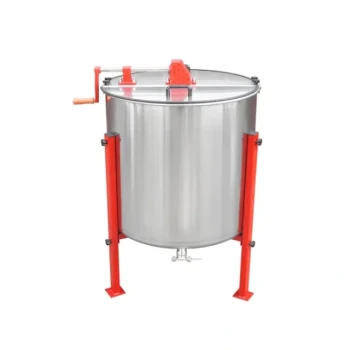
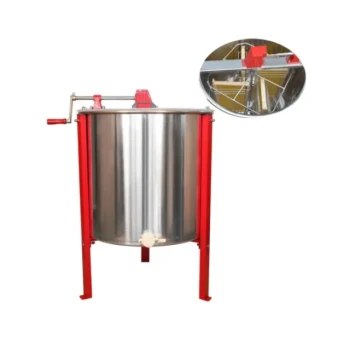
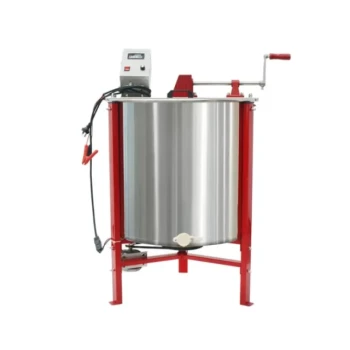
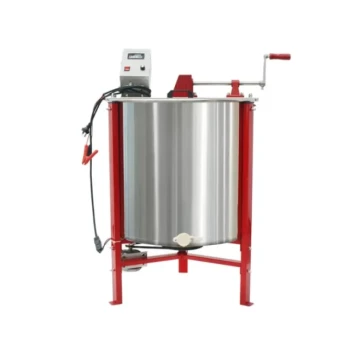
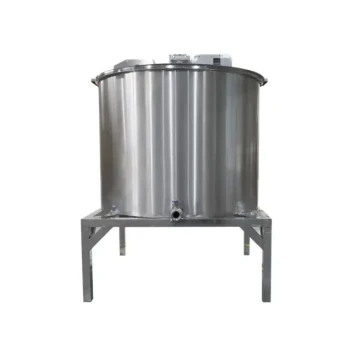
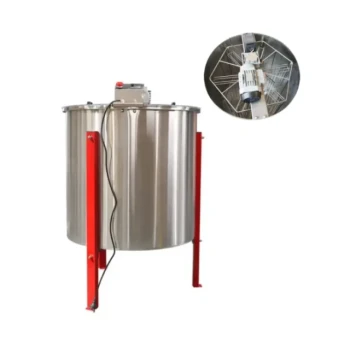
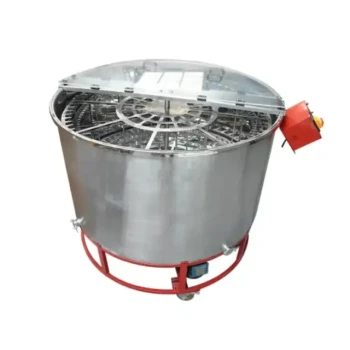
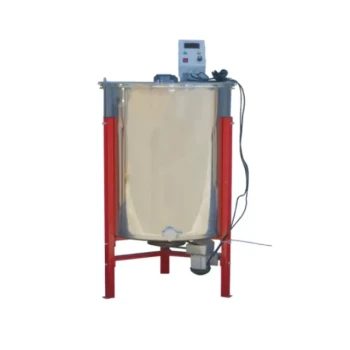
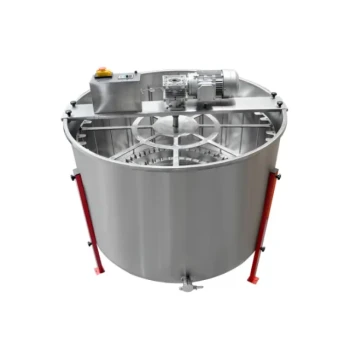
Modern honey extraction machinery is essential for stingless bee (Trigona sp.) production because it utilizes physical separation technology to guarantee a contaminant-free, clear liquid product. Unlike manual collection, which relies on squeezing and often introduces impurities, mechanical extraction effectively handles the high viscosity of this unique honey while preventing nutrient loss and secondary contamination.
The Bottom Line: Trigona honey is exceptionally viscous and sensitive to environmental factors. Transitioning from manual squeezing to professional extraction equipment is the only way to ensure a clear, pure liquid that retains its full nutritional bioactivity and flavor profile.
The Physical Properties of Trigona Honey
Managing High Viscosity
Stingless bee honey is characterized by significant thickness and viscosity. Modern machinery is designed to apply the necessary physical force to move this dense liquid efficiently, a feat that is difficult and inconsistent when performed by hand.
Preventing Odor Absorption
Trigona honey has a natural tendency to absorb ambient odors rapidly. Professional extraction equipment operates within a closed or semi-closed system, shielding the honey from external smells that could compromise its delicate flavor profile.
Achieving a Clear Liquid Form
The primary goal of modern extraction is producing a visually clear product. Machinery effectively filters out particulate matter during the separation process, ensuring the final product is free from the cloudiness associated with manual methods.
Improving Purity and Nutrition
Eliminating Foreign Matter
Manual squeezing inevitably mixes honey with wax particles, bee bread, and other hive debris. Mechanical separation isolates the honey from these impurities, preventing the inclusion of foreign matter that degrades quality.
Preventing Secondary Contamination
Hand-processing increases the risk of introducing bacteria or external debris into the harvest. Professional hygienic equipment, such as suction-type extractors, creates a sanitary barrier between the operator and the product.
Preserving Nutritional Integrity
Manual methods often result in significant nutrient loss due to oxidation or physical degradation. Mechanical processes are designed to be distinct and rapid, preventing the breakdown of sensitive nutrients and ensuring the honey retains its bioactivity.
Operational Efficiency and Hive Health
Reducing Air Exposure
Industrial extractors, particularly centrifugal models, utilize speed to separate honey quickly. This significantly shortens the time the honey is exposed to air, which is critical for maximizing the preservation of natural flavor and preventing fermentation.
Protecting Colony Structure
Suction-type extractors allow for extraction directly from tiny honey pots without crushing the hive structure. This protects the colony's wax foundations and ensures continuous productivity, whereas manual squeezing is often destructive to the bees' home.
Understanding the Trade-offs
Equipment Cost vs. Product Value
While manual collection requires zero capital investment, it limits the product to a lower, "raw" grade often unsuitable for high-end markets. Modern machinery requires an upfront investment but unlocks the ability to produce commercial-grade, clear honey.
Maintenance and Cleaning
The introduction of machinery adds a requirement for rigorous cleaning protocols. Because Trigona honey is sticky and acidic, equipment must be maintained meticulously to prevent machinery corrosion or cross-contamination between batches.
Making the Right Choice for Your Goal
To determine the best approach for your apiary, consider your end goals:
- If your primary focus is Commercial Quality: Invest in professional extraction machinery to ensure a clear, impurity-free liquid that meets market standards for purity.
- If your primary focus is Colony Sustainability: Utilize suction-type equipment to extract honey without destroying the wax pots, allowing the bees to regenerate stores faster.
- If your primary focus is Nutritional Analysis: Use equipment that minimizes mechanical disturbance to preserve specific phytochemicals like polyphenols for laboratory testing.
Adopting modern extraction technology is not just about speed; it is the definitive step toward professionalizing stingless bee beekeeping.
Summary Table:
| Feature | Manual Collection | Modern Machinery |
|---|---|---|
| Purity Level | High risk of impurities (wax, bee bread) | Clear, contaminant-free liquid |
| Nutrient Preservation | Prone to oxidation and degradation | Rapid processing retains bioactivity |
| Hive Impact | Destructive to honey pots | Non-invasive (suction-type preservation) |
| Flavor Control | Risk of ambient odor absorption | Closed systems protect delicate profiles |
| Commercial Value | Low (Raw/Home grade) | High (Commercial/Premium grade) |
Elevate Your Stingless Bee Honey Production with HONESTBEE
Transitioning from manual collection to professional-grade machinery is the key to unlocking the full commercial potential of Trigona sp. honey. At HONESTBEE, we specialize in providing commercial apiaries and distributors with high-performance beekeeping tools and machinery designed for precision and hygiene.
Whether you need specialized suction-type extractors that protect hive integrity or industrial honey-filling machines for your retail line, our comprehensive wholesale offering has you covered. Partner with us to ensure your honey meets the highest market standards for purity and nutritional value.
Ready to professionalize your apiary? Contact us today to explore our full spectrum of beekeeping equipment and industrial consumables.
References
- Kurnia Kurnia, Andi Sadapotto. The development strategy of Trigona sp beekeeping at SMKN 4 Luwu. DOI: 10.1088/1755-1315/886/1/012064
This article is also based on technical information from HonestBee Knowledge Base .
Related Products
- Stainless Steel 3 Frame Manual Honey Extractor Spinner for Bee Honey Extraction
- Stainless Steel Manual 8 Frame Radial Honey Extractor Machine for Beehives
- 6 Frame Manual Stainless Steel Honey Extractor Beekeeping Equipment
- HONESTBEE 4 Frame Manual Self Reversing Honey Extractor for Beekeeping
- HONESTBEE 8 Frame Electric and Manual Three Use Honey Extractor
People Also Ask
- Which type of honey extractor is generally more durable? Focus on Material & Build Quality for Longevity
- What are the disadvantages of a manual honey extractor? Overcome Efficiency Bottlenecks in Your Apiary
- What is a manual honey extractor? The Essential Guide to Cost-Effective Beekeeping for Beginners
- Why are manual extractors popular among beginner beekeepers? A Guide to Starting Simple & Saving Money
- What are the primary advantages of utilizing a manual honey extractor? Cost-Effective & Gentle Harvesting