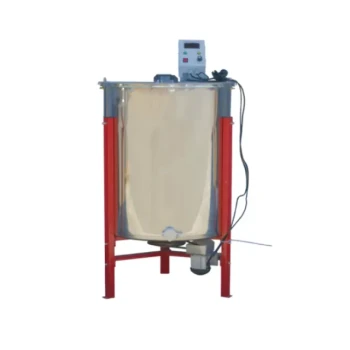
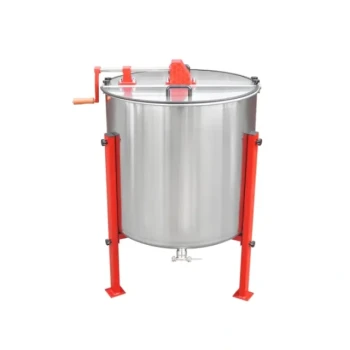
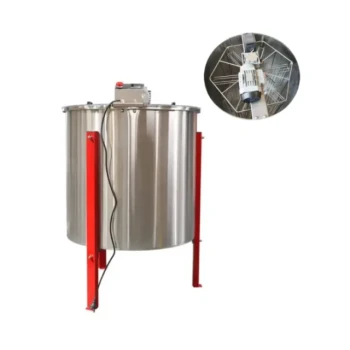
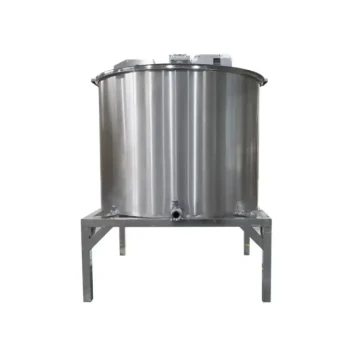
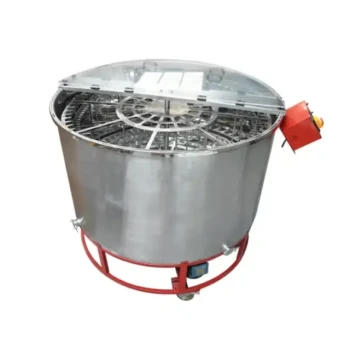
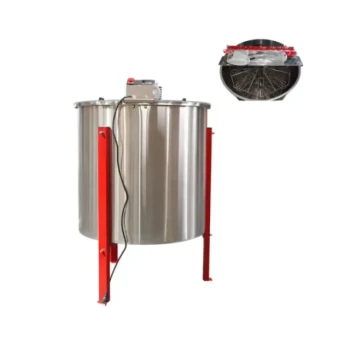
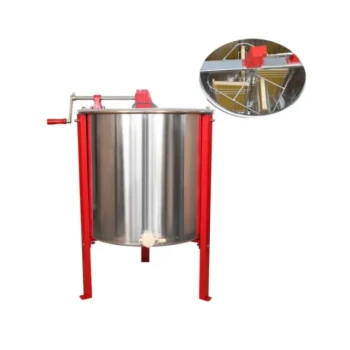
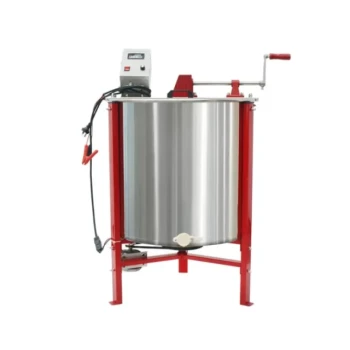
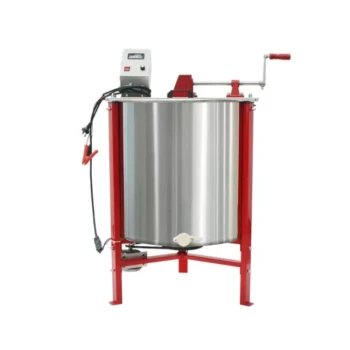
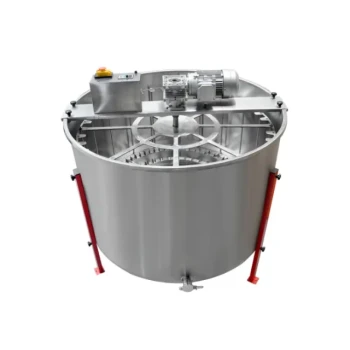
Replacing manual comb-squeezing with centrifugal honey extractors is critical because it converts honey harvesting from a destructive, labor-intensive task into a repeatable commercial process. Centrifugal extractors remove honey from movable-frame combs through controlled rotation while preserving the wax structure. This improves throughput, reduces contamination, allows bees to reuse comb immediately, and produces cleaner honey more consistently for commercial distribution.
For commercial apiaries, centrifugal extraction is not merely an equipment upgrade—it is the foundation for scalable, hygienic, and economically efficient honey production. Preserving comb reduces colony recovery time while mechanical processing improves labor productivity, product consistency, and supply-chain readiness.
Why Manual Comb-Squeezing Becomes a Commercial Bottleneck
It destroys valuable comb infrastructure
Manual harvesting typically involves cutting, crushing, or squeezing honeycomb. Once damaged, the comb cannot be returned to the hive in usable condition.
Bees must then consume resources and spend significant energy producing new beeswax. That energy could otherwise support brood development, nectar collection, and honey storage.
It creates inconsistent processing results
Manual squeezing depends heavily on operator technique. Pressure, filtration, drainage time, and handling conditions can vary from batch to batch.
This makes it difficult for commercial apiaries to maintain consistent yield, clarity, processing time, and product presentation.
It limits production capacity
Squeezing and simple straining require substantial manual handling. As hive numbers and harvest volumes grow, labor becomes the primary constraint.
A process that works for a small apiary can quickly become impractical when serving wholesalers, distributors, retailers, or contract buyers.
How Centrifugal Extraction Changes the Production Model
It removes honey without destroying the comb
A centrifugal extractor uses controlled high-speed rotation to pull honey from framed combs. The wax structure remains substantially intact for reuse.
After extraction, the frames can be returned to the colony, allowing bees to begin storing honey again without rebuilding the entire comb foundation.
It improves colony productivity
Preserved comb reduces the bees’ need to produce replacement wax. This can shorten the recovery period between harvest cycles and help colonies allocate more effort to honey production.
The result is a more efficient relationship between hive resources, harvest frequency, and overall apiary output.
It increases throughput per harvest
Mechanical rotation extracts honey more quickly and thoroughly than manual pressing. Commercial operators can process more frames in less time with fewer workers.
This increased throughput is especially important during concentrated harvest periods, when delays can disrupt labor scheduling, storage, filtration, and order fulfillment.
Why Hygiene and Product Consistency Matter
It reduces wax debris and manual contamination
Cutting and squeezing expose honey to more wax fragments and repeated manual contact. These conditions increase the burden on later straining and filtration stages.
Centrifugal extraction separates honey from the comb more cleanly, helping reduce wax particulates and unnecessary handling during primary processing.
It supports commercial food-safety requirements
Modern extraction machinery provides a more standardized and controllable workflow. When combined with suitable filtration, filling, cleaning, and storage procedures, it helps apiaries establish more reliable hygiene controls.
This is important for market access because commercial buyers expect repeatable quality, traceable processes, and dependable packaging performance.
It improves batch uniformity
Mechanical extraction creates more consistent operating conditions than improvised manual methods. Operators can standardize loading, rotation, unloading, and filtration procedures.
Greater consistency helps commercial apiaries meet buyer specifications and reduces disputes related to clarity, debris, yield, or processing variation.
Why Comb Preservation Supports Faster Growth
It shortens the production cycle
Reusable comb gives bees an immediate structural base for storing nectar. The colony does not need to rebuild an equivalent wax structure before continuing normal honey-storage activity.
For commercial apiaries, this can make each harvest cycle more productive and improve the utilization of existing frames.
It reduces hidden operating costs
The cost of manual squeezing is not limited to wages. It also includes damaged comb, lost production time, additional filtration, slower hive recovery, and the biological cost of wax replacement.
A centrifugal extractor addresses several of these costs at the process level rather than treating them as separate problems.
It supports expansion without proportional labor growth
Mechanization allows an apiary to increase processing capacity without increasing manual labor at the same rate. This is essential when moving from small-scale production toward professional or industrial operations.
The equipment therefore supports not only faster harvesting, but also a more scalable business model.
The Role of Extraction Equipment in Modern Beekeeping Systems
It standardizes the apiary workflow
Modern beekeeping systems depend on compatible stages: movable-frame management, mechanical extraction, filtration, storage, filling, and packaging.
The centrifugal extractor connects hive management with downstream processing, creating a more organized and repeatable production line.
It improves supply-chain reliability
Wholesalers, distributors, and resellers need dependable volumes, predictable delivery schedules, and consistent product quality. Manual extraction makes all three more difficult to guarantee.
Mechanical extraction improves production planning, helping apiaries respond more reliably to purchase orders and seasonal demand.
It enables a complete equipment strategy
For businesses supplying commercial apiaries, an extractor is best viewed as part of a broader processing portfolio. Related equipment may include uncapping tools, honey pumps, filters, settling tanks, filling machines, containers, and cleaning systems.
A distributor or wholesaler that can provide coordinated equipment sourcing offers greater value than one that supplies isolated machines without process integration.
Understanding the Trade-offs
The initial investment is higher
A centrifugal extractor requires capital, installation space, cleaning procedures, and operator training. The right model must match the apiary’s frame format, harvest volume, power availability, and expansion plans.
However, evaluating only the purchase price overlooks labor savings, comb reuse, processing speed, and improved commercial consistency.
Equipment selection must match operating scale
An undersized extractor creates delays and bottlenecks. An oversized system can increase capital costs and remain underutilized during normal harvest periods.
Buyers should assess frame capacity, extraction speed, construction materials, control features, cleaning access, and compatibility with future processing equipment.
Mechanization does not replace process discipline
A centrifugal extractor improves the process, but it does not automatically guarantee food-safe honey. Operators still need clean equipment, suitable filtration, controlled storage, trained staff, and documented procedures.
The machine should be integrated into a complete hygiene and quality-management system.
Maintenance affects long-term performance
Rotating equipment requires inspection, cleaning, and routine maintenance. Poor maintenance can reduce extraction efficiency, increase downtime, and create avoidable safety risks.
Reliable suppliers should provide clear technical documentation, responsive service, spare-parts access, and practical support after delivery.
How to Apply This to Your Apiary or Supply Business
The best equipment decision depends on whether the priority is hive productivity, processing efficiency, product quality, or commercial scalability.
- If your primary focus is maximizing honey production: Choose centrifugal extraction to preserve comb and reduce the bees’ need to rebuild wax after every harvest.
- If your primary focus is reducing labor costs: Select a mechanically efficient extractor that increases frame throughput and minimizes manual handling.
- If your primary focus is improving honey quality: Integrate centrifugal extraction with appropriate filtration, hygienic handling, and controlled storage.
- If your primary focus is serving commercial buyers: Build a standardized extraction and filling workflow that supports consistent quality, dependable volumes, and repeatable order fulfillment.
- If your primary focus is sourcing equipment for resale: Work with suppliers offering a broad product portfolio, rapid response, technical expertise, after-sales support, and efficient delivery across the complete honey-processing system.
For commercial apiaries transitioning to modern beekeeping, centrifugal extraction provides the practical foundation for higher productivity, better hygiene, and scalable market performance.
Summary Table:
| Aspect | Manual Comb-Squeezing | Centrifugal Extraction |
|---|---|---|
| Comb Preservation | Destroys comb; bees rebuild | Preserves comb; immediate reuse |
| Production Speed | Slow; labor-intensive | Fast; high throughput |
| Labor Costs | High per unit | Reduced per unit |
| Product Quality | Inconsistent; more debris | Consistent; cleaner honey |
| Scalability | Limited by labor | Scales with equipment |
Ready to modernize your honey extraction process? At HONESTBEE, we supply commercial apiaries and distributors with a full range of centrifugal extractors and complete honey-processing systems. From uncapping machines to filling lines, our wholesale solutions boost efficiency, preserve comb health, and ensure consistent quality. Partner with us for rapid delivery, OEM/ODM support, and expert guidance. Contact us today to upgrade your operation and maximize your harvest!
Related Products
- electric honey extractor honey centrifuge 3 frame honey extractor stainless steel honey frame extractor
- Manual Hand Crank 4 Frame Honey Extractor Centrifuge for Beekeeping
- Professional 4 Frame Self Reversing Electric Honey Extractor for Beekeeping
- Electric 4 Frame Tangential Honey Extractor
- 24 Frame Honey Extractor Commercial Radial Honey Frame Extraction Machine
People Also Ask
- What are the characteristics of electric honey extractors? Boost Your Apiary Efficiency with Automated Technology
- What are the disadvantages of using an electric honey extractor? Weighing Cost, Power, and Comb Safety
- What are the advantages of an electric honey extractor? Boost Efficiency and Scale Your Honey Production
- What are the technical advantages of electric honey extractors? Maximize Yield and Protect Your Bee Colony
- How does an electric honey extractor affect the quality of honey? Preserve Flavor & Purity with Precision Extraction