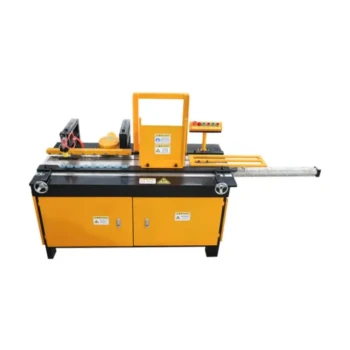
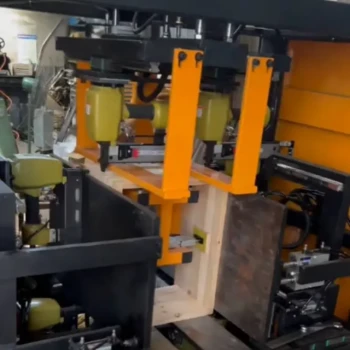
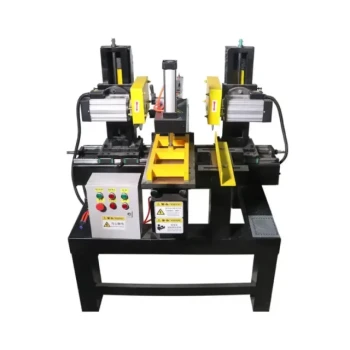
Specialized hive-making machinery is essential because it provides the high-precision manufacturing capability required to standardize apiary infrastructure at an industrial scale. By ensuring absolute dimensional compatibility across thousands of components, this machinery creates the necessary physical foundation for mechanized honey harvesting and efficient colony management.
The Core Insight In commercial beekeeping, standardization is not merely a convenience; it is an operational prerequisite. Specialized machinery transforms hive components from variable, handcrafted items into precise, interchangeable industrial assets, enabling the transition from labor-intensive traditional methods to automated, large-scale production.
The Foundation of Standardization
Achieving Absolute Interchangeability
The primary function of specialized machinery is to guarantee dimensional consistency. In a large-scale operation, frames and hive bodies must be universally interchangeable without modification.
This precision ensures that a frame removed from one hive fits perfectly into any other hive in the apiary. It eliminates the operational friction and labor costs associated with sorting or modifying ill-fitting components during critical field operations.
Ensuring Critical Sealing Performance
Precision manufacturing is vital for the sealing performance of the hive. Specialized machinery creates exact joints and gaps that prevent environmental leaks and maintain internal climate control.
Proper sealing protects the colony from external threats and improves the hive's ability to regulate temperature. This structural integrity is impossible to achieve consistently at scale using manual or non-specialized woodworking methods.
Enabling Mechanization and Scale
Facilitating Mechanized Harvesting
Industrial honey harvesting relies on automated uncapping and extraction lines that require uniform input. Standardized hardware is the hardware interface for these systems.
If hive frames deviate even slightly in size or shape due to manufacturing errors, they can jam automated machinery, causing costly downtime and equipment damage. Specialized hive-making machinery eliminates this variable, allowing for smooth, high-speed processing.
Supporting Industrial Management
Transitioning from small-scale beekeeping to managing 150 or more colonies requires a shift in management philosophy. Operators can no longer treat hives as unique individual units.
Uniform equipment allows for standardized management protocols. When every hive acts and reacts the same way physically, apiarists can apply broad maintenance strategies, streamlining workflow and reducing the cognitive load on staff.
Economic and Biological Advantages
Reducing Operational Costs
Automated hive production reduces the acquisition cost per unit through mass production efficiencies. Furthermore, the durability of precision-cut wood extends the lifespan of the equipment.
Maintenance costs also drop significantly. Because parts are interchangeable, repairing a hive becomes a simple swap-and-replace operation rather than a custom carpentry project.
Enhancing Colony Health and Behavior
Structural accuracy directly influences honeybee nesting behavior and overall health. Precision manufacturing eliminates improper gaps that can induce "burr comb" (unwanted wax bridges) or provide entry points for pests and parasites.
By reducing physical defects in the hive structure, the machinery minimizes bee stress. A stress-free environment promotes better colony health, which correlates directly with higher productivity and lower colony loss rates.
Understanding the Trade-offs
The Rigidity of Standardization
While standardization drives efficiency, it also creates infrastructure rigidity. Once an apiary invests in machinery for a specific hive standard (e.g., Langstroth dimensions), switching to a different standard later becomes functionally impossible without replacing significant capital assets.
Capital vs. Labor Exchange
Investing in specialized machinery represents a high upfront capital expenditure. This shifts the business model from a variable-cost structure (paying for labor as needed) to a fixed-cost structure. This approach is highly efficient for large operations but may be financially burdensome for smaller apiaries that have not yet reached critical mass.
Making the Right Choice for Your Goal
To leverage hive-making machinery effectively, align the technology with your operational objectives:
- If your primary focus is Efficiency: Prioritize machinery that guarantees tight tolerances for frame dimensions to ensure seamless integration with automated extraction lines.
- If your primary focus is Scalability: Focus on high-volume output capabilities to rapidly expand colony counts while maintaining low per-unit acquisition costs.
True commercial viability relies on the invisible precision of your hardware, turning individual wooden boxes into a unified, scalable production system.
Summary Table:
| Key Feature | Operational Impact | Strategic Benefit |
|---|---|---|
| Dimensional Consistency | Universal interchangeability of frames/bodies | Reduced labor and field friction |
| Precision Sealing | Improved internal climate and pest control | Enhanced colony health and survival |
| Hardware Uniformity | Seamless integration with automated extractors | High-speed processing and efficiency |
| Mass Production | Lower acquisition cost per unit | Rapid and affordable scalability |
| Structural Accuracy | Minimal burr comb and wax bridges | Streamlined maintenance protocols |
Elevate Your Commercial Beekeeping Infrastructure with HONESTBEE
Transitioning to industrial-scale production requires more than just tools—it requires a precision-engineered foundation. HONESTBEE specializes in empowering commercial apiaries and distributors with the high-performance machinery needed to standardize operations and maximize yield.
From heavy-duty hive-making and honey-filling machines to a complete spectrum of professional beekeeping hardware and consumables, we provide the end-to-end solutions your business demands. Partner with us to transform your apiary into a highly efficient, scalable production system.
Ready to scale your operation? Contact our experts today to discuss our wholesale machinery and equipment offerings.
References
- Iryna Maslii. IMPROVEMENT OF TECHNOLOGICAL STAGES IN BEEKEEPING WITH DISINFECTION MEASURES. DOI: 10.32900/2312-8402-2024-131-128-138
This article is also based on technical information from HonestBee Knowledge Base .
Related Products
- High-Efficiency Pneumatic Bee Hive Making Machine for Rapid Box Assembly
- Beehive Handle and Frame Rest Cutting Machine: Your Specialized Hive Machine
- Mini Desktop Bee Hive Frame Forming Making Machine
- Automatic High-Speed Bee Hive Box Stapling Machine
- Beehive Machine Double End Saw for Precision Hive Component Manufacturing
People Also Ask
- How does the introduction of professional beehive-making machinery benefit sustainable beekeeping? Scale Your Apiary
- Why is specialized beehive-making machinery critical for low-defense breeding? Enhance Selection with Precision Tools
- How does the introduction of specialized beehive making machinery contribute to increasing the scale of regional beekeeping industries?
- What is the importance of specialized beehive making machinery in a circular bio-economy? Build Local Sustainability
- Why is specialized beehive-making machinery essential? Scale Your Apiary with Precision Industrial Standards