Specialized suction extraction is necessary because stingless bees store honey in irregular wax (cerumen) pots rather than the standardized honeycomb frames used by traditional honeybees. Because these delicate pots cannot withstand centrifugal force, manual or electric suction devices are required to extract honey without destroying the hive structure or contaminating the final product.
The Core Insight Stingless bees build intricate, individual storage pots that are fundamentally incompatible with standard centrifugal extractors. Specialized suction equipment solves this biological mismatch by utilizing negative pressure to harvest honey non-destructively, preserving the hive's architecture and significantly reducing the time the colony needs to recover and rebuild.
The Biological Constraint: Pots vs. Combs
Understanding Cerumen Pots
Unlike the European honeybee (Apis mellifera), which builds uniform hexagonal combs, stingless bees store honey in small, distinct clusters of pots. These pots are constructed from cerumen, a mixture of beeswax and plant resins (propolis).
Why Standard Extractors Fail
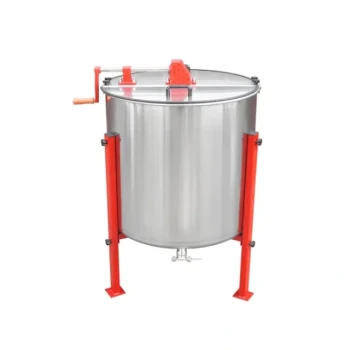
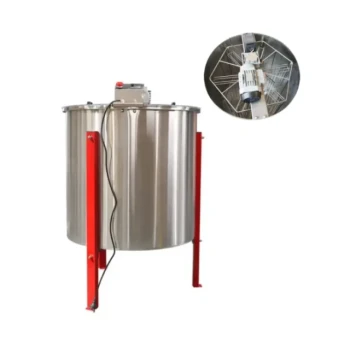
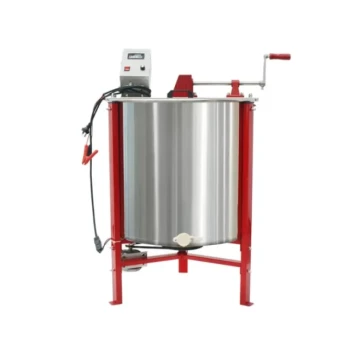
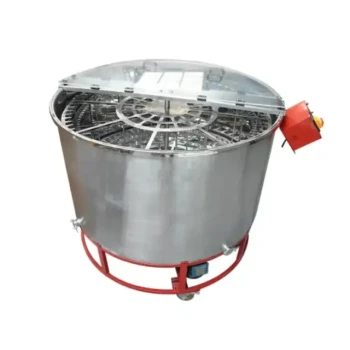
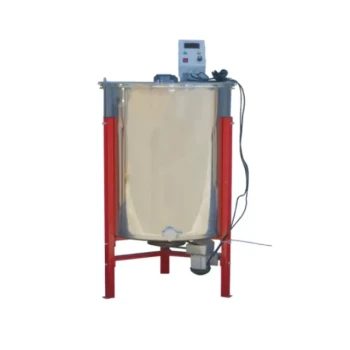
Traditional honey harvesting relies on spinning frames in a centrifuge to fling honey out. Because stingless bee honey is sealed in irregular, individual pots rather than openable frames, centrifugal extractors are physically incompatible and ineffective.
Ensuring Hygiene and Purity
Avoiding Contamination
Traditional "squeezing" methods often crush the pots, inadvertently mixing the honey with larval fluids, royal jelly, pollen, and pot debris. Suction devices extract only the liquid honey, ensuring high clarity and purity.
Managing High Moisture Content
Stingless bee honey typically has a higher moisture content than standard honey, making it naturally susceptible to fermentation. By using sterile suction equipment rather than manual squeezing, you drastically reduce the introduction of external bacteria and contaminants that accelerate spoilage.
Protecting Colony Productivity
Minimizing Structural Damage
The primary advantage of suction extraction is its non-destructive nature. It allows for the removal of honey without tearing down the complex architecture of the nest, which serves as both food storage and home.
Reducing Repair Intervals
When honey pots are destroyed during harvest, the colony must redirect energy from foraging to reconstruction. By preserving the empty pots, suction equipment shortens the interval between honey production cycles, as bees can immediately refill the existing structures.
Safeguarding the Brood
Stingless bee hives often have honey pots located near brood (larvae) cells. Precision suction tools allow the harvester to navigate around these sensitive areas, avoiding accidental damage to the next generation of bees.
Understanding the Trade-offs
Scalability Limitations
While essential for quality, suction extraction is generally slower and more labor-intensive than industrial centrifugal methods. It is best suited for small to medium-scale operations rather than high-volume, fully automated production lines.
Maintenance Requirements
The equipment, specifically hoses and pumps, requires rigorous cleaning. Because stingless bee honey is prone to fermentation, any residue left in the suction tubes can contaminate subsequent harvests.
Making the Right Choice for Your Goal
Whether you are managing Heterotrigona itama, Geniotrigona thoracica, or other species, your extraction method dictates your long-term yield.
- If your primary focus is Honey Purity: Utilize electric or manual vacuum pumps to eliminate debris, pollen, and larval fluids from the final product.
- If your primary focus is Colony Growth: Prioritize suction methods to preserve pot structure, allowing bees to focus energy on foraging rather than rebuilding.
- If your primary focus is Low-Cost/Micro-Scale: Medical-grade large-capacity syringes offer a cost-effective alternative to pumps while still providing precise, non-destructive extraction.
By aligning your equipment with the unique biology of the stingless bee, you transform harvesting from a destructive event into a sustainable cycle.
Summary Table:
| Feature | Traditional (Centrifugal/Squeeze) | Specialized Suction Extraction |
|---|---|---|
| Hive Impact | Destructive (Crushes cerumen pots) | Non-destructive (Preserves structure) |
| Honey Purity | High risk of larval/pollen contamination | Superior clarity and high purity |
| Colony Recovery | Slow (Bees must rebuild pots) | Rapid (Bees immediately refill pots) |
| Suitability | Standard Honeybee (Apis) | All Stingless Bee species |
Maximize Your Yield with HONESTBEE Professional Solutions
Elevate your commercial beekeeping operation with high-performance tools designed for precision. HONESTBEE supports commercial apiaries and distributors with a full spectrum of specialized hardware, including professional suction units, honey-filling machines, and industrial hive-making equipment.
Our comprehensive wholesale offering ensures your colonies remain productive while your honey meets the highest market standards for purity and quality.
Connect with the HONESTBEE experts today to scale your business!
References
- Marcelo Fernandes Pacheco Dias, Eliane Macedo Sobrinho Santos. Beekeeping and Meliponiculture: A Sweet Look At The Women of The Jequitinhonha River Valley. DOI: 10.24857/rgsa.v19n4-026
This article is also based on technical information from HonestBee Knowledge Base .
Related Products
- Stainless Steel 3 Frame Manual Honey Extractor Spinner for Bee Honey Extraction
- Stainless Steel Manual 8 Frame Radial Honey Extractor Machine for Beehives
- 6 Frame Manual Stainless Steel Honey Extractor Beekeeping Equipment
- Stainless Steel Manual Honey Press with Guard for Pressing Honey and Wax
- HONESTBEE 2 Frame Manual Acrylic Honey Extractor Beekeeping Equipment
People Also Ask
- Which type of honey extractor is generally more durable? Focus on Material & Build Quality for Longevity
- What are the disadvantages of a manual honey extractor? Overcome Efficiency Bottlenecks in Your Apiary
- What is a manual honey extractor? The Essential Guide to Cost-Effective Beekeeping for Beginners
- Why are manual extractors popular among beginner beekeepers? A Guide to Starting Simple & Saving Money
- What are the primary advantages of utilizing a manual honey extractor? Cost-Effective & Gentle Harvesting