The addition of sugar candy is essential because it provides a stable, solid energy source that resists spoilage while maintaining low moisture levels. This continuous supply of energy is critical for supporting the metabolism of the virgin queen and her attendant workers, preventing starvation, and ensuring the queen's ovaries continue to develop normally.
In the artificial environment of a queen bank, sugar candy acts as a critical nutritional bridge, preventing starvation and maintaining reproductive potential by providing a consistent, low-moisture energy source that mimics natural reserves without the risk of spoilage.
The Physiological Necessity of Sugar Candy
Preventing Metabolic Failure
The primary function of sugar candy is to prevent starvation. In a queen banking scenario, the queen is removed from the resources of a natural colony.
Without a continuous supply of energy, the queen's normal physiological metabolism would collapse. Sugar candy provides a dense caloric source that bridge this gap, keeping the queen alive during isolation.
Maintaining Reproductive Viability
Beyond mere survival, the queen's value lies in her reproductive capability. Nutritional deprivation has immediate consequences for her biology.
Starvation or energy fluctuation can cause the cessation of ovarian development. Consistent access to sugar candy ensures that her reproductive system remains active and she retains her potential for future laying.
The Role of the Banking Environment
Supporting the Social Unit
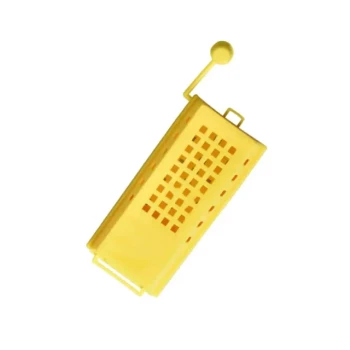
Standardized wooden queen cages are not designed for the queen alone; they also house a small number of attendant worker bees.
These attendants simulate a basic social environment necessary for the queen's survival. The sugar candy must provide enough energy to sustain both the queen and these essential caretakers within the confined space.
Stability in Confinement
The physical constraints of a queen banking cage require a food source that is chemically and physically stable.
Sugar candy is ideal because it is a solid energy source with low moisture content. This specific composition prevents the food from degrading or spoiling, which is a significant risk in the warm, enclosed environment of a hive bank.
Understanding the Trade-offs
Spoilage Resistance vs. Hydration
While sugar candy is superior for stability, its low moisture content is a specific design choice to prevent spoilage.
Liquid feeds, while hydrating, are prone to fermentation and can create unsanitary conditions in a compact container. Sugar candy mitigates this risk, prioritizing high resistance to spoilage over immediate hydration, relying on the hive environment to balance humidity.
Space Efficiency
In compact standardized cages, space is at a premium.
Bulky liquid feeders are impractical for individual queen isolation. Sugar candy offers maximum energy density in a small form factor, allowing manual addition without compromising the limited space needed for the queen and her attendants to move and interact.
Making the Right Choice for Your Goal
To successfully bank virgin queens, you must align your nutritional strategy with your biological goals.
- If your primary focus is maximizing survival rates: Prioritize sugar candy with low moisture content to minimize the risk of spoilage and bacterial growth within the confinement cage.
- If your primary focus is preserving reproductive quality: Ensure the supply of candy is never interrupted, as even brief starvation can permanently arrest the ovarian development required for a productive queen.
Proper nutrition during banking is the difference between a surviving queen and a thriving one.
Summary Table:
| Feature | Benefit for Queen Banking |
|---|---|
| Energy Source | Provides dense caloric intake to prevent metabolic collapse and starvation. |
| Moisture Content | Low moisture levels prevent fermentation and spoilage in warm hive environments. |
| Reproductive Support | Ensures continuous ovarian development and maintains future laying potential. |
| Physical State | Solid form saves space in standardized cages and resists leaking. |
| Social Support | Sustains both the queen and her attendant workers within the isolation unit. |
Maximize Your Apiary's Success with HONESTBEE
At HONESTBEE, we understand that the health of your queens is the foundation of a productive apiary. Whether you are a commercial beekeeper or a global distributor, our comprehensive wholesale range provides everything you need to maintain a thriving operation.
From high-precision queen banking cages and specialized beekeeping tools to industrial-grade honey-processing machinery and hive-making equipment, we deliver the quality and reliability your business demands. Partner with us to access professional-grade consumables and innovative hardware designed for efficiency and scale.
Ready to elevate your beekeeping production?
Contact our expert team today to discuss your wholesale needs!
References
- Bruno Berger, Carminda da Cruz‐Landim. Beekeeping practice: effects of Apis mellifera virgin queen management on ovary development. DOI: 10.1007/s13592-015-0404-8
This article is also based on technical information from HonestBee Knowledge Base .
Related Products
- 10-Cell Silicone Beeswax Bee Queen Cups Forming Mold
- Multi-Function Queen Roller Cage and Catcher
- Clear Black Plain Polystyrene Queen Bee Grafting Cell Cups No Lug for Bee Queen Cup
- High-Efficiency Diamond Maze Bee Escape for Clearing Supers
- Plastic Queen Bee Catcher Marker Tube Holder for Queen Marking Bottle
People Also Ask
- How do beeswax queen cell cups function? Optimize Queen Rearing with Biological Mimicry
- What is the biological function of beeswax queen cell cups? Boost Acceptance in Artificial Queen Rearing
- What role do specialized queen rearing tools play in developing mite-resistant honeybee stock? Master Genetic Selection
- What materials are used to make artificial queen cell cups for grafting? Beeswax vs. Plastic Guide
- What roles do specialized queen cell cups play in royal jelly production? Optimize Your Hive's Secretion and Yield